Assam Assembly Elections 2026: Record 85.13% Voter Turnout Creates New History | 722 Candidates’ Fate Sealed in EVMs
Assam Elections 2026 Record Voter Turnout: 85.13% Participation Marks New Milestone in State’s Democratic Journey
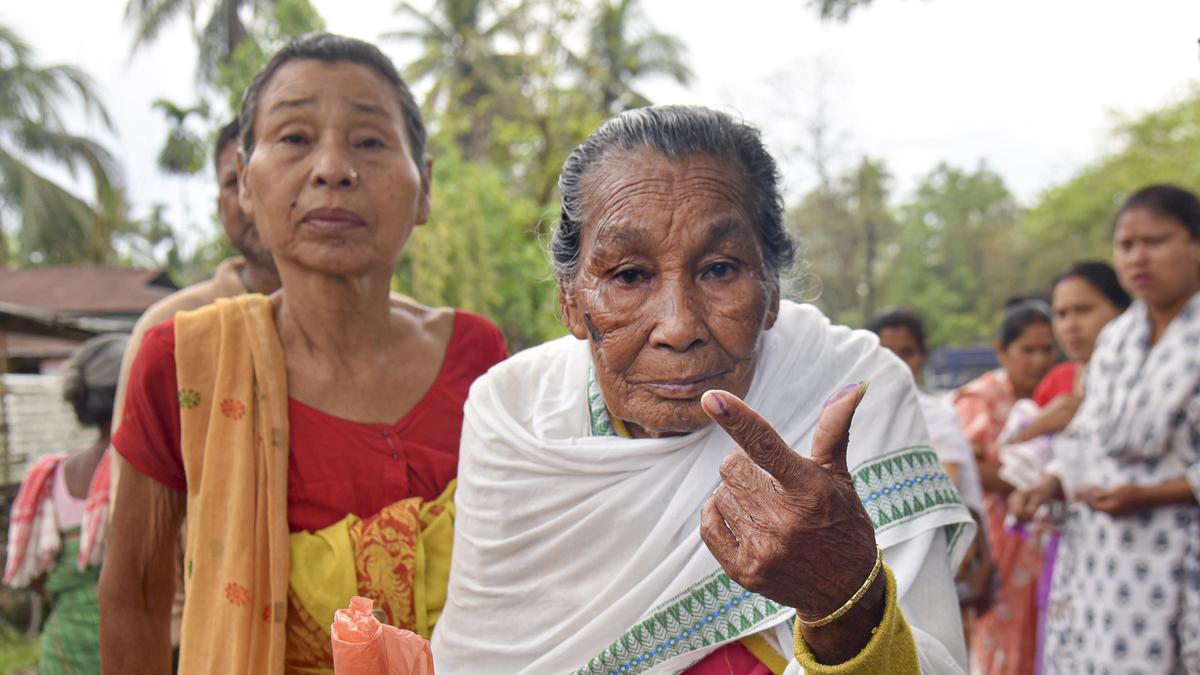
Guwahati, April 10, 2026: In a remarkable display of democratic enthusiasm, the Assam Assembly Elections 2026 have set a new benchmark with an impressive 85.13% voter turnout, creating history in the state’s electoral records. This single-phase polling on April 9, 2026, across all 126 constituencies saw voters braving occasional adverse weather to exercise their franchise, surpassing the previous record of 82.04% registered in the 2021 Assam Legislative Assembly polls.
The Election Commission of India (ECI) data released by evening highlighted the massive public participation, with expectations that the final figure could edge closer to 90% once all pending reports are incorporated. This surge in voter turnout in Assam Assembly Elections 2026 underscores the growing political awareness and commitment of the people towards shaping the future of the state.
Chief Electoral Officer Anurag Goel praised the voters for their enthusiastic involvement, stating that the high turnout reflects the success of the Election Commission’s efforts to ensure inclusive and transparent polling. He extended gratitude to all citizens for making the “festival of democracy” a grand success despite challenges like scattered EVM glitches and minor allegations of irregularities.
Highest and Lowest Voter Turnout in Assam Polling 2026
The constituency-wise variations in polling percentage painted an interesting picture of voter engagement:
- Dalgaon Assembly Constituency recorded the highest voter turnout at 94.57%, reflecting exceptional participation in this area.
- Amri Assembly Constituency saw the lowest at 70.48% (or approximately 70.40% as per some updates).
In the Kamrup Metropolitan district, which includes parts of Guwahati, the turnout figures were as follows:
- Dispur: 73.98%
- Dimoria: 80.52%
- New Guwahati: 71.27%
- Middle Guwahati: 75.23%
- Jalukbari: 80.83%
These numbers indicate that while rural and semi-urban areas showed stronger enthusiasm, urban pockets in Guwahati had relatively moderate participation. Rural belts across Assam generally outshone urban centres in terms of voter turnout during the Assam Assembly Elections 2026.
This pattern aligns with broader trends observed in previous elections, where grassroots-level mobilization often drives higher percentages in non-urban constituencies.
Key Facts and Figures of Assam Vidhan Sabha Election 2026
The 2026 Assam polls were significant for several reasons:
- Total Voters: 2,50,54,463 (approximately 2.505 crore)
- Male voters: 1,25,31,552
- Female voters: 1,25,22,593
- Third gender voters: 318
- Polling Stations: 31,490 across 35 districts
- Candidates in Fray: 722 contesting for 126 seats
- Special Booths:
- Model polling stations: 126
- Women-managed polling stations: 4,021
- Differently-abled managed polling stations: 15
This was the first election after the recent delimitation exercise, conducted in a single phase. The redrawing of boundaries has altered the political landscape, particularly affecting the distribution of certain voter demographics.
Voting commenced at 7:00 AM and concluded at 5:00 PM smoothly in most places. Voters stood in long queues, demonstrating patience and civic responsibility even under overcast skies and occasional rain.
Peaceful Polling Amid Minor Incidents
The Election Commission and state authorities had made elaborate arrangements for a free, fair, and secure polling process. Over two lakh civil staff and police personnel, along with Central Armed Police Forces (CAPF), were deployed to maintain law and order.
While some isolated incidents were reported — including EVM malfunctions in a few booths and stray allegations of rigging — the overall environment remained peaceful and orderly. Chief Electoral Officer Anurag Goel confirmed that the voting process was conducted in a disciplined manner, with swift replacements for faulty EVMs where required.
Special provisions were made for senior citizens, persons with disabilities (PwD), and other vulnerable groups to ensure maximum accessibility. Webcasting of sensitive booths and real-time monitoring helped enhance transparency.
The Assam Assembly Elections 2026 also witnessed innovative measures such as a large number of women-led polling stations, promoting gender inclusivity in the electoral machinery.
Historical Context: Comparison with Previous Assam Elections
The 85.13% turnout in 2026 marks a significant improvement over the 82.04% recorded in 2021, when the BJP-led NDA retained power by winning 75 seats. Earlier elections had seen varying participation levels, but the consistent upward trend reflects maturing democratic participation in Assam.
Factors contributing to the high turnout may include:
- Intense campaigning by major political parties
- Heightened public interest in key issues like development, infrastructure, education, healthcare, and regional aspirations
- Effective voter awareness campaigns by the Election Commission
- Increased youth and women participation
The presence of 722 candidates, including heavyweights from BJP, Congress, AIUDF, AGP, BPF, Raijor Dal, and others, made the contest multifaceted in many seats.
What the High Turnout Indicates for Assam Politics
A voter turnout exceeding 85% is often interpreted as a sign of strong democratic vibrancy. In the context of Assam Assembly Elections 2026, it could signal:
- High stakes: Voters perceive the election as crucial for the state’s future direction.
- Pro or anti-incumbency: Analysts will closely study whether the surge reflects satisfaction with the ruling dispensation or a desire for change.
- Youth and women empowerment: With a growing Gen Z voter base, their active participation could influence outcomes.
- Regional dynamics: Higher rural turnout may highlight priorities of agrarian and tea garden communities.
Political observers note that while final results on May 4 will reveal the verdict, the record participation itself strengthens the legitimacy of the democratic process.
Detailed Breakdown of Voting Process and Arrangements
Polling stations opened promptly at 7 AM. Voters were seen carrying voter slips, EPIC cards, and other identity proofs. Queue management was efficient in most booths, with priority given to elderly, pregnant women, and PwD voters.
The Election Commission had set up help desks, drinking water facilities, and shaded waiting areas at many locations. Braille-enabled EVMs and ramps ensured accessibility for differently-abled citizens.
In urban areas like Guwahati, traffic management around polling booths helped minimize disruptions. In remote and hilly regions, security personnel accompanied polling parties to ensure smooth operations.
Minor technical issues with EVM-VVPAT machines were reported in scattered locations, but officials claimed these were resolved quickly without significantly impacting the process.
Role of Election Commission and Security Forces
The Chief Electoral Officer’s office, under Anurag Goel, worked tirelessly in coordination with district administrations. Pre-poll preparations included extensive training for polling personnel, vulnerability mapping of booths, and deployment of adequate forces in sensitive areas.
The commitment to neutrality and transparency was evident through measures like:
- Randomization of polling staff
- CCTV and webcasting at vulnerable stations
- Strict enforcement of Model Code of Conduct
- Prompt action on complaints
State police and CAPF ensured that no major untoward incident marred the day, allowing voters to cast their ballots without fear.
Looking Ahead: Vote Counting on May 4, 2026
All eyes are now on the vote counting scheduled for May 4, 2026. The fate of 722 candidates, including prominent leaders, remains sealed in the EVMs. The results are expected to be declared on the same day or shortly after.
The high turnout has already sparked discussions on potential trends. Will the ruling BJP-led alliance secure a third term? Can the Congress-led opposition mount a strong comeback? How will smaller parties and independents perform?
These questions will be answered post-counting. Until then, the record 85.13% voter turnout in Assam Assembly Elections 2026 stands as a testament to the people’s faith in the democratic system.
Why This High Participation Matters for Assam’s Future
Beyond numbers, the enthusiastic voting in Assam Vidhan Sabha Election 2026 reflects deeper societal engagement. Issues such as flood management, border security, economic development, employment opportunities for youth, women’s safety, and preservation of cultural identity dominated public discourse during the campaign.
A higher turnout often correlates with greater accountability from elected representatives. It sends a clear message that voters are vigilant and expect tangible progress on ground-level issues.
Moreover, the peaceful conduct of polls despite political polarization highlights the maturity of Assam’s electorate.
Constituency-Wise Insights and Guwahati Focus
In the capital region, the moderate turnout in constituencies like Dispur, New Guwahati, and Middle Guwahati compared to higher figures in Dimoria and Jalukbari indicates varying levels of urban mobilization. Factors like traffic, work schedules, and perceived ease of voting might have played a role.
Dalgaon’s exceptional 94.57% turnout could be attributed to strong local leadership, community mobilization, or intense competition among candidates.
Amri’s lower figure warrants analysis — possibly due to geographical challenges, lower voter awareness, or other local factors.
Such variations provide valuable data for future electoral reforms and targeted voter education drives.
Election Commission’s Special Initiatives
To boost inclusivity, the ECI and state CEO office undertook several measures:
- Extensive SVEEP (Systematic Voters’ Education and Electoral Participation) campaigns
- Focus on first-time voters and youth
- Collaboration with NGOs and educational institutions
- Use of social media and local languages for awareness
These efforts seem to have paid dividends, as evidenced by the record numbers.
Conclusion: A Proud Moment for Assam Democracy
The Assam Assembly Elections 2026 will be remembered not just for the political battles but for the unprecedented voter turnout of 85.13%. This achievement belongs to every voter who stood in line, every polling official who worked diligently, and every security personnel who ensured safety.
As the state awaits the results on May 4, the high participation has already reinforced Assam’s reputation as a vibrant democracy. It sets a positive precedent for future elections and highlights the power of informed and engaged citizenship.
The coming days will see intense analysis, exit poll interpretations (where permitted), and political maneuvering. But one thing is certain: the voice of the people has been loudly expressed through the ballot.
For live updates, constituency-wise trends, candidate profiles, and detailed result analysis on May 4, stay tuned to our news website. We bring you comprehensive, unbiased coverage of Assam politics and beyond.