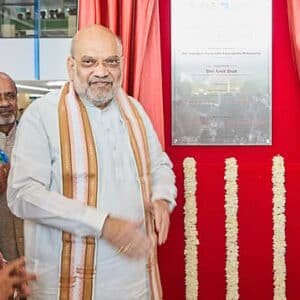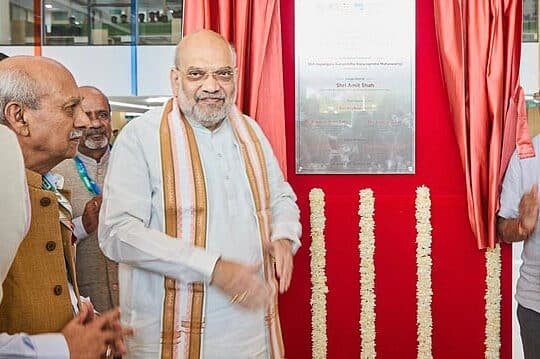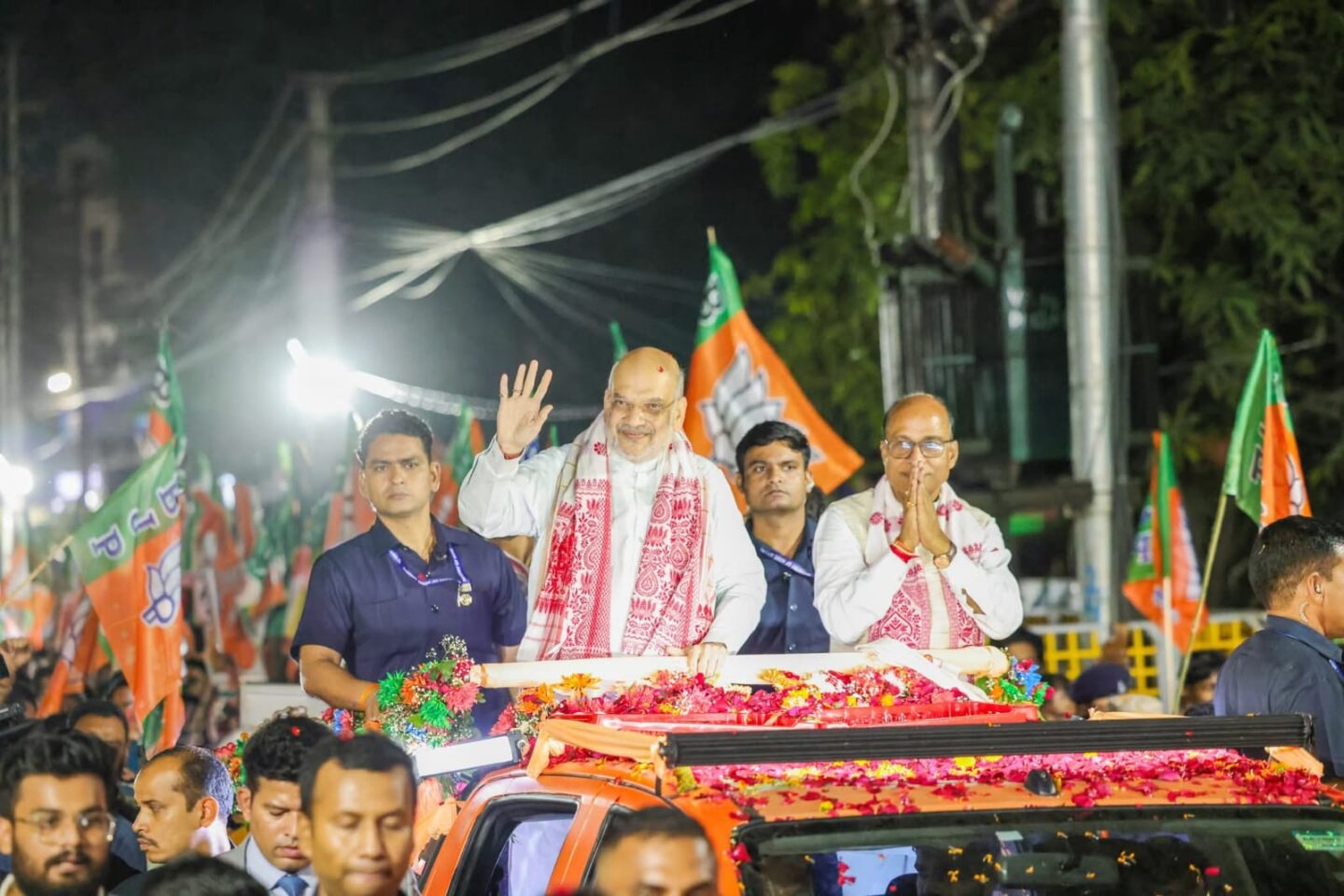
The political landscape of Northeast India is once again heating up as the countdown to the state assembly elections begins. In a high-voltage declaration that has set the tone for the upcoming polls, Union Home Minister and senior Bharatiya Janata Party (BJP) leader Amit Shah has made a bold prediction: the National Democratic Alliance (NDA) is not just returning to power in Assam—it is set to do so with a historic mandate. Speaking during a roadshow in Guwahati on Saturday, Mr. Shah asserted that the alliance would secure more than 90 seats in the 126-member assembly, signaling a significant leap from its previous performances.
For readers following the Assam Assembly election closely, this announcement marks the official start of what promises to be a fiercely contested battle. With the NDA aiming for a third straight term, the stakes are higher than ever. This article dives deep into Amit Shah’s campaign promises, the strategic seat-sharing among allies, the peace dividends claimed by the government, and what this means for the future of India’s gateway to the Northeast.
The Bold Claim: Why Amit Shah is Confident About 90+ Seats
Amit Shah’s confidence is not merely rhetorical; it is rooted in the political arithmetic and governance record of the state. During his address to journalists in Guwahati, the Home Minister stated unequivocally that “the wind is blowing in favour of the NDA in Assam.” He attributed this momentum to what he described as a “double-engine government”—a term used to denote the synergy between the BJP-led government at the Centre and the state administration led by Chief Minister Himanta Biswa Sarma.
Breaking Down the Numbers
The NDA is contesting all 126 constituencies. The seat-sharing arrangement reflects a strategic consolidation of regional allies:
- BJP: Fielding candidates in 90 seats.
- Asom Gana Parishad (AGP): Contesting 26 seats.
- Bodoland People’s Front (BPF): Fielding candidates in 11 seats.
Interestingly, there is a friendly contest in the Sibsagar seat between the BJP and AGP, a move that highlights the maturity of the alliance, allowing friendly competition where both partners have strong grassroots presence.
To understand the significance of the “90-seat” target, one must look at history. In 2021, the BJP-led alliance won 75 seats. In its breakthrough election of 2016, it secured 84 seats. Crossing the 90-seat threshold would not only solidify the NDA’s dominance but also surpass the performance of previous Congress governments, marking a new era of political stability in the region.
The Peace Dividend: A State Free from Insurgency
One of the central pillars of Amit Shah’s campaign narrative is the restoration of peace in Assam. For decades, the state was synonymous with insurgency, bandhs (strikes), and ethnic violence. However, speaking to the crowd during the roadshow for BJP’s Guwahati Central candidate Vijay Kumar Gupta, Mr. Shah emphasized that the narrative has shifted.
“Assam has seen a lot of changes. Peace agreements have been signed with all extremist groups. Today, there is no insurgency or extremism in the State, and the law-and-order situation is satisfactory,” Shah stated.
The Bodo Accord and Beyond
This claim carries significant weight in the context of the Assam Assembly election. The signing of the historic Bodo Peace Accord (Third Bodo Accord) in 2020 was a landmark achievement. It ended a five-decade-long insurgency in the Bodoland Territorial Region (BTR), leading to the surrender of over 1,600 militants and the recovery of massive caches of arms.
For voters in the Bodoland Territorial Council areas, where the BPF is an ally, this peace translates into tangible development—roads being built, schools reopening, and businesses thriving without the fear of extortion. Amit Shah’s message is clear: voting for the NDA ensures that this hard-earned peace is preserved.
Infrastructure and Economy: The Semiconductor Push
While peace and order are crucial, Amit Shah also addressed the economic aspirations of the state. He linked the pro-NDA sentiments to the infrastructure push by Prime Minister Narendra Modi, specifically mentioning a major development that positions Assam as a hub for high-tech industry.
“A semiconductor unit and other industries are coming up in Assam,” Shah said.
This is a reference to the ambitious plan to set up India’s first semiconductor packaging plant in the Northeast, located in Jagiroad, Morigaon district. For a state traditionally reliant on agriculture and tea gardens, the arrival of a semiconductor unit represents a paradigm shift. It promises to create thousands of jobs, attract ancillary industries, and transform Assam from a “landlocked” state into a critical node in India’s electronics manufacturing supply chain.
In the context of the Assam Assembly election, this economic argument is aimed at the youth and the urban middle class—voters who are looking beyond identity politics and seeking employment opportunities and industrial growth.
Campaign Trail Strategy: High-Profile Rallies
Amit Shah’s current visit is part of a meticulously planned campaign strategy. After his roadshow in Guwahati, he is scheduled to campaign for two incumbent Ministers on Sunday, March 29, 2026.
- Ashok Singhal: Campaigning in Dhekiajuli constituency (north-central Assam).
- Chandra Mohan Patowary: Campaigning in Tihu constituency (western Assam).
Both are heavyweights in the Sarma cabinet. By focusing on individual constituencies, Shah is signaling that the party is leaving nothing to chance. Furthermore, he is expected to return to Assam for another round of campaigning in April, indicating that the BJP is treating this election as a prestige battle.
The “Himanta Biswa Sarma” Factor
A recurring theme in Shah’s speech was the performance of Chief Minister Himanta Biswa Sarma. Once a Congress stalwart, Sarma has been instrumental in expanding the BJP’s footprint in the Northeast. His aggressive governance style, focus on infrastructure, and ability to manage complex ethnic equations have made him a formidable force.
Shah’s assertion that the alliance would “reap the dividends of the performance by the government led by Chief Minister Himanta Biswa Sarma” underscores the central role Sarma plays in the campaign. The party is effectively running a dual leadership campaign—projecting Modi at the Centre and Sarma as the face of stability and development in the state.
Analyzing the Opposition’s Challenge
While Amit Shah’s confidence is palpable, the Assam Assembly election is never a one-sided affair. The opposition Congress, led by its state unit, is attempting to stitch together a coalition of minority communities, indigenous groups, and those feeling left out by the BJP’s aggressive Hindutva and citizenship policies.
The Citizenship Amendment Act (CAA) Factor
Although Shah did not mention the CAA in this specific address, it remains a critical issue in Assam. The implementation of the CAA, which grants citizenship to non-Muslim migrants from neighboring countries, has been a contentious topic since 2019. While the BJP views it as a humanitarian issue, opposition parties argue it threatens the indigenous fabric of Assam.
In response, the NDA is relying on the “peace and development” narrative to overshadow these concerns. By emphasizing the signing of accords with extremist groups and the economic boom, the BJP hopes to consolidate the votes of the upper castes, OBCs, and a significant section of the tea tribe communities, who have historically been loyal to the party since 2016.
What a Third Straight Term Means for India
The outcome of the Assam Assembly election will have repercussions far beyond the state’s borders. For the BJP, Assam is the gateway to the Northeast—a region the party has prioritized to expand its national footprint. A third straight term would:
- Stabilize the Northeast: It would send a signal that the BJP’s “Act East Policy” is irreversible, bringing connectivity, trade, and tourism to the region.
- Strengthen the NDA’s National Position: Winning Assam with a higher margin would offset potential losses in other parts of the country, reinforcing the narrative of Modi’s popularity in non-Hindi heartland states.
- Ensure Policy Continuity: Key infrastructure projects, including the semiconductor plant, the expansion of the Brahmaputra riverfront, and the ongoing peace processes with remaining fringe groups, would continue uninterrupted.
Frequently Asked Questions (FAQ)
1. How many seats did the BJP-led NDA win in the last Assam Assembly election?
In the 2021 Assam Assembly election, the BJP-led NDA won 75 seats. This included the BJP’s individual tally of 60 seats, along with its allies the AGP and UPPL. This was a decrease from the 84 seats the alliance won in 2016.
2. What are the key promises being made by Amit Shah for Assam?
Amit Shah is focusing on two main promises: sustained peace (claiming an end to insurgency through signed accords) and economic development (highlighting new industries like the semiconductor unit and infrastructure growth). He is also promising a stable, “double-engine” government for a third straight term.
3. Who are the main allies of the BJP in the Assam Assembly election?
The BJP is contesting the election as part of the National Democratic Alliance (NDA). Their key allies are the Asom Gana Parishad (AGP) , contesting 26 seats, and the Bodoland People’s Front (BPF) , contesting 11 seats. There will be a friendly contest between the BJP and AGP in the Sibsagar constituency.
4. When will the Assam Assembly election be held?
While the exact dates have not been announced by the Election Commission of India as of this report, the election is scheduled to be held in 2026. Based on Amit Shah’s campaign schedule, political analysts expect the polling to take place in the months following the current campaign blitz in March and April.
5. How has the law and order situation changed in Assam according to the government?
According to Union Home Minister Amit Shah, Assam has been transformed from a state riddled with insurgency to a peaceful region. He stated that peace agreements have been signed with all extremist groups, leading to a “satisfactory” law-and-order situation, with no active insurgency or extremism reported by the government.
Conclusion: A High-Stakes Battle for the Northeast
As Union Home Minister Amit Shah intensifies his campaign across the state, it is evident that the Assam Assembly election is shaping up to be a referendum on the governance model of Himanta Biswa Sarma. Shah’s target of 90+ seats is ambitious, but it is backed by a narrative of peace, development, and political stability.
For voters in Assam, the choice appears to be between continuing with the current administration that promises industrial growth and ethnic peace, or pivoting towards an opposition that is banking on discontent over issues like the CAA and inflation. With Shah’s return to the state planned for April, the political temperature is set to rise further.
What’s Next?
Stay tuned for detailed constituency-wise analysis and ground reports. If you are a voter in Assam, ensure you check your name in the electoral roll and understand the candidates’ profiles in your constituency. For the latest updates on the election schedule, candidate lists, and campaign developments, keep following Asom Barta for in-depth national and regional political coverage.