Iran Missile Attack on Diego Garcia Failed: UK Condemns ‘Reckless’ Strike on US-UK Base in Indian Ocean – Latest Updates 2026
The escalating conflict in the Middle East has taken a dramatic turn with reports of Iran launching ballistic missiles at the strategic joint US-UK military base on Diego Garcia in the Indian Ocean. The UK Ministry of Defence (MoD) has condemned the move as “reckless attacks” and part of Tehran’s pattern of “lashing out across the region,” while confirming the attempted strike was unsuccessful. This development, reported by major outlets including the Wall Street Journal, BBC, Reuters, and others on March 20-21, 2026, marks a significant escalation, pushing the ongoing Iran-US-Israel war beyond the Gulf region for the first time.
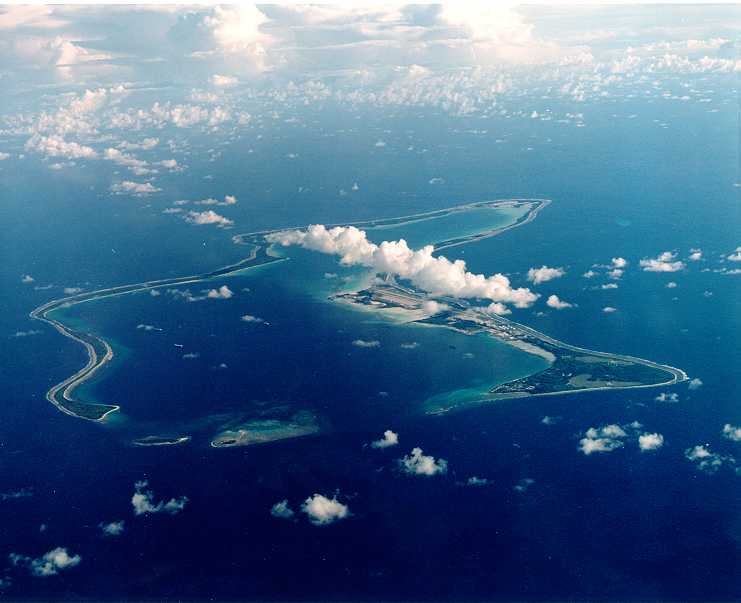
Diego Garcia, a remote atoll in the British Indian Ocean Territory (Chagos Islands), serves as a critical hub for US long-range bombers, naval operations, and logistical support in the Indo-Pacific and Indian Ocean theaters. The base’s location—approximately 3,800–4,000 km (about 2,350–2,500 miles) from Iran’s mainland—has raised immediate questions about the true capabilities of Iran’s ballistic missile arsenal, which Tehran has long claimed is limited to around 2,000 km.
Failed Missile Strike on Diego Garcia: What We Know
According to multiple US officials cited by the Wall Street Journal, Iran fired two intermediate-range ballistic missiles (IRBMs) toward Diego Garcia. Neither reached the target:
- One missile malfunctioned and failed during flight.
- The other was engaged by a US Navy warship using an SM-3 interceptor missile, though it’s unclear if the interception fully succeeded in destroying it.
The exact timing of the launch remains unspecified in initial reports, but UK sources indicate it occurred before London’s agreement on March 20, 2026, to allow limited US use of British bases—including Diego Garcia and RAF Fairford—for defensive operations against Iranian threats in the Strait of Hormuz.
The UK MoD issued a strong statement: “Iran’s reckless attacks, lashing out across the region and holding hostage the Strait of Hormuz, are a threat to British interests and British allies.” The US military has declined to comment officially, while Iran has not publicly confirmed or denied the strike in detail, though state media and proxies have highlighted retaliatory actions elsewhere.
This marks the first reported Iranian attempt to target assets outside the Middle East, signaling a potential shift in Tehran’s strategy amid heavy losses.
Doubts Over Iran’s Missile Range: Khorramshahr and Beyond
A key point of analysis is whether Iran possesses missiles capable of reaching Diego Garcia. Publicly, Tehran has maintained that its ballistic missiles, such as the Sejjil, Emad, Ghadr, and Khorramshahr series, have ranges capped at around 2,000 km—deliberately limited to avoid escalation with Europe or farther targets.
However, the attempted strike on Diego Garcia—at roughly double that distance—suggests otherwise. Military analysts point to the Khorramshahr-4 (or similar variants) as a likely candidate. Some assessments, including from Israel’s Alma Research and Education Center, estimate the Khorramshahr’s potential range at up to 3,000 km or more under certain configurations, with unverified claims reaching 4,000 km if lighter payloads are used.
This revelation has alarmed observers: If confirmed, it implies Iran has undeclared advancements in its missile program, potentially putting distant US allies or even parts of Europe in theoretical range. The failed nature of the attack—due to technical failure and interception—highlights vulnerabilities but also demonstrates intent to project power far afield.
Context: The Broader Iran-US-Israel War Timeline
The Diego Garcia incident did not occur in isolation. The current phase of the conflict traces back to late February 2026, when US-Israeli strikes targeted Iranian sites, reportedly killing Supreme Leader Ayatollah Ali Khamenei and other high-ranking officials. This triggered a cycle of retaliation, including Iranian missile and drone barrages across the region.
A major turning point came on March 18, 2026, with an Israeli strike on Iran’s South Pars gas field—the world’s largest natural gas reserve, shared with Qatar. The attack disrupted Iranian production, halting gas exports to Iraq and affecting domestic supply. Iran responded swiftly by targeting Qatar’s Ras Laffan LNG facility (on the same field), causing significant damage and sending global energy prices soaring.
US President Donald Trump intervened publicly, assuring that Israel would hold off further strikes on South Pars while warning Iran against continued attacks on Gulf energy infrastructure. Trump stated on social media that any escalation could lead to the US “massively blowing up” the field. Despite this, Iranian reprisals continued, including claims of downing advanced US aircraft.
The Diego Garcia attempt appears tied to this tit-for-tat dynamic, especially as the UK permitted US use of British bases for Hormuz-related defensive actions—potentially prompting Tehran to view Diego Garcia as a “prime target” for deterrence.
Strategic Importance of Diego Garcia in the Conflict
Diego Garcia has long been a linchpin for Western military projection in the region. It hosts B-52 bombers, refueling aircraft, and submarine facilities, enabling rapid response across vast distances. In the current war, it supports operations monitoring Iranian naval activity in the Indian Ocean and provides staging for potential strikes.
An attack here, even unsuccessful, represents a symbolic blow—showing Iran’s willingness to strike deep into allied territory. Military analysts describe it as a “worrying development” for the UK, with one expert noting it as not surprising given Diego Garcia‘s role in supporting US-UK interests against threats in the Strait of Hormuz.
The base’s isolation offers defensive advantages, but the incident underscores evolving threats from long-range missiles.
Implications for Global Security and Energy Markets
This escalation has ripple effects:
- Energy Prices: Attacks on South Pars and Ras Laffan already spiked oil and gas prices. Further disruptions in the Strait of Hormuz—through which 20% of global oil passes—could worsen inflation worldwide.
- Regional Stability: Iran’s actions risk drawing in more actors, including Gulf states and possibly broader NATO involvement.
- Missile Proliferation: Confirmation of extended ranges could accelerate international efforts to curb Iran’s program.
The UK and US emphasize defensive postures, but the cycle of retaliation shows no immediate de-escalation.
Conclusion: A New Phase in an Unpredictable War
The failed missile attack on Diego Garcia highlights how quickly the Iran-US-Israel conflict has expanded geographically and in intensity. From the killing of Ayatollah Khamenei in February to strikes on critical energy infrastructure and now long-range attempts on distant bases, the war has entered uncharted territory.
As global powers monitor developments, the focus remains on preventing further escalation while addressing Iran’s demonstrated (and potentially undeclared) capabilities. For now, Diego Garcia stands resilient, but the attempt serves as a stark reminder of the conflict’s widening scope.