Holi 2026: Ultimate Guide to the Festival of Colours – Dates, Celebrations in Guwahati, Assam Traditions, Significance, and Top Events
Holi, the exuberant Festival of Colours, is set to light up India and the world in 2026 with its signature burst of joy, unity, and vibrant hues. As spring arrives, this beloved Hindu festival celebrates the victory of good over evil, the divine love of Radha and Krishna, and the renewal of nature. In 2026, amid a lunar eclipse influencing some regional timings, Holi promises unforgettable moments—especially in vibrant hubs like Guwahati, Assam, where traditional devotion meets modern carnival energy.
With millions gearing up for color throws, bonfires, music, dance, and delicious sweets, Holi 2026 stands out as a cultural extravaganza. This comprehensive guide covers everything you need: exact dates, deep mythological roots, how it’s celebrated across India (with a special focus on Assam and Guwahati), top events, safety tips, eco-friendly practices, and why Holi remains a timeless symbol of harmony.
When is Holi 2026? Dates, Timings, and Lunar Eclipse Impact
Holi 2026 falls on the Phalguna Purnima (full moon) in the Hindu lunar calendar, typically landing in March. This year, due to astronomical alignments including a lunar eclipse on March 3 (from approximately 3:21 PM to 6:46 PM IST in many regions), some confusion arose about dates. However, reliable sources like Drik Panchang and pan-India calendars confirm:
- Holika Dahan (Chhoti Holi): Tuesday, March 3, 2026 (evening). Muhurat in Guwahati: 05:25 PM to 07:53 PM (local timings may vary slightly; perform after eclipse ends where applicable).
- Rangwali Holi / Dhulandi (Main Color Play Day): Wednesday, March 4, 2026.
In most parts of India, including Assam and Guwahati, Holika Dahan occurs on March 3 evening (post-eclipse in affected areas), followed by the joyous color festivities on March 4. Some northern or western states may shift slightly due to tithi endings or eclipse sutak, but Assam follows the standard March 3-4 schedule. Mark your calendars—Holi 2026 is just days away (as of late February 2026)!
This two-day structure is universal: the eve burns away negativity via bonfire, while the next day drowns differences in colors.
Mythological Origins and Deep Significance of Holi
Holi’s essence lies in ancient tales from Hindu scriptures like the Puranas and Bhagavata.
The primary legend is Prahlad and Holika: Demon king Hiranyakashipu, blessed with near-immortality, forbade Vishnu worship and demanded god-like reverence. His son Prahlad’s unwavering devotion to Vishnu infuriated him. Holika, Hiranyakashipu’s sister (immune to fire), was tasked to carry Prahlad into flames. Divine intervention saved Prahlad; Holika burned instead. Holika Dahan bonfires symbolize this triumph of faith, truth, and righteousness over tyranny and ego.
The second beloved story revolves around Lord Krishna and Radha in Braj (Mathura-Vrindavan). Playful Krishna, teased about his dark skin contrasting fair Radha, smeared her with colors. This sparked the playful color-throwing tradition, representing love transcending barriers, forgiveness, and equality.
Holi also marks seasonal change: bidding farewell to winter’s chill and welcoming spring’s fertility, blooming flowers, and harvest hopes. It’s a time for renewal—forgiving grudges, mending relationships, and embracing unity.
How Holi is Celebrated Across India – Traditions and Rituals
Holi festivities vary regionally but share core elements:
- Holika Dahan Eve: Communities build bonfires with cow dung cakes, wood, and Holika effigies. Prayers, bhajans, and circumambulation occur as flames rise, symbolizing evil’s destruction. In some areas, people toss grains or coconuts into the fire for prosperity.
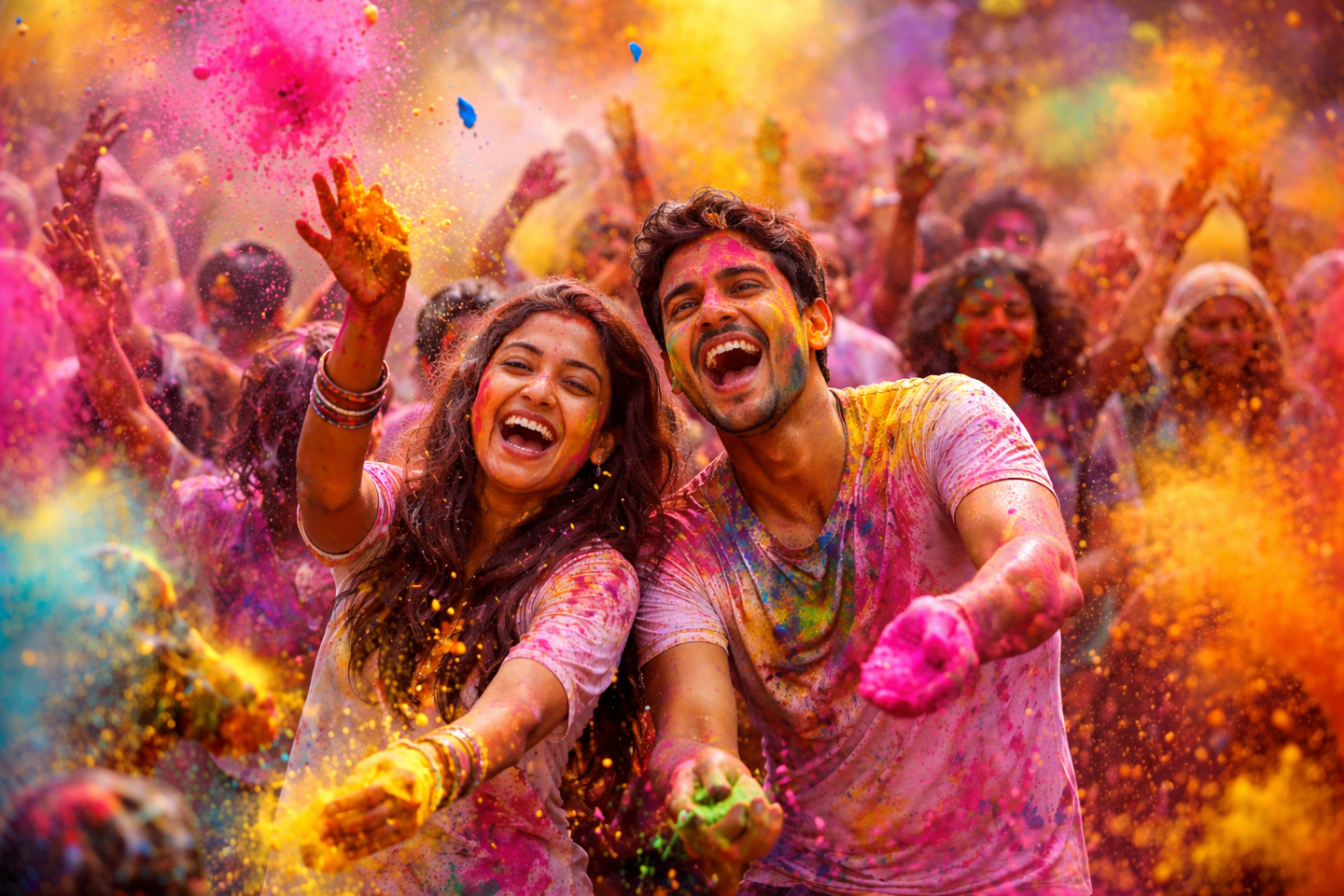
- Rangwali Holi / Dhulandi: The main day explodes with colors! People apply gulal (dry powder), splash colored water via pichkari, and drench one another. Streets become battlegrounds of joy—red for passion, blue for Krishna, green for nature. Music blares from dhols, people dance in groups, and playful teasing fills the air.
- Music, Dance, and Folk Performances: Holi geet (songs), raas leela enactments, and processions keep energy high. In rural areas, Lathmar Holi (playful stick-fighting in Barsana) or Holi Milan gatherings thrive.
- Food Delicacies: Indulge in gujiya (sweet dumplings with khoya, nuts), thandai (spiced milk drink, sometimes with bhang), malpua, dahi vada, papri chaat, and puran poli. These treats sweeten bonds.
- Social Message: Hierarchies vanish—rich and poor, young and old embrace. It’s forgiveness day; people say “Bura na mano, Holi hai!” (Don’t mind, it’s Holi!).
Special Focus: Holi in Assam – Phagwah, Doul Jatra, and Guwahati Vibes
In Assam, Holi is warmly called Phagwah, Doul Jatra, or Basanta Utsav, blending Vaishnavite devotion (thanks to saint Srimanta Sankardev) with local fervor. Celebrations often extend 3-5 days, emphasizing bhakti, community, and music.
- Barpeta’s Doul Mahotsav features grand processions, borgeet (devotional songs), and rituals at satras (monasteries).
- Guwahati, Assam’s bustling capital, fuses tradition with contemporary fun. Modern carnivals draw thousands with rain dances, DJs, organic colors, family zones, and massive color throws.
Top Holi 2026 events in Guwahati include:
- Rang Barse 2026 at Vivanta Guwahati (March 3-4, 11 AM–10 PM): Northeast’s biggest carnival—nonstop DJs, live dhol, organic colors, food stalls, selfie zones, VIP areas, and family-friendly vibes. Expect 5000+ attendees in association with local media.
- Colourland 2026 at Residency Tourist Resort (March 4): Celebrating its 10th edition as Guwahati’s oldest and biggest Holi party—20+ DJs, live dhol, 360° booths, organic colors, and nonstop energy.
- Color District – Holi 2026 at The Greenwood Resort: Premium two-day immersive event with music, culture, food, and youth-focused fun.
- Other highlights: Phoolon Ki Holi-style events at hotels like Vishwaratna, kids’ special Holi at venues like 11 July Kitchen, and pre-Holi warm-ups with rain dance and DJs.
These events make Guwahati a Holi hotspot, blending Assam’s devotional roots with high-energy modern twists.
Modern Holi: Global Reach, Eco-Friendly Trends, and Safety Tips
Holi has gone global—celebrations in New York, London, Sydney feature color runs and vegetarian feasts. In India, eco-conscious shifts dominate: switch to natural, herbal gulal (made from flowers, turmeric, beetroot) to avoid skin issues and pollution from chemical colors.
Safety reminders:
- Use skin-safe, eye-protective colors.
- Avoid excessive bhang in thandai.
- Stay hydrated; wear old clothes.
- Respect consent—no forced coloring.
- Clean up post-festival to protect environment.
Why Holi 2026 Will Be Unforgettable
As colors wash away differences, Holi 2026 reinforces timeless values: joy triumphs over sorrow, love over hate, unity over division. In Guwahati and beyond, it’s a reminder to embrace life’s vibrant spectrum.
Whether joining a neighborhood bonfire, dancing at Rang Barse, or playing safely with family, let Holi fill your heart with happiness.
Holi Hai! Wishing you a colorful, safe, and joyous Holi 2026. 🌈✨