Prime Minister Narendra Modi Inaugurates Northeast’s First Emergency Landing Facility (ELF) in Moran, Assam: A Historic Boost to Defence and Infrastructure
On February 14, 2026, Prime Minister Narendra Modi marked a landmark moment in India’s strategic infrastructure by inaugurating the Northeast’s first Emergency Landing Facility (ELF) at the Moran Bypass in Dibrugarh district, Assam. The event, which saw the Prime Minister personally landing aboard an Indian Air Force C-130J Super Hercules aircraft on the reinforced highway stretch, has been hailed as historic for Assam, the Northeastern region, and national security.
This Emergency Landing Facility represents a significant advancement in dual-use infrastructure, blending civilian roadways with military capabilities. Conceptualized in 2021 and completed in 2025 at an approximate cost of ₹99.86 crore (around ₹100 crore), the ELF utilizes a 4.2-kilometer four-lane section of National Highway-37 (NH-37). Engineered in close coordination with the Indian Air Force, the facility is designed to support emergency landings and takeoffs for fighter jets weighing up to 40 tonnes and transport aircraft up to 74 tonnes maximum takeoff weight.
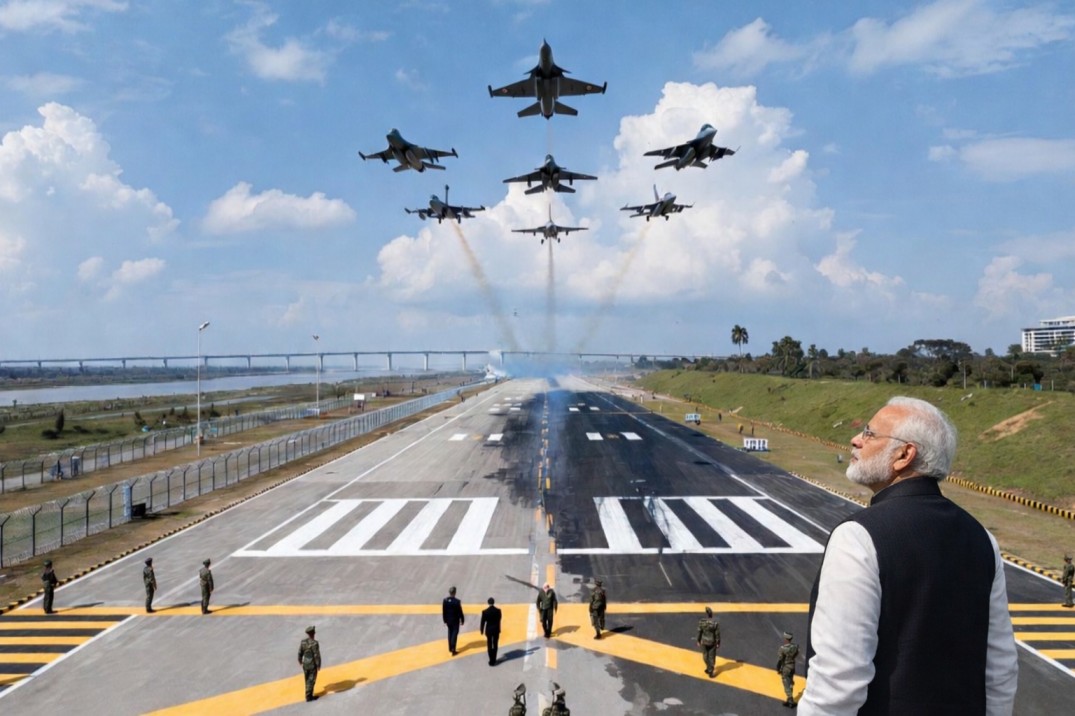
The inauguration unfolded dramatically. Prime Minister Modi arrived at Chabua Air Force Station before transferring to the C-130J Super Hercules for the short flight to Moran. His landing on the highway-turned-runway symbolized the facility’s operational readiness. Post-inauguration, an impressive air show featured 16 Indian Air Force assets, including Sukhoi Su-30MKI and Rafale fighter jets, helicopters, and transport aircraft performing takeoffs, landings, and fly-pasts. The display captivated thousands of onlookers gathered under the sun along the Moran Bypass, underscoring the project’s engineering prowess and strategic value.
Strategic Importance of the Moran ELF
Located in Upper Assam, roughly 180 km from the India-China border, the Emergency Landing Facility in Moran significantly bolsters India’s defence posture in a geopolitically sensitive region. The Northeast, prone to natural disasters like floods and landslides, often faces connectivity disruptions. Traditional airfields can become inoperable during crises, but this highway-based ELF provides an alternative for rapid military deployment, humanitarian aid delivery, and disaster response.
Government officials emphasize its role in enhancing operational flexibility for the Indian Air Force. In wartime or emergency scenarios, it allows quick dispersal of aircraft, reducing vulnerability at fixed bases. The facility also supports civil aviation needs during contingencies, potentially aiding medical evacuations or supply drops in remote areas. This dual-use approach aligns with global practices where highways double as auxiliary runways, ensuring resilience in challenging terrains.
Prime Minister Modi’s presence and personal landing highlighted the project’s national priority. During the event, he dedicated the ELF to the nation, praising it as a step toward strengthening India’s self-reliance in defence infrastructure and rapid response capabilities in the Northeast.
Political Controversy and Reactions
While celebrated by many as a defence milestone, the inauguration ignited sharp political debate in Assam. Opposition leaders criticized the project, questioning its relevance to everyday citizens amid pressing issues like high airfares and living costs.
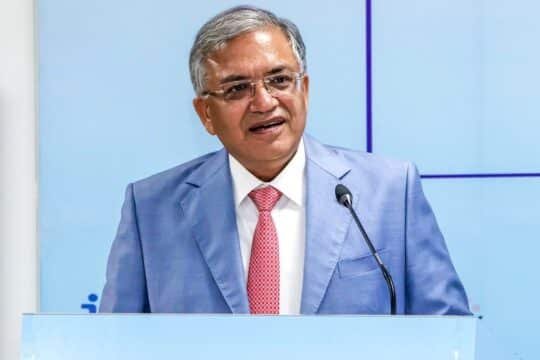
Assam Pradesh Congress Committee President and Jorhat MP Gaurav Gogoi sharply mocked the ELF, arguing it cannot be labeled true development. He pointed to exorbitant flight tickets to Delhi (₹18,000–20,000) and airport tea priced at ₹100–150 as indicators of real public concerns. Gogoi dismissed portraying the Moran road stretch and ELF as development symbols, calling such claims ridiculous and disconnected from ordinary Assamese lives.
Raijor Dal MLA Akhil Gogoi echoed similar sentiments, condemning the event as election-oriented spectacle. He questioned the benefit of “flying a few aircraft on the road” before polls and accused the Prime Minister of using “magic shows” to dazzle voters rather than addressing core issues. Akhil Gogoi suggested that if such displays are needed, they could be viewed from Delhi without burdening Assam.
Chief Minister Dr. Himanta Biswa Sarma launched a strong counterattack, particularly targeting Gaurav Gogoi. He accused the Congress leader of having “no connection with India” and failing to understand national security imperatives. Sarma stated that only representatives of enemy nations would undermine such a vital project. He described the ELF as crucial for India’s security and mocked criticism as an insult to the Assamese people and their pride in regional progress.
The controversy reflects broader political tensions in poll-bound Assam, where development projects often become battlegrounds between ruling BJP and opposition parties. Some voices, including from Assam Jatiya Parishad (AJP), supported the ELF, urging that national security transcend politics.
Broader Context and Implications
The Moran ELF is not isolated; it follows similar facilities like the one in Barmer, Rajasthan (inaugurated in 2021). However, as the first in the Northeast, it addresses unique regional challenges—rugged terrain, frequent disasters, and proximity to international borders.
Locals in Moran expressed pride and amazement, viewing it as an “unimaginable achievement” that puts Assam on the national defence map. The project integrates with ongoing infrastructure pushes in the region, including improved highways, air connectivity, and military modernization.
Critics argue it remains a “prestige project” with limited immediate benefits for common people, who grapple with high travel costs and basic amenities. Supporters counter that strategic investments ensure long-term security and economic stability, indirectly benefiting all.
In his address, Prime Minister Modi likely tied the ELF to broader themes of Atmanirbhar Bharat and Viksit Bharat, emphasizing how such innovations fortify borders while fostering development.
Conclusion
The inauguration of the Emergency Landing Facility in Moran on February 14, 2026, stands as a pivotal achievement in India’s defence and infrastructure landscape. By enabling rapid, reliable operations in a vulnerable region, it enhances national security and disaster resilience. Amid political fireworks, the project’s enduring value lies in safeguarding the Northeast and symbolizing India’s commitment to strategic preparedness.
As Assam gears up for elections, debates over development versus spectacle will continue. Yet, the ELF’s tangible capabilities—proven by fighter jet operations and the Prime Minister’s historic landing—underscore its role in a stronger, more secure India.