Pakistan Boycotts India Match in T20 World Cup 2026: Won’t Play February 15 Clash in Colombo Amid ICC Tensions
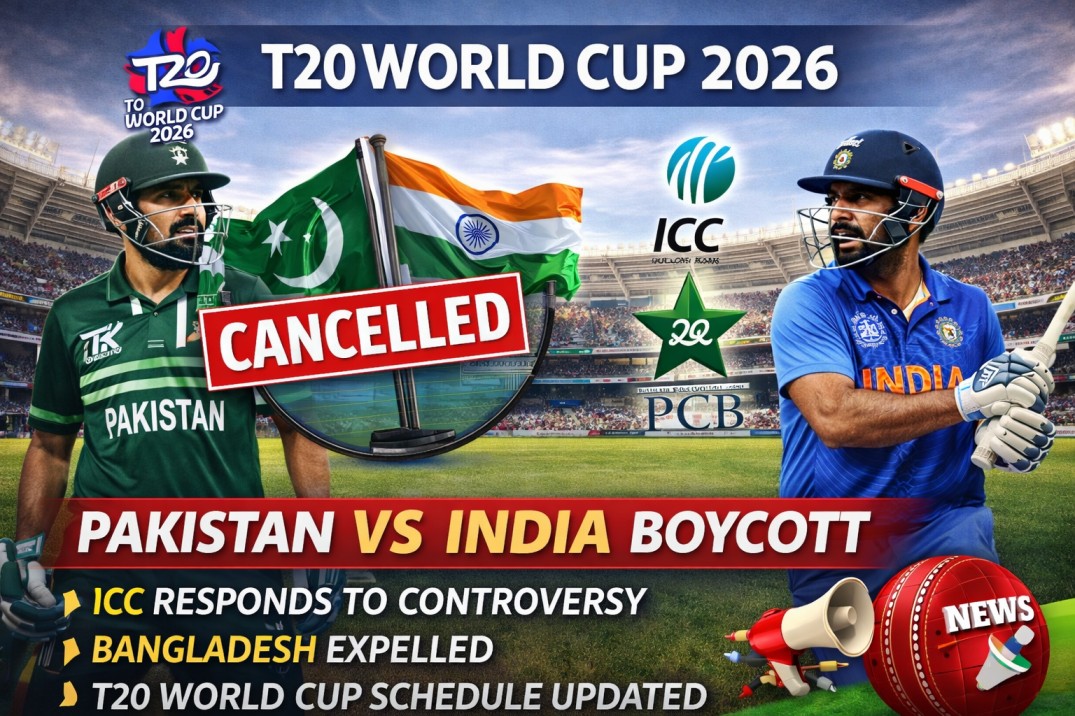
The Pakistan government has officially approved the national cricket team’s participation in the ICC Men’s T20 World Cup 2026, but with a major caveat: Pakistan will boycott their highly anticipated group-stage match against arch-rivals India scheduled for February 15 in Colombo, Sri Lanka. This decision, announced via an official statement on social media, has sent shockwaves through the cricket world just days before the tournament kicks off on February 7.
The statement from the Government of the Islamic Republic of Pakistan reads: “The Government grants approval to the Pakistan Cricket Team to participate in the ICC World T20 2026; however, the Pakistan Cricket Team shall not take the field in the match scheduled on 15th February 2026 against India.” While no explicit reason was provided in the announcement, the move comes amid heightened tensions following the ICC’s expulsion of Bangladesh from the tournament for refusing to play matches in India due to security concerns. Pakistan had vocally supported Bangladesh’s stance and accused the ICC of double standards.
Background of the India-Pakistan Clash at T20 World Cup 2026
The India vs Pakistan fixture has long been cricket’s biggest draw, generating massive global viewership, revenue, and excitement. Under a 2024 agreement between the BCCI and PCB, matches between the two sides at ICC events hosted by either nation are played at neutral venues. For the T20 World Cup 2026, co-hosted by India and Sri Lanka, all Pakistan matches—including the Group A encounter with India—are set in Sri Lanka to adhere to this protocol.
The match is slated for the iconic R. Premadasa Stadium in Colombo on February 15 (evening local time). Pakistan, placed in Group A alongside India, Namibia, Netherlands, and the USA, will play their other group games in Sri Lanka. Their tournament opener is against the Netherlands on February 7 at the Sinhalese Sports Club in Colombo.
Fans from both nations had eagerly awaited this high-voltage clash, often dubbed the “greatest rivalry in cricket.” The absence of this game marks the first time since 2010 that an ICC men’s tournament will miss an India-Pakistan encounter in the group stage, robbing audiences of stars like Virat Kohli, Rohit Sharma, Babar Azam, and Shaheen Shah Afridi going head-to-head.
ICC’s Response and Potential Consequences
The International Cricket Council (ICC) responded swiftly, expressing disappointment and urging dialogue. In an official statement, the ICC noted that it respects governmental roles in national policy but emphasized that selective participation “is not in the interest of the global game or the welfare of fans worldwide, including millions in Pakistan.” The governing body called on the PCB to seek a “mutually acceptable resolution” and warned of “significant and long-term implications for cricket in its own country,” hinting at potential impacts on the global cricket ecosystem.
Reports indicate Pakistan could forfeit two points for not taking the field, severely hampering their Super 8 qualification chances in Group A. Financial repercussions are also likely, as the India-Pakistan match is expected to be the tournament’s most lucrative group fixture in terms of broadcasting rights, sponsorships, and ticket sales. The ICC has yet to detail exact sanctions, as playing conditions for the event are still under review, but experts predict penalties could include fines or further restrictions.
Neither the BCCI nor the ICC has issued a detailed follow-up response beyond initial statements, leaving the cricket fraternity in suspense. India is expected to adhere to ICC protocols and travel to Colombo for the match, with the on-field referee potentially declaring it forfeited if Pakistan does not appear.
Link to Bangladesh’s Expulsion and Broader Tensions
This development echoes the recent controversy involving Bangladesh. The Bangladesh Cricket Board (BCB) requested that their matches be shifted from India to Sri Lanka over security concerns, a demand the ICC rejected outright due to a lack of credible threats. Bangladesh was subsequently replaced by Scotland in the 20-team lineup, prompting strong criticism from Pakistan’s PCB chairman Mohsin Naqvi, who highlighted perceived inconsistencies in ICC decision-making.
Pakistan’s partial boycott appears tied to these events, with some viewing it as a protest against the ICC’s handling of the Bangladesh case. The PCB had kept participation uncertain until the government’s final approval, building suspense over the past week.
Impact on Fans, Tournament Integrity, and Future Bilateral Ties
Cricket enthusiasts worldwide are expressing disappointment, with social media flooded with reactions ranging from frustration to calls for resolution. The boycott deprives fans of one of sport’s most electrifying spectacles and could dent the tournament’s commercial appeal.
For Pakistan, the decision risks isolating them further in international cricket, especially as they commit to other matches while opting out of the biggest one. It raises questions about the future of India-Pakistan cricket, which has been confined to ICC events at neutral venues since bilateral series halted in 2012-13 due to geopolitical issues.
The T20 World Cup 2026 runs from February 7 to March 8, featuring 20 teams across venues in India (including Narendra Modi Stadium, Eden Gardens, and Wankhede) and Sri Lanka. With group stages concluding by February 20, Super 8s from February 21, semifinals on March 4-5, and the final on March 8, the tournament promises high drama—though minus one of its signature highlights.
As the cricket world awaits further developments from the ICC, PCB, and BCCI, this boycott underscores the delicate intersection of politics, governance, and sport in modern cricket.