Ugadi 2026: Celebrating the Hindu New Year with Traditions, Significance, and Joyful Rituals Across India
Ugadi, often spelled as Yugadi, stands as one of India’s most vibrant and spiritually enriching festivals, heralding the arrival of the Hindu New Year according to the traditional lunisolar calendar. Known as the Telugu New Year in Andhra Pradesh and Telangana, and as the Kannada New Year in Karnataka, Ugadi symbolizes renewal, growth, fresh beginnings, and the cyclical nature of time. The term “Ugadi” originates from two Sanskrit words: “Yuga,” meaning era or age, and “Adi,” meaning beginning—literally translating to “the beginning of a new era.”
In 2026, Ugadi falls on Thursday, March 19, aligning perfectly with the onset of spring. This date corresponds to Chaitra Shukla Pratipada, the first day of the bright lunar fortnight in the Chaitra month. According to various Panchang sources, the Pratipada Tithi begins around 6:52 AM on March 19 and extends into the next day, making the morning after sunrise the most auspicious time for rituals and celebrations. Families across India, including in regions like Agartala, Tripura, where diverse communities observe the festival, wake up early to embrace this day of optimism and prosperity.
Deep Cultural and Spiritual Significance of Ugadi
Ugadi is far more than a mere calendar change; it embodies profound philosophical and spiritual teachings. The festival celebrates the triumph of good over evil, the promise of abundance, and the harmonious balance of life’s experiences. It coincides with the spring season, when nature awakens from winter’s slumber—trees bloom, flowers blossom, and new life emerges. This natural renewal mirrors the inner renewal that devotees seek.
Mythologically, Ugadi marks the day when Lord Brahma, the creator of the universe, began his work of creation after deep meditation. Ancient texts describe how Brahma, upon realizing his divine origin, initiated the cycle of time and existence on this very day. Some legends also link it to significant events, such as Lord Rama’s coronation in Ayodhya or the end of Lord Krishna’s earthly presence, reinforcing themes of righteousness, dharma, and cosmic order.
Ugadi also signals the start of Chaitra Navratri, a nine-day period dedicated to Goddess Durga, leading up to Ram Navami. In many households, the day involves worship of Lord Brahma alongside other deities like Lord Ganesha (for obstacle removal) and family gods. The recitation of the Panchanga Sravanam—the astrological almanac for the new year—predicts rainfall, harvests, societal events, and personal fortunes, helping people prepare mentally and spiritually for the year ahead.
This year, 2026, marks the beginning of the Parabhava or Vishwavasu Samvatsara in the 60-year cycle of the Telugu and Kannada calendars. Each Samvatsara carries unique characteristics, and devotees often perform special pujas to invoke blessings for peace, health, and economic growth.
Ugadi’s message resonates universally: life is a beautiful blend of joys and sorrows, and true wisdom lies in accepting all experiences with equanimity. By embracing this philosophy on Ugadi, people set a positive tone for the months to come.
Traditional Rituals and Preparations for Ugadi
Homes are thoroughly cleaned and adorned to welcome positive energies:
Celebrations kick off well before dawn. Families perform an auspicious oil bath (Abhyanga Snana), applying herbal oils to purify body and soul, followed by a refreshing bath. New clothes are worn to symbolize a fresh start, and people exchange gifts while offering charity to the less fortunate, emphasizing compassion and generosity.
- Rangoli or Muggulu: Intricate geometric designs made with rice flour, colors, or flower petals at the entrance to invite Lakshmi (goddess of wealth).
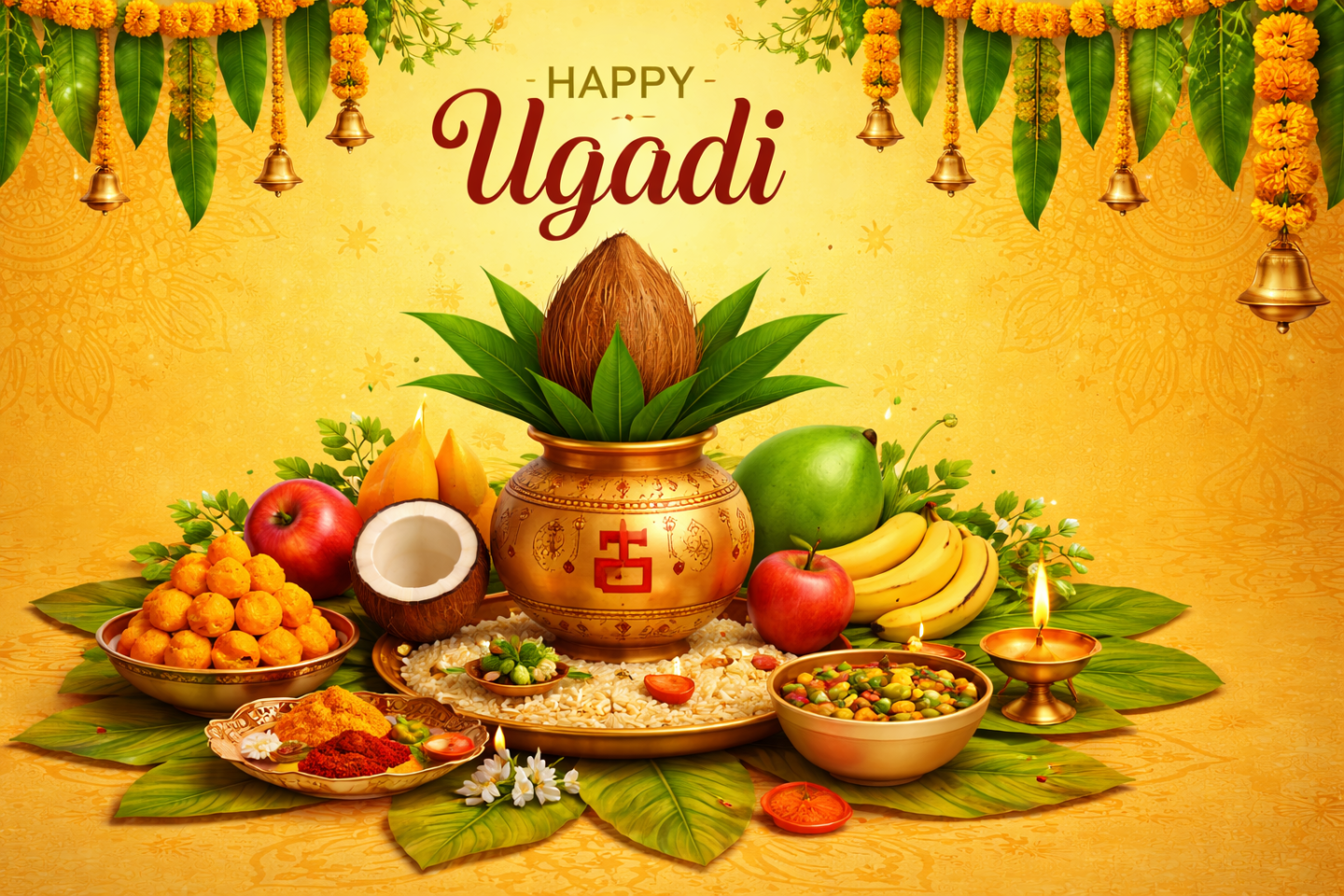
- Mango leaf toranas: Fresh mango leaves strung across doorways, believed to absorb negative vibrations and attract prosperity due to their auspicious green hue.
Temple visits are central, with special pujas offered to deities. Many listen to the Panchanga Sravanam broadcast or recited by priests, gaining insights into the year’s astrological outlook.
Ugadi is also a time for family reunions. Relatives gather for elaborate feasts, sharing laughter, stories, and well-wishes for health, wealth, and success in the new Samvatsara.
The Iconic Ugadi Pachadi: Symbol of Life’s Six Tastes
No Ugadi is complete without Ugadi Pachadi (known as Bevu-Bella in Karnataka), the festival’s most symbolic dish. This unique mixture incorporates six distinct flavors, each representing an emotion or aspect of human existence:
- Neem flowers (bitter) → Difficulties, bitterness, and challenges in life
- Jaggery (sweet) → Happiness, joy, prosperity, and sweet moments
- Raw mango (tangy/astringent) → Surprises, unexpected events, and twists of fate
- Tamarind (sour) → Sadness, unpleasant experiences, or hardships
- Black pepper or chili (spicy/pungent) → Anger, intensity, or fiery situations
- Salt (salty) → Fear, grounding, or neutral phases that balance everything
Prepared as a paste or drink, Ugadi Pachadi is consumed first thing in the morning (often as neivedyam to gods). By tasting this blend, people acknowledge that life will bring all these flavors—good and bad—and one must face them with balance and resilience. This ritual draws from Ayurvedic principles of Shad Rasa (six tastes), promoting holistic well-being.
Traditional Ugadi Pachadi recipe includes fresh neem flowers (or buds), chopped raw green mango, jaggery pieces, tamarind pulp, a pinch of black pepper or red chili powder, salt, and sometimes grated coconut or honey for extra texture.
Festive Foods and Ugadi Recipes
Beyond Pachadi, Ugadi feasts feature a variety of delectable dishes:
- Pulihora (tamarind rice): Tangy, spicy rice mixed with peanuts, curry leaves, and spices—symbolizing life’s sour notes but prepared with love.
- Bobbatlu/Obbattu/Holige/Puran Poli: Sweet flatbreads stuffed with chana dal or toor dal filling sweetened with jaggery— a must-have dessert representing prosperity.
- Payasam/Kheer: Rice or vermicelli pudding with milk, cardamom, and nuts for sweetness and richness.
- Other favorites: Curd rice, lemon rice, kesari bath, medu vada, poornam boorelu, and snacks like punugulu.
These dishes use seasonal ingredients like raw mangoes and neem, connecting the festival to nature’s bounty.
Modern Celebrations and Ugadi in Diverse Regions
While rooted in southern India, Ugadi has spread globally through Telugu and Kannada diaspora communities. Virtual pujas, online Panchanga readings, and social media greetings keep traditions alive. In places like Agartala, Tripura, where multicultural festivities blend, local families join in with mango torans and special prayers, fostering unity.
Contemporary celebrations include community events, cultural programs, and eco-friendly practices—using natural rangoli colors and minimizing waste.
Ugadi 2026 reminds us that every new beginning holds infinite potential. As families prepare neem flowers, mango leaves, and Pachadi today (March 19, 2026), the festival inspires hope, gratitude, and resilience.
Happy Ugadi 2026! May this Vishwavasu Samvatsara bring abundant joy, good health, prosperity, and harmony to you and your loved ones. 🌿🥭✨