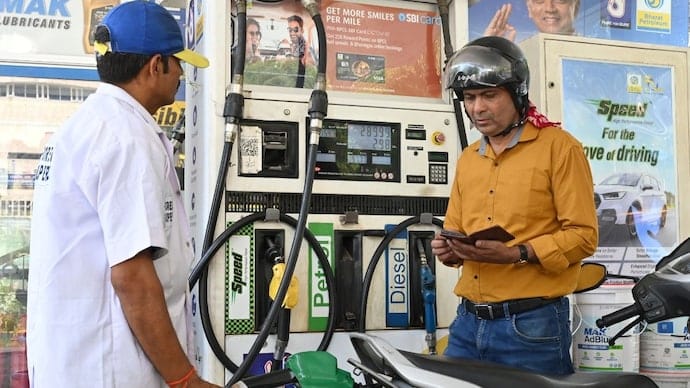
Petrol Price Hike in India: Third Increase This Month as Iran Conflict Drives Crude Oil Surge to $113-114/Barrel – Full Details, Impact & What’s Next
Petrol Price Hike in India: Third Fuel Increase This Month Amid Escalating Global Crude Oil Crisis
State-run fuel retailers in India have once again raised petrol prices and diesel rates, marking the third hike in May 2026. This latest adjustment comes as the government and oil marketing companies (OMCs) grapple with mounting losses due to elevated global crude oil prices triggered by the ongoing conflict in West Asia, particularly involving Iran.
According to dealers, in New Delhi, petrol price increased by Rs 0.87 per litre to Rs 99.51 per litre, while diesel prices rose by Rs 0.91 to Rs 92.49 per litre. This incremental hike follows earlier increases of around 90 paise per litre and an initial Rs 3 per litre surge earlier in the month.
The repeated adjustments in petrol price reflect the vulnerability of India’s energy sector to international geopolitical developments. With nearly 90% of its crude oil needs met through imports, India remains highly sensitive to fluctuations in global energy markets.
Background: Why Are Petrol and Diesel Prices Rising Now?
Retail fuel prices in India had remained largely stable since April 2022, with only a minor reduction of Rs 2 per litre in March 2024. Oil marketing companies like Indian Oil Corporation (IOC), Bharat Petroleum Corporation Limited (BPCL), and Hindustan Petroleum Corporation Limited (HPCL) had paused daily price revisions to shield consumers from volatility following Russia’s invasion of Ukraine.
However, the situation changed dramatically with the escalation of conflict in West Asia. India’s crude oil basket, which averaged around $69 per barrel in February 2026, has now surged to nearly $113–114 per barrel. Disruptions in the Strait of Hormuz, a critical chokepoint for global oil supply, have exacerbated supply concerns.
The first major hike of Rs 3 per litre came as global crude prices spiked due to the Iran-related tensions. This was followed by a second increase of around 90 paise, and now the third adjustment. These changes aim to partially offset the under-recoveries faced by OMCs, which were absorbing significant losses by selling fuel below cost.
City-Wise Petrol Price and Diesel Price Updates (as of May 23, 2026)
Fuel prices vary across states due to different tax structures:
- Delhi: Petrol Rs 99.51 | Diesel Rs 92.49
- Mumbai: Petrol around Rs 107-108 | Diesel higher accordingly
- Kolkata: Petrol Rs 110.64 (post-hike)
- Other metros and cities show similar upward trends.
These petrol price variations highlight how local taxes and levies influence the final consumer cost.
Economic Implications of the Petrol Price Hike
The repeated petrol price increases are expected to have a cascading effect on the Indian economy:
- Inflation Pressure: Higher fuel costs directly impact transportation expenses, which feed into higher prices for essential goods, vegetables, and services. This could push retail inflation higher, affecting household budgets.
- Impact on Logistics and Industry: Truckers, farmers, and manufacturers relying on diesel will face increased operational costs. This may lead to higher freight charges and, eventually, elevated prices for consumer goods.
- Government Revenue and Subsidies: While the government benefits from higher excise duties in normal times, the current strategy involves balancing consumer protection with fiscal prudence. OMCs had been absorbing losses estimated in thousands of crores daily before these hikes.
- Stock Market and Oil Companies: Shares of upstream and downstream oil companies may react positively to the price corrections, as they help improve margins.
Experts note that India has managed the crisis relatively well so far by diversifying import sources, increasing purchases from Russia, Venezuela, and others. However, prolonged disruption in West Asia poses risks.
Global Context: Iran Conflict and Strait of Hormuz Disruptions
The ongoing conflict has led to significant volatility in global energy markets. The Strait of Hormuz, through which a substantial portion of the world’s oil passes, has seen supply chain issues. This has driven Brent crude prices higher, affecting not just India but many import-dependent nations.
Compared to other countries, India’s hikes have been relatively modest (around 4% total so far), unlike sharper increases seen in some Western economies. This measured approach aims to minimize immediate consumer pain while addressing OMC losses.
Historical Perspective on Fuel Price Changes in India
India shifted to a dynamic daily pricing mechanism in 2017. Prices were frozen or adjusted minimally during major global events to protect the economy. The stability from 2022 onwards was a deliberate policy amid post-Ukraine war volatility.
The current hikes represent a return to market-linked pricing after a long pause. This shift underscores the challenges of maintaining energy security in a geopolitically unstable world.
How India Is Mitigating the Impact
- Diversification of Crude Sources: India has rapidly expanded imports from non-West Asian countries, reducing dependence on the Strait of Hormuz route.
- Strategic Reserves: Government maintains buffer stocks to cushion short-term shocks.
- Promotion of Alternatives: Long-term push towards electric vehicles (EVs), biofuels, and renewable energy to reduce oil dependence.
- Tax Adjustments: In the past, the government has tweaked excise duties to manage prices.
Consumers are advised to monitor official announcements from IOC, BPCL, and HPCL websites for daily updates.
Consumer Impact and Tips
For the average Indian household, higher petrol price means increased commuting and goods costs. Two-wheeler and four-wheeler owners will feel the pinch immediately.
Practical Tips:
- Opt for carpooling or public transport where possible.
- Maintain optimal tire pressure and drive efficiently to save fuel.
- Consider switching to CNG or electric vehicles for daily commutes in the long run.
- Track prices in your city using reliable apps or websites.
Small businesses, especially in transport and agriculture, need to factor in these costs and potentially adjust pricing.
Future Outlook: More Petrol Price Hikes Possible?
Analysts suggest that if global crude prices remain above $100-110 per barrel and the West Asia situation does not de-escalate, further adjustments in petrol price cannot be ruled out. However, the government is likely to adopt a cautious approach, especially considering political and economic sensitivities.
Positive factors include India’s growing refining capacity, which allows it to process cheaper heavy crudes, and increasing domestic exploration efforts, though production growth has been slow.
Broader Energy Security Lessons for India
This crisis highlights the need for accelerated energy transition:
- Boosting domestic oil and gas production.
- Expanding solar, wind, and nuclear capacity.
- Investing in green hydrogen and advanced biofuels.
- Strengthening strategic petroleum reserves.
India’s position as the world’s third-largest oil consumer and importer makes energy diplomacy crucial. Strengthening ties with diverse suppliers remains a key strategy.
Conclusion
The latest petrol price hike to Rs 99.51 in Delhi and corresponding diesel increase marks a significant policy shift after years of stability. Driven by the Iran conflict and global crude surge, these changes aim to stabilize the finances of oil companies while managing inflation risks.
As the situation evolves, staying informed about petrol price trends, government policies, and global events will be essential for consumers, businesses, and policymakers alike. While short-term pain is inevitable, these developments could accelerate India’s journey towards greater energy independence in the long term.