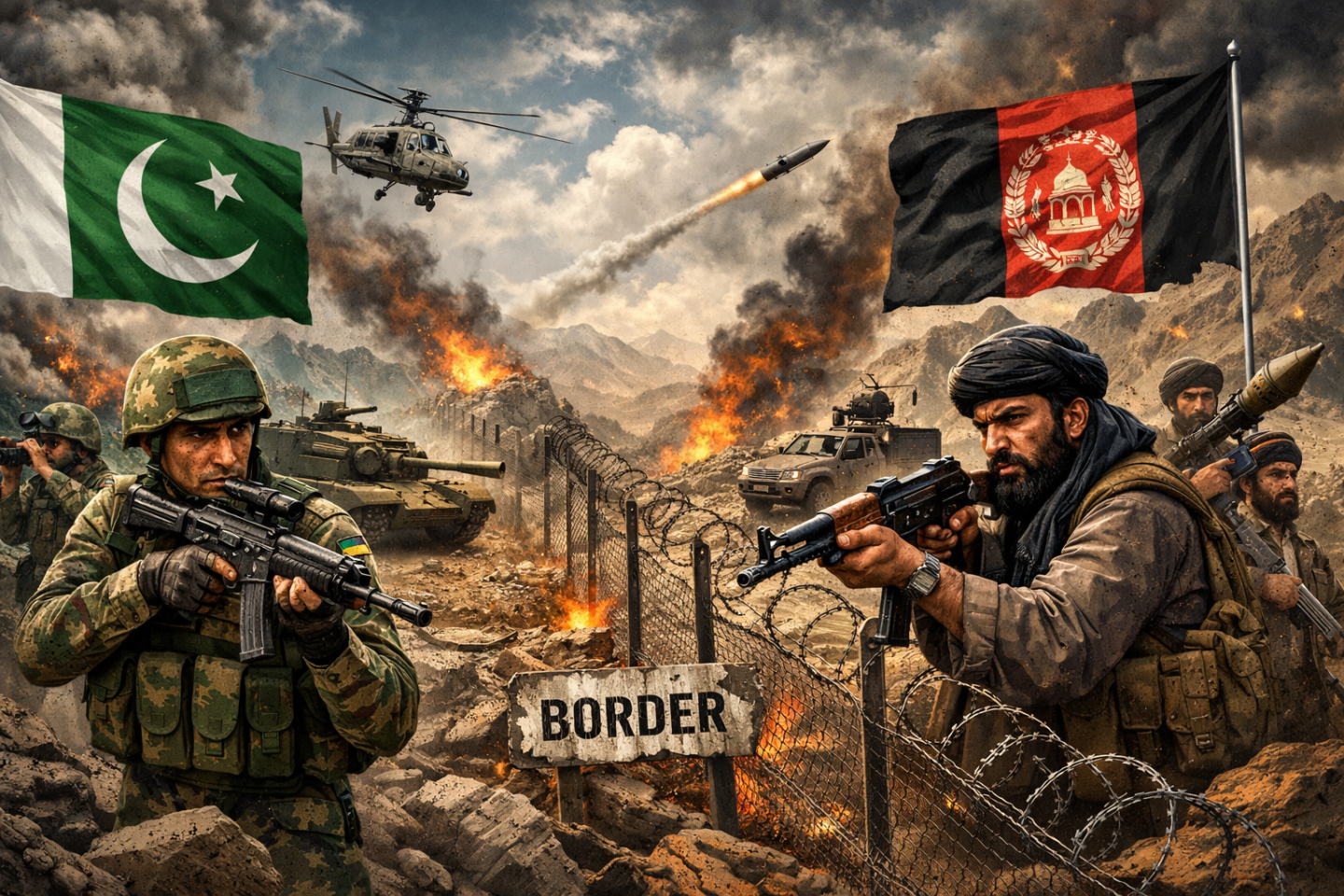
Pakistan Afghanistan Conflict 2026: Afghanistan Strikes Nur Khan Air Base in Rawalpindi – Full Escalation Details
The Pakistan Afghanistan conflict has erupted into one of the most intense confrontations in recent decades, with Afghanistan launching claimed airstrikes deep into Pakistani territory, including the high-profile Nur Khan Air Base in Rawalpindi. This dramatic escalation follows Pakistan’s Operation Ghazab Lil Haq, which involved widespread air raids on Afghan targets and declarations of an “open war” by Pakistani leadership. As of March 2, 2026, both sides continue to trade accusations, casualty figures, and threats of further retaliation, raising serious concerns about regional stability in South Asia.
Afghanistan’s Ministry of National Defence announced on March 2, 2026, via an official statement on X that its Air Force executed “precise and coordinated aerial operations” — reportedly involving armed drones — against several strategic Pakistani military installations. The primary targets highlighted were:
- Nur Khan Air Base in Rawalpindi, a critical logistics and command hub near Pakistan’s Army General Headquarters (GHQ).
- The 12th Division headquarters in Quetta, Balochistan.
- Khwazai Camp (also spelled Khoizai or Khowizoo in reports) in Mohmand Agency, Khyber Pakhtunkhwa.
- Additional unspecified military facilities and command centers.
The Afghan statement described these actions as a direct retaliation for prior Pakistani air raids on Kabul, Bagram Air Base, Kandahar, and other Afghan locations. Officials claimed preliminary assessments showed “significant damage” and issued a clear warning: further violations of Afghan airspace would meet a “swift, decisive, and proportionate response.”
Multiple international and regional media outlets, including Times of India, India Today, Economic Times, Deccan Herald, CNBC-TV18, and News18, reported on these claims, noting the symbolic weight of striking Nur Khan Air Base — a site previously damaged in unrelated past operations and under repair. Some reports referenced drone-launched strikes, with Afghan sources sharing imagery purportedly showing impact zones at the base.
Pakistan has not issued an immediate detailed public confirmation or denial specifically addressing the March 2 strikes on its soil. However, the military and government have maintained that ongoing operations under Operation Ghazab Lil Haq (often translated as “Wrath for Justice” or “Righteous Fury”) are defensive and continue to target alleged militant infrastructure inside Afghanistan.
Background: Roots of the Pakistan Afghanistan Conflict
The Pakistan Afghanistan conflict stems from long-standing issues along the 2,600-km Durand Line border, which Afghanistan has historically contested. Tensions have worsened since the Taliban regained control of Kabul in 2021. Key flashpoints include:
- Pakistan’s repeated accusations that the Afghan Taliban provides safe havens to Tehreek-e-Taliban Pakistan (TTP) militants launching attacks inside Pakistan.
- Afghan claims of Pakistani support for anti-Taliban groups and interference.
- Disputes over border fencing, frequent cross-border shelling, and militant incursions.
- Earlier incidents in 2024–2025 involving Pakistani airstrikes and Taliban responses.
The current phase intensified in late February 2026. On February 26–27, Afghan forces reportedly launched large-scale ground offensives against Pakistani border positions in sectors like Torkham, Khyber Pakhtunkhwa, and others. Pakistan responded swiftly with Operation Ghazab Lil Haq, conducting air and artillery strikes on Taliban targets in Kabul, Kandahar (spiritual base of Taliban leadership), Paktia, Nangarhar, and multiple border provinces.
Pakistan’s Information Minister Attaullah Tarar stated that the operation eliminated 415 Afghan Taliban personnel, injured over 580, destroyed 182 checkposts, captured additional positions, and disabled numerous vehicles and armored units. He reported strikes on 46 locations inside Afghanistan. Defence Minister Khawaja Asif explicitly described the situation as an “open war,” signaling a shift from limited border skirmishes to broader military engagement.
The Downed Jet Claim and Conflicting Narratives
Adding fuel to the fire, Afghan officials claimed on February 28, 2026, that they shot down a Pakistani fighter jet over Jalalabad (Nangarhar province) and captured the pilot alive. Statements from local police spokesman Tayeb Hammad and eastern military spokesman Wahidullah Mohammadi, cited by AFP and outlets like Times of India, Economic Times, and Firstpost, described the incident: the jet was downed in Jalalabad’s sixth district, with the pilot ejecting via parachute and subsequently detained.
Residents reported hearing jet engines followed by explosions near the airport. However, Pakistan’s foreign ministry and military swiftly labeled the claim “totally untrue” and “fabricated.” Some reports suggested possible misidentification — including confusion with a parachutist or recycled imagery from unrelated crashes (e.g., a 2021 Russian firefighting plane incident presented as evidence).
Casualty figures remain heavily disputed:
- Pakistani side: Hundreds of Taliban fighters killed/injured in Operation Ghazab Lil Haq; destruction of militant posts and infrastructure.
- Afghan side: Significant damage from retaliatory strikes; earlier Pakistani raids allegedly caused civilian and military losses in Kabul, Kandahar, etc.
- Additional reports: Taliban sources previously claimed retaliatory actions killed at least 55 Pakistani soldiers after Pakistani strikes that Islamabad said eliminated 133 Taliban fighters and injured over 200.
Independent verification of these claims is limited due to restricted access and the fluid nature of the fighting.
Strategic Importance of Targeted Sites
- Nur Khan Air Base (Rawalpindi): A vital Pakistan Air Force installation supporting air mobility, logistics, and proximity to GHQ. Its alleged targeting represents a psychological and strategic blow, deep inside Pakistani territory.
- Quetta 12th Division HQ: Oversees operations in Balochistan, a region facing its own insurgency challenges.
- Mohmand/Khwazai Camp: Border-area facility in a historically volatile tribal region prone to militant activity.
These strikes, if confirmed, mark a rare instance of Afghan forces projecting power beyond border zones.
Regional and Global Implications of the Pakistan Afghanistan Conflict
The escalation risks drawing in neighboring powers and complicating broader South Asian security dynamics:
- Heightened militant activity along the Durand Line could empower groups like IS-Khorasan.
- Civilian displacement and humanitarian concerns in border areas.
- Potential spillover effects on trade, refugees, and counter-terrorism cooperation.
- Calls for restraint from international actors, though no major mediation has emerged publicly as of March 2, 2026.
Both sides appear entrenched: Pakistan insists operations continue until threats are neutralized, while Afghanistan vows proportional responses to any incursion.
This Pakistan Afghanistan conflict remains highly dynamic. Developments could shift rapidly with new statements, footage, or military actions. Our team will continue monitoring official channels, international reports, and on-ground updates.