Kumar Bhaskar Varma Setu Opens for Vehicular Traffic: Guwahati-North Guwahati Bridge Full Details, Cost, Features & Impact 2026
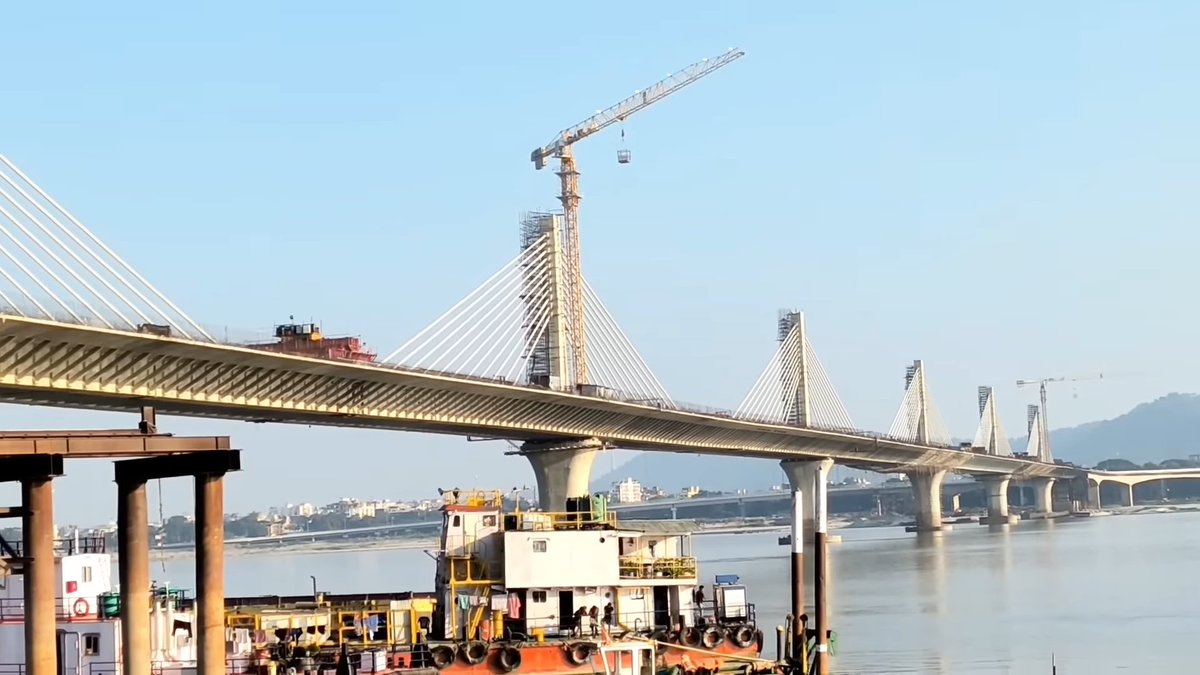
The Kumar Bhaskar Varma Setu, Guwahati’s newest and most anticipated infrastructure marvel, has officially been thrown open to vehicular traffic on Sunday at 12:00 noon. This landmark event marks the full public use of the bridge, connecting Guwahati with North Guwahati across the mighty Brahmaputra River and ushering in a new era of seamless connectivity for the region.
Prime Minister Narendra Modi formally inaugurated the Kumar Bhaskar Varma Setu on February 14, 2026, in a grand ceremony that highlighted its role in transforming Assam’s transport landscape. Following the inauguration, the bridge was initially accessible only to pedestrians, allowing thousands of residents to walk across, enjoy panoramic views of the Brahmaputra, and celebrate this engineering achievement. Pedestrian access was extended until March 7 to accommodate public enthusiasm, before vehicular movement commenced on March 8 (a Sunday), with initial restrictions to private and light vehicles in the first phase.
The opening at noon on Sunday brought immediate relief to commuters frustrated by long detours via existing crossings like the Saraighat Bridge or ferries. Reports indicate that while some morning delays occurred due to awaiting final approvals from district authorities, vehicles began crossing by early afternoon—around 1 PM in some accounts—signaling the start of active daily use for both personal and freight transport.
What is the Kumar Bhaskar Varma Setu? Key Features and Specifications
The Kumar Bhaskar Varma Setu is a six-lane extradosed prestressed concrete (PSC) bridge—the first of its kind in Northeast India. This innovative design blends elements of traditional girder bridges with cable-stayed structures, using shorter stay cables anchored to towers for enhanced span efficiency, deck stiffness, and load-bearing capacity.
- Length: The main bridge spans 1.24 kilometers, forming part of a broader 8.4-kilometer connectivity corridor that includes approach roads, flyovers, and interchanges.
- Width: Approximately 33 meters, accommodating six lanes for smooth bidirectional traffic.
- Cost: Built at an estimated cost of around Rs 3,030 crore (with some sources citing up to Rs 3,300 crore), reflecting the scale of engineering required in one of India’s most challenging riverine environments.
- Engineering Highlights:
- Extradosed PSC technology for durability and aesthetic appeal.
- Seismic-resistant features, including base isolation with friction pendulum bearings—crucial in Assam’s high-seismic zone.
- Real-time Bridge Health Monitoring System for ongoing structural safety.
- High-performance M70 grade concrete and noise-barrier technology.
- Designed to handle heavy loads, including military vehicles, ensuring long-term resilience against the Brahmaputra’s strong currents and seasonal floods.
Named after the 7th-century Kamarupa king Kumar Bhaskar Varma (r. 594–650 CE), a visionary ruler praised by Chinese traveler Hiuen Tsang for his enlightened governance, military prowess, and promotion of learning, the bridge symbolizes Assam’s rich historical legacy fused with modern progress.
Historical Context and the Need for the Bridge
Guwahati, Assam’s bustling capital and gateway to Northeast India, has long grappled with the Brahmaputra’s division of the city. The river, one of the world’s widest and most dynamic, separates the southern urban core (Guwahati) from North Guwahati, home to growing residential areas, industrial zones, and key institutions like Gauhati University and the Indian Institute of Technology Guwahati (IITG).
Prior to the Kumar Bhaskar Varma Setu, commuters relied on older bridges like the Saraighat Bridge (opened in 1962) or ferries, leading to travel times of 45–60 minutes or more during peak hours, severe congestion, and economic losses from delays in goods movement. Freight transport, vital for Assam’s tea, oil, and agricultural sectors, faced bottlenecks that hampered regional trade.
The bridge addresses these longstanding issues head-on. It drastically reduces travel time to just 7–10 minutes, easing pressure on existing infrastructure, improving emergency response, and facilitating smoother inter-state connectivity to places like Meghalaya and Arunachal Pradesh.
Economic and Social Impact of Kumar Bhaskar Varma Setu
The full opening of the Kumar Bhaskar Varma Setu is poised to catalyze economic growth in Guwahati and beyond:
- Commuter Benefits: Daily travelers, students, office-goers, and families will save hours weekly, reducing fuel consumption and stress.
- Freight and Logistics: Faster movement of goods will boost supply chains, lower costs, and support industries in North Guwahati and surrounding areas.
- Urban Development: North Guwahati is emerging as a “twin city” to Guwahati, with potential for new residential, commercial, and educational hubs. The bridge accelerates this growth.
- Tourism and Recreation: Scenic views from the bridge enhance tourism, while easier access promotes day trips and regional exploration.
- Environmental Gains: Reduced idling in traffic lowers emissions, contributing to cleaner air in Guwahati.
Experts view it as a game-changer for Northeast connectivity, aligning with India’s broader push for infrastructure under initiatives like Bharatmala Pariyojana.
Challenges During Construction and Opening
Constructing over the Brahmaputra involved overcoming formidable challenges: unpredictable floods, strong currents, seismic risks, and logistical hurdles in a remote terrain. Work began around 2019, with careful planning to ensure safety and quality.
The phased opening—inauguration in February, pedestrian use through early March, and vehicular traffic on March 8—allowed testing and public adaptation. Initial vehicular restrictions ensured smooth integration into city traffic systems.
Looking Ahead: A New Chapter for Guwahati
With the Kumar Bhaskar Varma Setu now fully operational for vehicles, Guwahati enters a transformed phase. Authorities continue monitoring traffic flow, with potential for full six-lane unrestricted use soon. Future expansions, including better integration with highways and public transport, could further amplify benefits.
This bridge stands as a testament to engineering excellence, visionary leadership, and Assam’s forward march. It not only connects two banks of a river but unites communities, economies, and aspirations.
For commuters in Imphal or across Northeast India, the Kumar Bhaskar Varma Setu represents faster, safer journeys to Guwahati and beyond—a true symbol of progress.