7th Kaziranga Waterbird Count 2026: Record 105,540 Birds Across 107 Species with First-Ever Smew Sighting – A Major Win for Assam Biodiversity
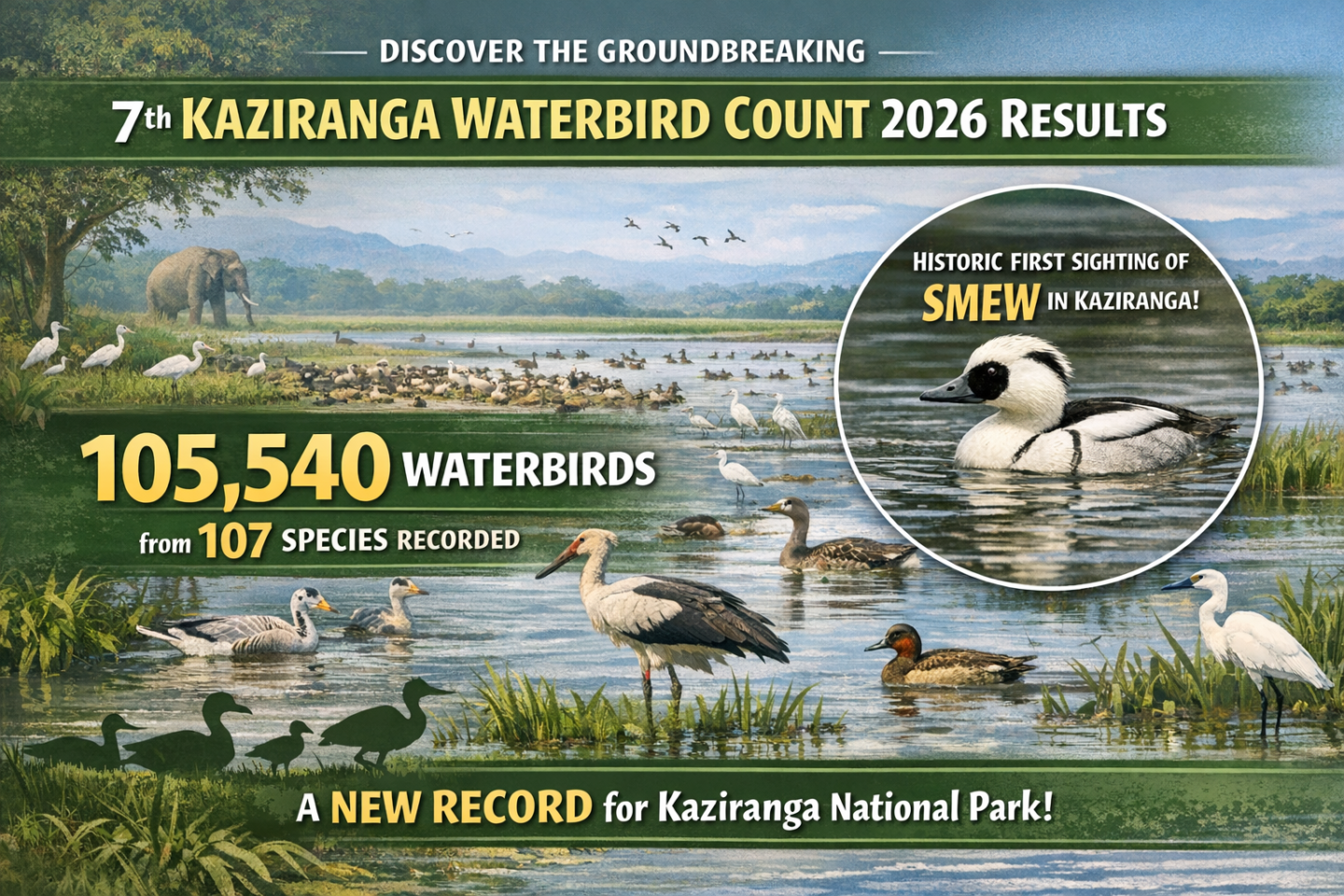
Kaziranga National Park and Tiger Reserve, a UNESCO World Heritage Site renowned for its one-horned rhinoceros population and rich biodiversity, has once again made headlines with the successful completion of the 7th Kaziranga Waterbird Count 2026. This annual synchronized survey has delivered extraordinary results, recording a staggering 105,540 individual waterbirds belonging to 107 different species—a new record that underscores the park’s critical role as a vital wintering habitat along the Central Asian Flyway.
The census, conducted between January 4 and 11, 2026, covered an extensive network of 166 wetlands spread across 10 ranges in the Eastern Assam Wildlife Division, Biswanath Wildlife Division, and Nagaon Wildlife Division. These areas include core zones of Kaziranga National Park as well as adjacent buffer landscapes like Laokhowa and Burhachapori floodplains. The impressive tally not only surpasses previous years but also highlights the resilience and health of Assam’s wetland ecosystems amid global environmental challenges.
Field Director Dr. Sonali Ghosh emphasized the significance of the survey: “This synchronized effort across multiple divisions has documented 105,540 waterbirds of 107 species. It reaffirms Kaziranga’s importance as a key stopover for migratory and resident waterbirds.” The count involved diverse species groups, including ducks, geese, herons, egrets, waders, and other wetland-dependent birds, painting a vibrant picture of avian diversity.
Historic First-Ever Smew Sighting Steals the Spotlight
The most thrilling highlight of the Kaziranga Waterbird Count 2026 was the first-ever sighting of the Smew (Mergellus albellus), a rare Eurasian diving duck. This striking bird, with males featuring a crisp white body accented by a black mask and females displaying mottled brown plumage, is typically a winter visitor to northern and central Europe. Sightings in India are extremely sporadic and localized, previously noted in places like Haiderpur Wetland (Uttar Pradesh) and around Corbett National Park.
The Smew was spotted at the Rowmari-Donduwa beels (within the Laokhowa buffer zone of Kaziranga Tiger Reserve), making it the ‘star species’ of the census. Ornithologist Dr. Nilutpal Mahanta noted that this vagrant appearance signals potential climate-driven range shifts. “The Smew’s presence flags changing migration patterns, possibly due to warmer winters in traditional breeding grounds. It also highlights the need to protect key refuelling stops from threats like hunting and oil pollution,” he explained.
This Smew sighting in Kaziranga adds immense value to the park’s avian checklist and serves as a testament to the effectiveness of ongoing monitoring efforts. Forest Minister Chandramohan Patowary expressed his excitement on X (formerly Twitter): “Thrilled by the 7th Kaziranga Waterbird Count! First-ever sighting of Smew steals the spotlight in a record-breaking census of 105,540 birds! This spectacular debut reaffirms Assam’s wetlands as vital biodiversity hotspots.”
Top Wetlands and Species Dominance
The survey identified the top-performing wetlands based on bird numbers and diversity:
- Rowmari Beel (Laokhowa): 15,661 birds – Emerging as the highest-count site, this beel hosted significant flocks and the landmark Smew.
- Danduwa Beel: 14,469 birds – Another powerhouse wetland contributing heavily to the total.
- Kotakhali: 4,979 birds
- Sohola Combined: 3,612 birds
- Khalihamari: 3,463 birds
Other notable areas included Kaboi Mari-Bhoisamari-Prasaran with 57 species and Ververi with 53 species, showcasing rich species variety.
Prominent and abundant species observed during the Kaziranga Waterbird Count 2026 included:
- Bar-headed Goose – Known for high-altitude migrations over the Himalayas.
- Northern Pintail – A graceful dabbling duck with long tail feathers.
- Lesser Whistling Duck – A resident species common in Indian wetlands.
These species, along with many others like gadwalls, shovelers, teals, and pochards, reflect the mix of migratory birds arriving via the Central Asian Flyway and local residents thriving in the floodplain ecosystem.
Citizen Science and Collaborative Effort
Since its inception in 2018-19, the Kaziranga Waterbird Count has embraced citizen science to enhance data accuracy and public engagement. The 2026 edition was no exception, supported by the CSR initiatives of Numaligarh Refinery Limited (NRL). Over 120 trained enumerators, including ornithologists, college students, photographers, and dedicated volunteers (around 50 additional participants), followed strict standardized protocols to ensure reliable results.
The official report was compiled under the leadership of Dr. Nilutpal Mahanta, Dr. Smarajit Oja, and Dr. Bishwajit Chakdar, with technical support from the Assam Biodiversity Monitoring Network. It was formally released on February 22, 2026, at JDSG College in Bokakhat. The event saw the presence of key dignitaries, including Kaziranga MP Kamakhya Prasad Tasa, IUCN SSC Chair Vivek Menon, and senior IAS officer Shivani J. Gerongal.
This collaborative model not only boosts scientific rigor but also fosters community awareness about wetland conservation, making the Kaziranga Waterbird Count 2026 one of India’s largest citizen-driven wildlife monitoring projects.
Broader Conservation Implications
Kaziranga’s 119-year conservation legacy, combined with its UNESCO status, makes these results particularly meaningful. The park’s wetlands serve as essential wintering grounds for migratory birds traveling thousands of kilometers. The record numbers and increased species diversity indicate successful habitat management, anti-poaching measures, and floodplain protection.
However, experts caution that threats persist. Climate change, altering migration routes, pollution from upstream activities, and habitat fragmentation could impact future counts. The Smew’s unexpected arrival underscores the urgency of adaptive conservation strategies, including enhanced wetland monitoring and international cooperation under flyway agreements.
The census data will inform policy decisions, from Ramsar site nominations to community-based eco-tourism initiatives. It also highlights Assam’s contribution to global biodiversity, positioning the state as a leader in wetland and avian conservation in India.
Why Kaziranga Remains a Global Biodiversity Hotspot
Beyond rhinos and tigers, Kaziranga’s floodplain ecosystem—fed by the Brahmaputra River—creates dynamic beels and grasslands ideal for waterbirds. The park’s location along the Central Asian Flyway ensures it attracts species from Siberia, Central Asia, and beyond during winter.
The 7th Kaziranga Waterbird Count 2026 builds on previous successes, showing steady growth in recorded numbers and species. This upward trend reflects effective conservation amid challenges like annual flooding, which, while disruptive, replenishes nutrients and maintains wetland productivity.
For birdwatchers, researchers, and tourists, these findings offer exciting opportunities. Guided birding tours in buffer zones like Laokhowa could spotlight rarities such as the Smew, boosting eco-tourism revenue for local communities.
Looking Ahead: Sustaining the Momentum
As Assam celebrates this milestone, calls grow for continued investment in wetland restoration, pollution control, and community involvement. The Kaziranga Waterbird Count series demonstrates how consistent monitoring yields actionable insights for long-term conservation.
The record-breaking 105,540 birds and the rare Smew sighting in Kaziranga are not just statistics—they represent thriving ecosystems and hope for biodiversity in a changing world. This success story from Assam’s heart reinforces why Kaziranga remains a beacon of wildlife protection.
Stay tuned for more updates on Assam’s natural heritage, migratory bird patterns, and conservation triumphs. Share this article to spread awareness about the Kaziranga Waterbird Count 2026 and the importance of protecting our wetlands!