Historic Milestone: Fighter Jets Successfully Land on Moran Highway in Assam – Final Rehearsal Completed Ahead of PM Modi’s Inauguration of Northeast’s First Emergency Landing Facility
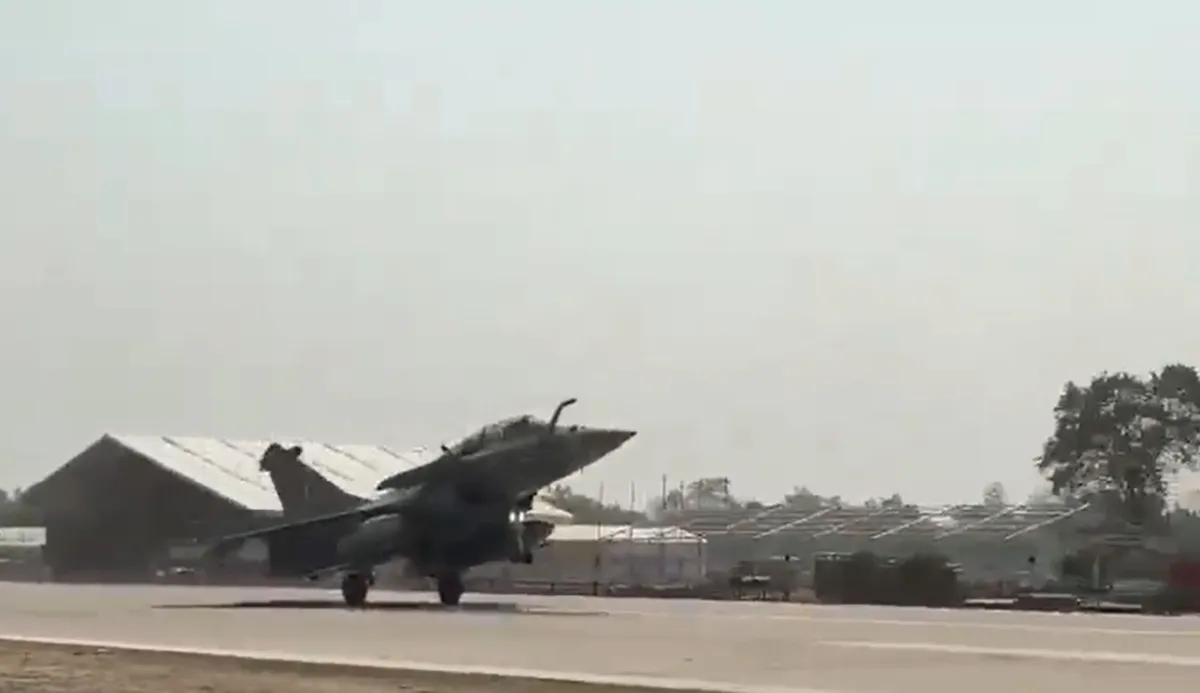
In a groundbreaking display of India’s growing defence capabilities and infrastructure prowess, the Indian Air Force (IAF) has successfully completed the final rehearsal of fighter jet landings and take-offs on the newly developed four-lane highway stretch in Moran, Assam. This marks a pivotal moment for the Northeast region, as the area prepares for the formal inauguration of its first Emergency Landing Facility (ELF) by Prime Minister Narendra Modi on February 14, 2026.
The trials, which intensified from Wednesday and culminated by Thursday evening, saw multiple IAF aircraft—including advanced fighters like Rafale, Sukhoi-30, MiG series, Tejas, and heavy transport planes such as C-130J Super Hercules and AN-32—executing precise landings and take-offs on the 4.2-kilometre designated strip at Jatiyani on the Moran bypass (part of National Highway-127, with references also to NH-37 stretches in reports). Eyewitnesses described the scene as creating a wartime-like atmosphere, with jets roaring one after another, transforming an everyday highway into a high-stakes operational runway.
This Emergency Landing Facility represents a strategic dual-use infrastructure project, where a section of the public national highway has been engineered to serve as an alternative airstrip during contingencies. In times of war, natural disasters, or when primary airbases like Chabua are compromised, the ELF will allow rapid deployment, emergency landings, and take-offs for fighter jets, transport aircraft, helicopters, and cargo planes. The Northeast’s terrain—hilly, flood-prone, and strategically sensitive due to its proximity to international borders—makes such facilities invaluable for enhancing national security, disaster response, and logistical mobility.
Prime Minister Narendra Modi’s visit on February 14, 2026, will be nothing short of historic. The Prime Minister is scheduled to arrive from Delhi at Chabua Air Force Station in Dibrugarh before proceeding in a special aircraft to land directly on the highway strip at Jatiyani. During his approximately 30-minute stay, he will witness an impressive aerial showcase: up to 16 aircraft performing landings on the highway in his presence, coupled with a thrilling display of combat manoeuvres in the skies above.
The rehearsals began on Wednesday with initial trials and reached their conclusive phase on Thursday, confirming the strip’s readiness. Strict security protocols were enforced by the IAF, with the entire runway zone sealed off to public access. However, local authorities have arranged safe vantage points for Assam residents to observe the events from a distance, ensuring public engagement without compromising safety.
Moran MLA Chakradhar Gogoi, visibly enthusiastic about the development, highlighted its transformative impact. He stated: “Thanks to the visionary thinking of the country’s Prime Minister, fighter jet landings on highways are now possible today. Where it was once difficult even to drive a tractor, fighter jets are now landing. What greater joyful news could there be? This is the journey of progress. Under the leadership of the Prime Minister and the Chief Minister, Assam and the entire country are rising to world-class status. As long as the BJP government is in power, this wave of development will continue.”
This sentiment echoes broader views on the project’s significance. Assam Chief Minister Himanta Biswa Sarma has previously emphasized that the Dibrugarh-Moran highway section serves dual purposes—civilian traffic and military emergencies—bolstering both connectivity and defence preparedness in a region prone to challenges.
The ELF at Moran is the first of its kind in Northeast India, aligning with India’s push for resilient, multi-purpose infrastructure. Similar highway landing capabilities have been tested elsewhere in the country, but this marks a major leap for the Northeast, where rapid air response can be critical amid geopolitical tensions and frequent natural calamities like floods.
Engineering highlights of the facility include a reinforced concrete surface, removal of central dividers for unobstructed runway use, precise markings, lighting provisions (where needed), and coordination mechanisms between civil authorities and the IAF. The 4.2-km length provides ample space for safe operations of high-performance aircraft, even under adverse conditions.
The successful trials have generated widespread excitement across Assam and beyond. Social media is abuzz with videos and images of the jets touching down, showcasing India’s self-reliance in defence infrastructure. This not only boosts morale among armed forces personnel but also sends a strong message about the nation’s readiness to protect its borders and respond to crises swiftly.
As February 14 approaches, all eyes are on Moran. The inauguration will symbolize Prime Minister Modi’s commitment to modernizing India’s defence ecosystem while integrating it with civilian development. For the people of Assam, it represents pride in hosting such a landmark project—one that turns ordinary roads into extraordinary assets for national security.
This development underscores the government’s focus on “Viksit Bharat” (Developed India), where infrastructure serves multiple roles: economic growth, connectivity, and strategic defence. The Moran ELF is expected to set a precedent for similar facilities across vulnerable regions, further strengthening India’s air power projection.
With the final rehearsal successfully wrapped up, the stage is set for what promises to be an unforgettable event. Assam’s skies and highways are ready to roar in unison, heralding a new era of defence innovation in the Northeast.