Guwahati Air Pollution Crisis 2026: AQI Spikes to Severe Levels – Health Risks & Solutions Revealed
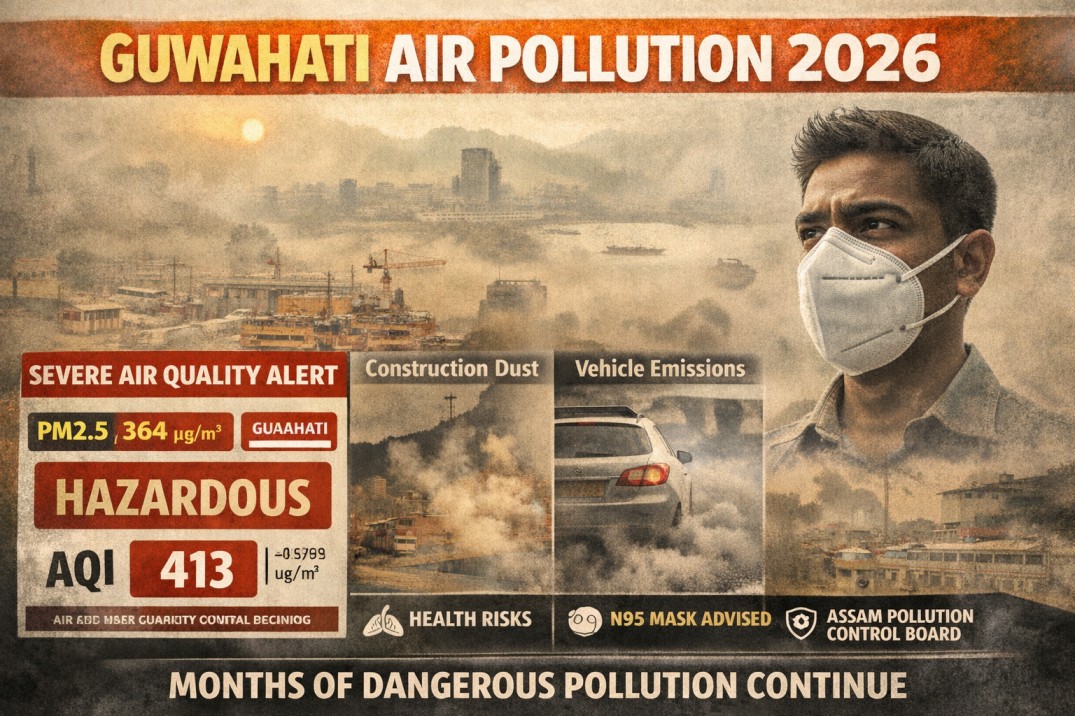
Guwahati, the bustling capital of Assam and the largest city in Northeast India, is once again grappling with a severe Guwahati air pollution crisis. As winter transitions into early spring in 2026, dry weather, rampant construction activities, heavy vehicular traffic, and other local sources have driven the Guwahati AQI today and in recent weeks into alarming territories—frequently registering in the Unhealthy (151–200), Very Unhealthy (201–300), and even Severe (301+) categories on the US AQI scale. Recent monitoring from stations like Railway Colony shows peaks above 300, with PM2.5 levels soaring past 150 µg/m³, far exceeding WHO safe limits.
This recurring seasonal spike, exacerbated by the absence of rainfall, poses grave threats to public health, particularly for vulnerable groups such as children, the elderly, and those with pre-existing respiratory conditions. In this comprehensive report, we delve deep into the causes, impacts, historical trends, expert insights, and actionable solutions to address Guwahati air pollution—a topic that demands urgent attention from residents, authorities, and policymakers.
Current Status: What is the Guwahati AQI Today?
As of February 24, 2026, real-time data from reliable sources including IQAir, aqi.in, AQICN, and others indicate that Guwahati AQI today hovers in the Severe range in several hotspots. For instance:
- Railway Colony: AQI around 214–322 (Severe/Hazardous), with PM2.5 at 156 µg/m³ and PM10 elevated.
- Other areas like Pan Bazaar and Bamunimaidam consistently report Very Unhealthy to Severe levels.
- City-wide averages often exceed 200, classifying the air as unhealthy for all residents.
This aligns with patterns observed in February, where dry conditions prevent natural dispersion of pollutants. Without significant rainfall, experts predict the situation may persist well into March or even April. Historical data from the same period shows similar spikes, with 2026 levels comparable or slightly variable compared to recent years, underscoring that Guwahati air pollution is a persistent challenge rather than a one-off event.
Primary Causes of Guwahati Air Pollution
Multiple interconnected sources fuel the high pollution levels in Guwahati. According to insights from the Assam Pollution Control Board (APCB) and environmental experts:
- Construction Dust – The Biggest Culprit (Up to 32%)
Rapid urbanization, flyover constructions, high-rise buildings, and infrastructure projects generate massive amounts of fugitive dust. PM10 particles dominate here, but finer PM2.5 also rises. Many sites fail to implement basic mitigation like covering materials, regular water sprinkling, or using dust barriers, worsening the crisis in areas like Bamunimaidam—often recorded as the most polluted hotspot. - Vehicular Emissions (19–52% for PM2.5)
Guwahati’s growing vehicle population, congested roads, and idling traffic contribute significantly, especially to ultrafine PM2.5 (52% attribution in some analyses). Older vehicles, poor fuel quality, and traffic bottlenecks amplify this. - Industrial and Biomass Burning (16% + 9%)
Factories, brick kilns, and the burning of wood, coal, or agricultural waste (common in peri-urban areas) add to the load. Domestic and commercial cooking with solid fuels also plays a role (16% for PM2.5). - Road Dust and Natural Sources
Paved and unpaved roads, plus sand/dust blown from the Brahmaputra riverbank during dry spells, compound the issue. Low wind speeds and temperature inversions trap pollutants closer to the ground. - Seasonal Factors
From January to March, minimal rainfall and stable atmospheric conditions prevent pollutant washout. This “winter pollution trap” is a yearly phenomenon in Guwahati.
These factors combined push Guwahati AQI today and over extended periods into dangerous zones, making it one of the more polluted cities in Northeast India.
Health Impacts: Why Guwahati Air Pollution is a Silent Killer
Fine particulate matter like PM2.5 and PM10 penetrates deep into the lungs and bloodstream, causing:
- Respiratory issues: Asthma exacerbations, bronchitis, reduced lung function.
- Cardiovascular problems: Increased risk of heart attacks, strokes, hypertension.
- Long-term effects: Lung cancer, premature death, developmental issues in children.
- Vulnerable populations face heightened risks—children may develop chronic conditions, while the elderly and those with COPD or heart disease suffer acute episodes.
Doctors report rising cases of respiratory infections during high-pollution periods. The WHO links long-term exposure above 5 µg/m³ PM2.5 to significant mortality increases—Guwahati often exceeds 100 µg/m³ during peaks.
Expert Insights and Official Responses
Dr. Gautam Kumar Mishra (Chief Environmental Scientist, APCB) highlights that while recent years show marginal improvements in average AQI, spikes remain hazardous. He stresses enforcement of dust control at construction sites and public awareness.
Meteorologists note low rain probability in coming days, delaying relief. The Guwahati Clean Air Action Plan (a hotspot-based initiative) aims for 50% reduction over five years through ward-level measures against open burning, dust, vehicles, and industry.
Authorities advise:
- Wear N95 or equivalent masks outdoors.
- Avoid unnecessary exposure, especially for at-risk groups.
- Limit activities near construction zones.
- Use air purifiers indoors.
Solutions and Way Forward to Combat Guwahati Air Pollution
Tackling Guwahati air pollution requires multi-pronged action:
- Short-term: Strict enforcement of dust suppression, odd-even vehicle rules during peaks, promotion of public transport, anti-smog guns at sites.
- Medium-term: Expand green belts, improve road paving, phase out old vehicles, incentivize electric mobility.
- Long-term: Sustainable urban planning, renewable energy shift, waste management to curb burning, rainfall enhancement via regional efforts.
Citizens can contribute by carpooling, planting trees, reporting violations, and monitoring Guwahati AQI today via apps like IQAir or official portals.
Conclusion: Time for Collective Action
The Guwahati air pollution crisis in 2026 is a wake-up call. With AQI frequently severe and health risks mounting, immediate and sustained efforts are essential. By addressing root causes and heeding expert advice, Guwahati can reclaim cleaner air. Stay informed, take precautions, and advocate for change—your lungs and future depend on it.