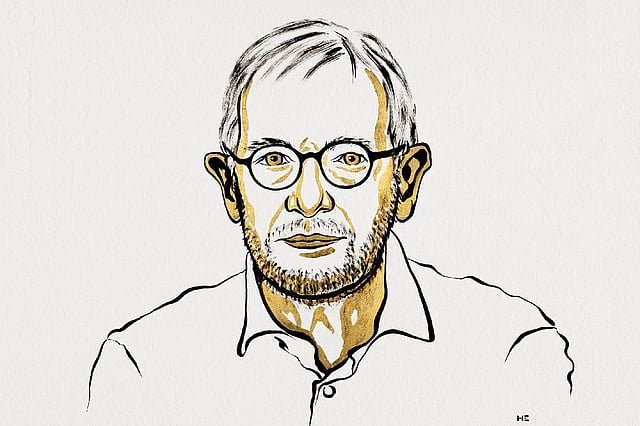
Francis Halzen Wins Nobel Prize in Physics 2026 for IceCube Neutrino Breakthrough
Francis Halzen Awarded Nobel Prize in Physics 2026 for Pioneering IceCube Work
The Nobel Prize in Physics 2026 has been awarded to Francis Halzen for his decisive contributions to the IceCube Neutrino Observatory and the discovery of high-energy neutrinos of astrophysical origin.
Born and raised in Belgium, Halzen completed his Master’s degree at the University of Louvain in 1966 and earned his PhD from the same university in 1969. In 1972 he also obtained the Agrégé de l’Enseignement Supérieur there. That same year he joined the University of Wisconsin–Madison as an assistant professor. More than five decades later he remains at the university as Vilas Research Professor and Gregory Breit Distinguished Professor of Physics.
Halzen’s long career has centered on particle physics and later neutrino astronomy. He became interested in neutrino astronomy in the 1980s. As principal investigator of the IceCube Neutrino Observatory, he helped turn a cubic kilometre of Antarctic ice at the South Pole into a giant detector capable of capturing elusive high-energy neutrinos—often called “ghost particles”—arriving from powerful cosmic sources.
The Royal Swedish Academy of Sciences recognised that IceCube made it possible to detect and study these rare particles, opening a new window on the universe. In 2026, 54 years after he first arrived at Wisconsin as an assistant professor, Halzen’s decades of research reached its highest academic milestone with the Nobel Prize in Physics.