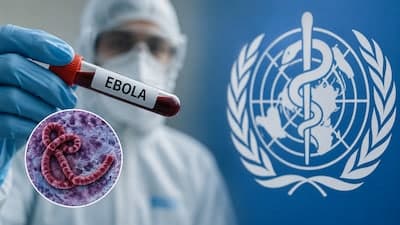
Eastern Congo Ebola Outbreak 2026: WHO Declares Public Health Emergency as Oxford Vaccine Development Races Against Bundibugyo Strain Spread
Eastern Congo Ebola Outbreak 2026: A Fast-Moving Crisis Demands Urgent Global Action
The Democratic Republic of the Congo (DRC) is confronting one of its most severe Ebola outbreaks in recent years, centered in the conflict-ridden eastern region. Health authorities and international organizations are scrambling to contain the spread of the Bundibugyo strain, which has already triggered a Public Health Emergency of International Concern (PHEIC) declared by the World Health Organization (WHO).
As of late May 2026, officials report over 900 suspected cases, including more than 101 confirmed infections, and at least 220 suspected deaths. The outbreak is rapidly evolving in Ituri Province, particularly around Bunia, the provincial capital located over 1,000 kilometers from Kinshasa. This volatile area has long suffered from armed conflict, displacement, and insecurity, complicating response efforts.
“We are now playing catch-up with a very fast-moving epidemic,” said WHO Director-General Tedros Adhanom Ghebreyesus, highlighting the challenges in containment.
This marks the 17th recorded Ebola outbreak in the DRC since the virus was first identified in 1976. Unlike previous Zaire ebolavirus strains with approved vaccines, this event involves the rarer Bundibugyo virus (BDBV), for which no licensed vaccine or specific treatment currently exists, raising alarms among global health experts.
Understanding the Ebola Virus and the Bundibugyo Strain
Ebola virus disease (EVD) is a severe, often fatal illness caused by viruses in the Orthoebolavirus genus. Transmission occurs through direct contact with bodily fluids of infected people or animals, contaminated surfaces, or infected wildlife like fruit bats. Symptoms typically appear 2–21 days after exposure and include sudden fever, fatigue, muscle pain, headache, sore throat, followed by vomiting, diarrhea, rash, and in some cases internal and external bleeding.
The Bundibugyo strain, first identified in Uganda in 2007–2008, generally has a lower case fatality rate (around 25–50%) compared to Zaire ebolavirus (up to 90% untreated), but its rapid spread in insecure environments poses unique challenges. Standard diagnostic tests can sometimes miss it initially, allowing undetected transmission.
In the current outbreak, patients in Bunia and surrounding health zones like Rwampara and Mongbwalu present with fever, generalized body pain, weakness, vomiting, and occasional hemorrhagic symptoms. The virus has crossed into Uganda, with confirmed cases linked to travel from DRC, including in Kampala.
Conflict in eastern DRC exacerbates risks: armed groups disrupt health operations, population displacement increases mobility, and mining activities drive cross-border movement. Attacks on treatment centers and community mistrust have historically hindered Ebola responses in the region.
Current Situation: Numbers and Geographic Spread
As of May 23–25, 2026, DRC health authorities report escalating figures: over 900 suspected cases and significant suspected deaths. Confirmed cases stand at 101+, with laboratory verification by the National Institute of Biomedical Research (INRB). The outbreak spans multiple health zones in Ituri, with spillover into North Kivu and South Kivu provinces.
Uganda has reported linked cases, prompting heightened screening at borders. Africa CDC declared a Public Health Emergency of Continental Security shortly after WHO’s PHEIC announcement on May 17, 2026.
The speed of escalation caught responders off-guard. Initial clusters went under the radar for weeks due to the strain’s characteristics and regional challenges, leading to the “catch-up” phase described by WHO leadership.
Challenges in Containment Amid Conflict
Eastern Congo’s security situation significantly impedes efforts. Humanitarian access remains limited in parts of Ituri. Health workers face threats, and safe burial practices—critical to stopping transmission—are difficult to implement amid distrust.
Population movements due to violence, trade, and mining facilitate spread. Frequent cross-border travel with Uganda adds complexity. WHO, CDC, MSF (Doctors Without Borders), and others are deploying teams, but insecurity hampers logistics. Cargo planes deliver supplies to Bunia, yet sustained operations require community engagement and protection for responders.
Surveillance, contact tracing, isolation, and infection prevention are pillars of the response. However, with over 900 suspected cases, resources are stretched. International partners emphasize the need for increased funding and personnel.
Hope on the Horizon: Oxford University’s Ebola Vaccine Initiative
Amid the crisis, a promising development offers hope. Researchers at the University of Oxford are accelerating efforts to develop and deploy a vaccine targeting the Bundibugyo strain.
Prof. Teresa Lambe, Head of Vaccine Immunology at the Oxford Vaccine Group and co-designer of the Oxford-AstraZeneca COVID-19 vaccine, announced progress at a recent virtual meeting. Animal studies are underway with global partners. Serum Institute of India (SII), one of the world’s largest vaccine manufacturers, will play a key role in scaling production.
“Animal studies for the Oxford vaccine candidate are already underway… Serum Institute of India is an organisation that goes far and fast. So we are hoping to have clinical grade vaccine doses ready within two to three months,” Prof. Lambe stated.
The goal is a single-dose vaccine, mirroring the successful licensed Ebola Zaire vaccine (rVSV-ZEBOV). This approach could simplify rollout in hard-to-reach areas. Oxford’s Clinical BioManufacturing Facility will produce initial clinical-grade material, with SII handling large-scale manufacturing.
This collaboration builds on prior successes, including rapid COVID-19 vaccine development. CEPI (Coalition for Epidemic Preparedness Innovations) and other partners support the initiative. If timelines hold, trials could begin soon, potentially altering the outbreak’s trajectory.
Historical Context: Ebola in DRC and Lessons Learned
The DRC has battled Ebola repeatedly, gaining expertise but also experiencing fatigue. Previous outbreaks, like the massive 2018–2020 Kivu epidemic (over 3,400 cases), highlighted the importance of community trust, ring vaccination, and integrated responses combining medical care with security coordination.
The 2025 Kasai outbreak (Zaire strain) was contained more efficiently, ending in December 2025. However, the current Bundibugyo event in a conflict zone presents different dynamics. No approved vaccine exists specifically for this strain, underscoring the need for rapid R&D.
Global health security relies on such preparedness. The PHEIC declaration mobilizes resources, facilitates international cooperation, and signals the need for vigilance beyond Africa, though global risk remains low with proper measures.
Global Response and Recommendations
WHO, Africa CDC, CDC (US), and MSF lead coordination. Efforts include:
- Enhanced surveillance in affected and neighboring countries (up to 10 nations on alert).
- Deployment of experts, PPE, treatment kits, and mobile labs.
- Community engagement to build trust and promote safe practices.
- Travel advisories: CDC issued Level 3 for DRC and Level 1 for Uganda.
For the public: Avoid contact with sick individuals or wildlife, practice hand hygiene, and seek immediate care for symptoms. Travelers should follow health protocols.
Researchers stress that while the vaccine is promising, non-pharmaceutical interventions remain crucial now. Early detection, isolation, and supportive care (fluids, symptom management) save lives.
Broader Implications for Global Health Security
This outbreak tests the world’s ability to respond to emerging threats in fragile settings. Climate change, deforestation, and human encroachment increase zoonotic spillover risks. Conflict zones amplify outbreaks, demanding integrated humanitarian-security-health approaches.
The Oxford-SII partnership exemplifies how public-private and international collaborations can accelerate solutions. Success here could strengthen platforms for future threats.
As the situation evolves, staying informed through reliable sources like WHO and national health ministries is vital. The coming weeks will be critical: whether containment gains ground or the fast-moving epidemic requires even greater intervention.
Health authorities continue monitoring, with updated figures expected regularly. The race between viral spread and scientific response defines this chapter in global health history.