BRICS Foreign Ministers’ Meeting 2026 in New Delhi: Jaishankar Highlights Global Flux as India Chairs Key Diplomacy Amid Reforms and Resilience
BRICS Foreign Ministers’ Meeting 2026 Opens in New Delhi Under India’s Leadership
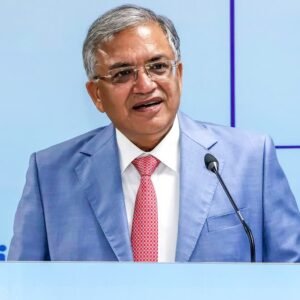
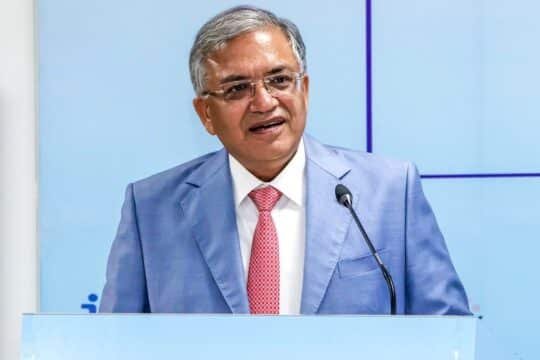
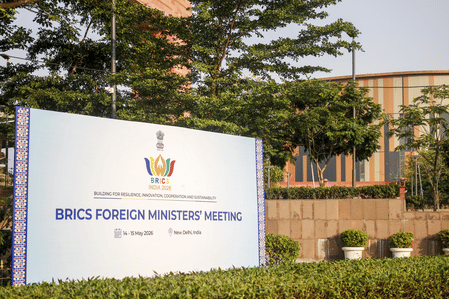
New Delhi, May 14, 2026 – The BRICS Foreign Ministers’ Meeting commenced today in India’s capital, marking a significant diplomatic engagement as the country assumes the rotating chairship of the influential grouping for 2026. External Affairs Minister Dr. S. Jaishankar, chairing the high-level gathering at Bharat Mandapam, set the tone by noting that the summit arrives at a time of “considerable flux in international relations.”
In his opening remarks, Jaishankar praised the attendees for maintaining “close and regular contact through bilateral and multilateral engagements.” He described the gathering as “a special occasion” that facilitates the exchange of perspectives and the development of convergences in an increasingly complicated and uncertain world.
“This allows us to exchange perspectives and encourages us to develop convergences. In this complicated and uncertain world, that is of ever-greater importance,” Jaishankar emphasized. As Chair, he thanked delegations for their presence and commitment to strengthening cooperation within the BRICS framework.
The two-day BRICS Foreign Ministers’ Meeting brings together ministers and senior representatives from full member countries and partner nations. It provides a platform to discuss global and regional issues of mutual interest, with a strong focus on building resilience amid geopolitical challenges.
India’s BRICS 2026 Chairship: Theme and Strategic Priorities
India’s chairship of BRICS in 2026 is guided by the theme “Building for Resilience, Innovation, Cooperation and Sustainability” (BRICS). This people-centric, humanity-first approach builds on previous presidencies and aligns with Prime Minister Narendra Modi’s vision for inclusive global development.
On the second day of the meeting, participants will engage in a dedicated session titled “BRICS@20: Building for Resilience, Innovation, Cooperation and Sustainability”. This will be followed by discussions on “Reforms of Global Governance and Multilateral System”, reflecting BRICS’ growing push for a more equitable international order.
India has hosted the BRICS Foreign Ministers’ Meeting as the incoming chair, following the previous gathering on the margins of the 80th Session of the United Nations General Assembly (UNGA 80) on September 26, 2025.
This year’s meeting assumes added importance as BRICS marks two decades of existence while navigating an expanded membership and complex global dynamics, including conflicts in West Asia, economic uncertainties, and calls for multilateral reforms.
Expanded BRICS: From Five to a Global Force
Originally comprising Brazil, Russia, India, China, and South Africa (BRICS), the grouping has significantly expanded. New full members include Egypt, Ethiopia, Indonesia, Iran, and the United Arab Emirates. Saudi Arabia’s status continues to evolve, while partner countries such as Belarus, Bolivia, Cuba, Kazakhstan, Malaysia, Nigeria, Thailand, Uganda, Uzbekistan, and Vietnam further broaden its reach.
This expansion transforms BRICS into a platform representing a substantial portion of the world’s population, GDP, and resources. It positions the group as a key voice for the Global South, advocating for reforms in institutions like the UN Security Council, IMF, World Bank, and WTO.
Analysts view India’s 2026 chairship as pivotal for consolidating this expansion, fostering practical cooperation in trade, technology, energy, and sustainable development while avoiding over-politicization of regional disputes.
Key Bilateral Engagements and Regional Concerns
Ahead of and during the BRICS Foreign Ministers’ Meeting, Jaishankar held several bilateral meetings, including with Russia’s Sergey Lavrov, Iran’s Abbas Araghchi, and others. These discussions underscore the grouping’s focus on strategic partnerships.
A prominent agenda item involves the strategically vital Strait of Hormuz. India is expected to convey concerns over the safe passage of merchant vessels through this narrow waterway, critical for global crude oil and LNG supplies. With tensions in West Asia, including recent disruptions, India has coordinated naval escorts and diplomatic efforts to ensure energy security. Reports indicate successful passage of multiple Indian vessels, with ongoing talks involving Iran.
Iran’s Foreign Minister Araghchi’s presence offers an opportunity to address maritime security, Chabahar Port development, and broader West Asia stability. India maintains balanced relations across the region while prioritizing energy imports from Russia and others as alternatives.
Global Context: Flux, Reforms, and Multipolarity
Jaishankar’s reference to “considerable flux” captures the current international landscape: ongoing conflicts, supply chain disruptions, technological competition, climate challenges, and debates over global governance.
BRICS nations collectively advocate for:
- Multilateral Reforms: Greater representation for developing countries in decision-making bodies.
- Economic Cooperation: De-dollarization efforts (though gradual), increased intra-BRICS trade in local currencies, and supply chain resilience.
- Innovation and Sustainability: Collaboration in renewable energy, digital economy, AI ethics, and climate finance.
- Peace and Security: Dialogue on regional issues without external interference.
The BRICS Foreign Ministers’ Meeting serves as a precursor to the full BRICS Leaders’ Summit later in 2026, which India will host. Expectations are high for outcomes on the New Development Bank (NDB), Contingent Reserve Arrangement, and people-to-people ties.
Historical Significance and India’s Role
India has chaired BRICS previously in 2012, 2016, and 2021. The 2026 term is its fourth and first with the expanded format. New Delhi has consistently emphasized constructive engagement, bridging divides between members while advancing practical outcomes.
Jaishankar’s diplomacy—marked by pragmatism and strategic autonomy—positions India as a stabilizing voice. Bilateral ties with Russia remain strong despite global pressures, while partnerships with Brazil, China, and new members like UAE and Indonesia offer economic synergies.
What to Expect: Outcomes and Long-Term Impact
Observers anticipate:
- A joint statement reaffirming commitment to multilateralism and reforms.
- Progress on economic and technological working groups.
- Initiatives under the BRICS@20 theme to mark the grouping’s maturity.
- Strengthened mechanisms for crisis response and resilience.
For India, successful hosting enhances its global profile as a bridge-builder and leader in the Global South. It also supports domestic priorities like energy security, technological self-reliance (Atmanirbhar Bharat), and export growth.
Broader Implications for Global South and Beyond
The BRICS Foreign Ministers’ Meeting 2026 highlights the shift toward multipolarity. As Western-led institutions face criticism over representation and effectiveness, BRICS offers an alternative platform—not confrontational but complementary—focusing on development needs of the majority world.
Challenges remain: internal divergences on issues like Ukraine or West Asia, varying economic models, and external pressures. Yet, the grouping’s resilience stems from its focus on shared interests in trade, investment, and reform.
As sessions continue tomorrow, the world watches how BRICS navigates uncertainty. Under India’s stewardship, emphasis on “Resilience, Innovation, Cooperation and Sustainability” promises forward-looking outcomes that benefit not just members but the global community.
This BRICS Foreign Ministers’ Meeting reinforces that in a fragmented world, platforms for dialogue and convergence are more vital than ever. India’s proactive chairship signals its readiness to shape the future of multilateralism.