Trump in China 2026: Xi Jinping Welcomes President Trump in Historic Beijing Summit for Stronger US-China Partnership
Trump in China: Xi Jinping Rolls Out Red Carpet for President Trump in Grand Beijing Summit
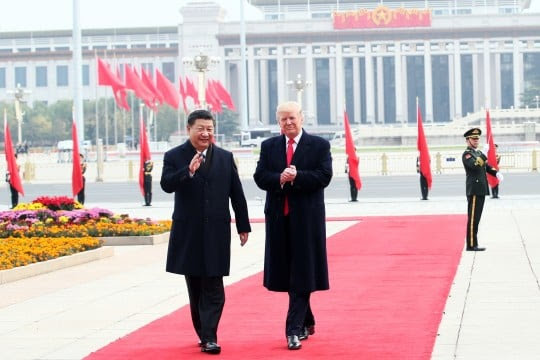
Beijing, May 14, 2026 – In a display of diplomatic pomp and pageantry, Chinese President Xi Jinping welcomed U.S. President Donald Trump with a firm handshake on Thursday, May 14, 2026, at the opulent Great Hall of the People in Beijing. The high-stakes summit marks Trump’s first visit to China since 2017 and signals a potential thaw in relations between the world’s two largest economies.
President Trump, arriving on Air Force One late Wednesday, May 13, was accompanied by a powerful delegation of American business leaders, including Nvidia’s Jensen Huang and Tesla’s Elon Musk. The visit underscores Trump’s focus on securing major business deals while addressing pressing geopolitical issues like the Iran conflict, trade tariffs, and Taiwan.
“Partners and Not Rivals”: Xi Jinping’s Message to Trump
During the bilateral meeting, Xi Jinping emphasized the importance of stable bilateral ties. “A stable China-U.S. relationship is a boon for the world. Cooperation benefits both sides, while confrontation harms both. We should be partners and not rivals,” Mr. Xi stated.
The Chinese leader expressed happiness at hosting Trump, noting that the world has reached “a new crossroads.” The ceremony featured a grand reception, including a Chinese military band playing the U.S. national anthem The Star-Spangled Banner followed by China’s anthem, with ceremonial cannon fire. Schoolchildren in colorful outfits waved American and Chinese flags, chanting “welcome, welcome” as the leaders walked through the square.
President Trump reciprocated warmly: “It’s an honour to be with you. It’s an honour to be your friend, and the relationship between China and the USA is going to be better than ever before. We are going to have a fantastic future together.”
Trump shook hands with key U.S. officials present, including Defense Secretary Pete Hegseth and Secretary of State Marco Rubio, who has historically been a vocal critic of Beijing. The presence of Rubio highlights the complex dynamics at play in this summit.
Inside the Trump in China Summit: Key Agenda Items
The two-day summit covers several thorny issues that have strained U.S.-China relations:
Trade and Tariffs: The leaders are discussing the extension of a one-year tariff truce reached in South Korea in October. Trump’s previous sweeping tariffs led to tit-for-tat responses exceeding 100%. Both sides aim to stabilize the trade relationship, with Trump pushing for greater market access for U.S. firms in agriculture, aircraft (including Boeing), and other sectors. Aboard Air Force One, Trump vowed to press Xi to “open up” China to American businesses.
Iran Conflict: The ongoing war with Iran looms large. China buys most of Iran’s U.S.-sanctioned oil. Trump expects a “long talk” on the issue but stated, “I don’t think we need any help with Iran” from Beijing. Secretary of State Marco Rubio expressed hope that China could play a more active role in persuading Iran to de-escalate in the Persian Gulf.
Taiwan: Trump indicated he would discuss U.S. arms sales to Taiwan with Xi, a potential shift from traditional U.S. policy of not consulting Beijing on support for the self-governing island. This topic is being watched closely by Taipei and regional allies.
Technology, Rare Earths, and AI: China’s controls on rare earth exports, AI competition, and broader tech rivalry are also on the agenda. The delegation of tech CEOs like Elon Musk and Jensen Huang points to ambitions for new investment and market-opening deals.
Grand Ceremonies and Cultural Highlights
Beyond high-level talks, the itinerary includes a state banquet at the Great Hall of the People in the evening and a visit by Trump to the historic Temple of Heaven, a UNESCO World Heritage site where Chinese emperors prayed for good harvests. These cultural elements add a layer of symbolism to the diplomatic engagement.
The welcome ceremony at just past 10:00 a.m. local time (0200 GMT) was meticulously orchestrated, reflecting China’s desire to project strength and hospitality while navigating deep underlying tensions.
Historical Context: Trump’s Return to China
This marks the first U.S. presidential visit to China in nearly a decade. Trump’s 2017 trip was accompanied by his wife Melania, unlike this solo-focused business and diplomacy trip. China today is more emboldened economically and geopolitically than it was nine years ago, presenting both opportunities and challenges for the Trump administration.
The summit comes amid global scrutiny, with both leaders seeking “wins” to stabilize a relationship that influences worldwide markets, supply chains, and security dynamics.
Business Leaders Join Trump in China Delegation
A notable feature of this visit is the inclusion of top U.S. CEOs. Nvidia’s Jensen Huang and Tesla’s Elon Musk represent key sectors where American innovation meets Chinese manufacturing and market scale. Trump hopes these executives can “work their magic” through new deals, potentially in electric vehicles, semiconductors, and broader tech cooperation.
Analysts suggest announcements on agriculture purchases, aircraft sales, and investment forums could emerge from the meetings.
Potential Outcomes and Global Implications
As the summit unfolds, expectations are tempered. While both sides want to project positivity, unresolved issues like trade imbalances, technology transfer concerns, and strategic rivalries persist. A reciprocal visit by Xi Jinping to the United States later in 2026 is reportedly a key goal for Trump to cement personal rapport.
For the global economy, positive developments from the Trump in China summit could ease supply chain pressures, stabilize commodity prices (including rare earths), and reduce uncertainty in financial markets. Conversely, any perceived concessions on Taiwan or failure to address Iran’s oil trade could draw criticism from U.S. allies.
Expert Perspectives on US-China Relations Under Trump
This meeting represents the world’s most important bilateral relationship in action. Success in extending the tariff truce and securing business commitments could boost U.S. exports and jobs. However, longstanding issues around intellectual property, market access, and human rights remain points of contention that may not be fully resolved in two days.
Secretary Rubio’s comments indicate a nuanced U.S. approach: combining Trump’s deal-making style with firm stances on security threats like Iran.
What to Expect Next from Trump in China
Day two of the summit will likely feature more in-depth negotiations, possible joint statements, and further cultural exchanges. Markets worldwide are watching closely for any breakthroughs or signals of tension.
Trump’s emphasis on reciprocity and “America First” while engaging personally with Xi reflects his unique diplomatic approach—blending toughness with charm.
This Trump in China visit comes at a pivotal moment, with the Iran war adding urgency to discussions on energy security and Middle East stability. China’s role as a major buyer of Iranian oil gives it leverage that Washington hopes to influence constructively.
Broader Significance for Global Stability
A stable U.S.-China relationship indeed benefits the world, as Xi noted. From climate cooperation to preventing conflict in the Indo-Pacific, the outcomes here ripple far beyond Beijing.
As President Trump and Xi Jinping conclude their meetings, the focus will shift to implementation of any agreements and follow-up diplomacy throughout 2026.
Stay tuned to our news website for live updates, analysis, and reactions from the Trump in China summit. We will continue providing comprehensive coverage of US-China relations, trade developments, and geopolitical shifts.