West Bengal Assembly Election 2026: NIA Probes Recovery of 79 Crude Bombs in South 24 Parganas Ahead of Final Polling Phase
The West Bengal Assembly Election 2026 is entering a critical phase with the campaign for the second and final round of polling scheduled to conclude on Monday. However, the atmosphere remains tense following the recovery of a large cache of crude bombs in South 24 Parganas district, prompting swift intervention by central agencies and the Election Commission of India (ECI).
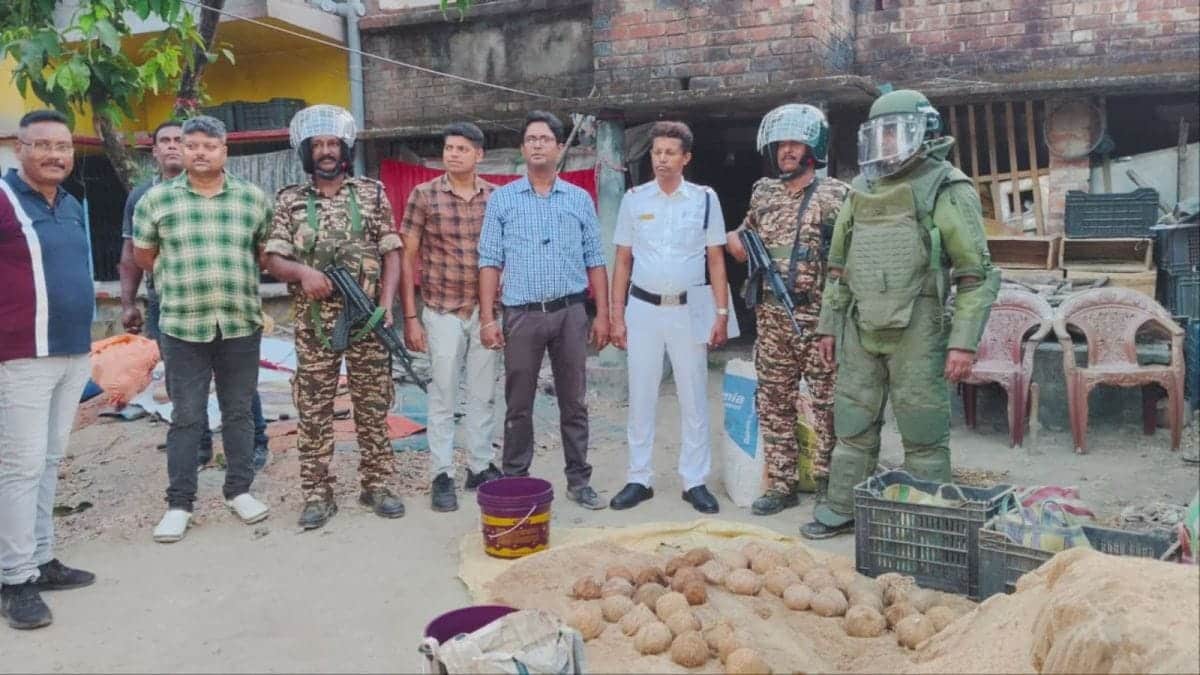
In a significant development that has raised serious concerns about law and order, police recovered a large quantity of crude bombs, locally known as khar bombs, from a residential premises in Bhangar area of South 24 Parganas. The discovery has sparked widespread alarm across the state just days before the crucial April 29 polling.
According to reports, the house belonged to a man identified as Rafiqul Islam. Acting on specific intelligence inputs, a police team conducted a search at his residence and seized a substantial number of live crude bombs along with other objectionable materials used in their manufacture. While initial reports mentioned around 100 crude bombs, the case formally registered with the National Investigation Agency (NIA) pertains to the recovery of 79 such devices.
The incident has not only created a stir in the state but has also highlighted the persistent challenge of illegal explosives in poll-bound West Bengal. The timing of the recovery — just before the second phase of the West Bengal Assembly Election 2026 — has intensified demands for stringent action to ensure free and fair polling.
Central Agencies Step In: MHA Transfers Case to NIA
Considering the gravity and potential threat to public safety, the Union Ministry of Home Affairs (MHA) directed the transfer of the case to the National Investigation Agency (NIA), India’s premier anti-terror probe body.
On Sunday evening, the NIA formally registered a case to investigate the recovery of the 79 crude bombs. The case was initially lodged at the Uttar Kashipur Police Station in Kolkata. Authorities recovered the bombs and other incriminating materials that were allegedly stockpiled in a manner that posed a direct threat to human lives and property.
The NIA case (No. 62/2026) has been registered under relevant sections of the Bharatiya Nyaya Sanhita (BNS), 2023, and the Explosive Substances Act, 1908. These provisions deal with illegal manufacturing, possession, and storage of explosives with the intent to endanger life or create terror.
Sources within the NIA indicated that the agency would conduct a thorough probe to uncover the larger network behind the illegal manufacturing and stockpiling of these crude bombs. The move underscores the Centre’s seriousness in tackling poll-related violence and ensuring the safety of voters during the West Bengal Assembly Election 2026.
Election Commission Directs Strict Action
The Election Commission of India has taken a firm stand on the issue. On Sunday, the poll panel directed the West Bengal Police to launch immediate operations to identify and arrest all individuals involved in the illegal manufacturing of crude bombs across the state.
The ECI further clarified that the NIA would investigate all cases related to explosive substances in the state. This directive comes in the wake of multiple scattered incidents and recoveries of objectionable materials reported from different parts of West Bengal in recent days.
Senior police officials across the state have been put on high alert. The Commission has warned them to maintain strict law and order, especially in sensitive areas, ahead of the April 29 polling date. The focus is on preventing any disruption to the electoral process and ensuring voters can exercise their franchise without fear.
Bhangar in South 24 Parganas has long been considered a politically sensitive and violence-prone area. The recovery of crude bombs from this region has once again brought the spotlight on the area’s history of political tensions and alleged use of explosives during election seasons.
Background of the West Bengal Assembly Election 2026
The West Bengal Assembly Election 2026 is being held in two phases to elect all 294 members of the state Legislative Assembly. The first phase covered 152 constituencies on April 23, 2026, while the second and final phase will cover the remaining 142 constituencies on April 29, 2026. Vote counting for all phases is scheduled for May 4, 2026.
The election has witnessed high political stakes, with major parties campaigning vigorously. However, reports of sporadic violence, including crude bomb explosions in certain areas like Murshidabad during the first phase, have raised questions about the overall security environment.
The discovery in Bhangar adds to the list of concerns. Political parties have already started trading charges, with opposition parties demanding a thorough investigation and stricter measures, while the ruling dispensation is expected to respond to the allegations.
Why Crude Bombs Remain a Recurring Threat in Bengal Polls
Crude bombs, or khar bombs, are rudimentary explosive devices often made using locally available materials such as potassium chlorate, sulphur, and other chemicals packed in containers. These are relatively easy to manufacture but highly dangerous and unpredictable. They have unfortunately become a tool in political clashes and intimidation tactics during elections in parts of West Bengal.
Over the years, several districts, including South 24 Parganas, Murshidabad, and Birbhum, have reported similar recoveries and incidents involving such explosives. The stockpiling of these bombs is often linked to attempts to create fear, disrupt rival campaigns, or influence voters through muscle power.
The involvement of the NIA in the current case signals that authorities are treating this not merely as a local law and order issue but as a potential threat with broader implications for internal security during the democratic exercise.
Impact on Voters and Democratic Process
With campaigning for the final phase ending on Monday, the focus now shifts entirely to ensuring peaceful polling on April 29. The presence of central forces has already been strengthened in sensitive booths, but the recovery of such a large quantity of explosives has necessitated additional vigilance.
Voters in the second phase constituencies, which include several areas in South 24 Parganas and other districts, will be closely watching how authorities handle the situation. Free and fair elections are the cornerstone of democracy, and any compromise due to violence or fear undermines the entire process.
The Election Commission’s proactive steps — including directing arrests of those involved in bomb-making and handing over cases to the NIA — are aimed at sending a strong message that electoral malpractices and violence will not be tolerated.
What Lies Ahead
As the West Bengal Assembly Election 2026 reaches its climax, all eyes are on the administration’s ability to maintain peace. The NIA probe is expected to reveal whether the recovered bombs were part of a larger conspiracy or isolated stockpiling. Any arrests or further recoveries in the coming days could significantly influence the narrative in the final hours before polling.
Political analysts suggest that such incidents often reflect deep-rooted issues of political polarization and the use of muscle power in certain pockets of the state. Addressing these challenges is crucial not only for the current election but for the long-term health of democracy in West Bengal.
The coming days will be decisive. Voters, political parties, and security agencies are all geared up for the final phase. The priority remains clear: ensuring that every eligible citizen can cast their vote safely and without any intimidation.
This incident serves as a reminder of the constant need for robust security measures and strict enforcement of laws to safeguard the electoral process. The people of West Bengal deserve an election free from fear, violence, and illegal activities.
Stay tuned for further updates on the West Bengal Assembly Election 2026, the NIA investigation into the Bhangar crude bomb recovery, and all developments leading up to the April 29 polling day.