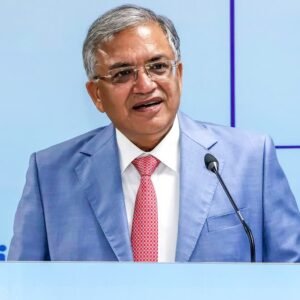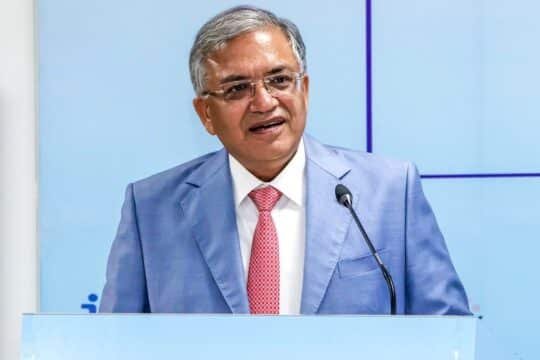
In a development that marks a defining moment in the political history of the state, Bihar’s longest-serving chief minister, Nitish Kumar, officially resigned from the legislative council on Monday. The move comes just days after he secured a berth in the Rajya Sabha, completing what he described as a long-held personal ambition: to serve in both Houses of the Bihar legislature as well as both Houses of Parliament.
While the resignation was a procedural formality, its political implications are seismic. For nearly two decades, Nitish Kumar has been the undisputed face of governance in Bihar—a leader who built his reputation on the twin pillars of “development and dignity.” His departure from state politics is not merely a routine transition; it represents the quiet but consequential closure of an era. More importantly, it paves the way for the Bharatiya Janata Party (BJP) to potentially appoint its own Bihar CM for the first time, reshaping the power dynamics of a state long dominated by regional satraps.
This article unpacks the significance of Nitish Kumar’s resignation, the political vacuum it creates, the rise of new leadership, and what it means for the future of governance in Bihar.
The Resignation: A Quiet End to a Tumultuous Tenure
On Monday, Mokama MLA Anant Singh confirmed what political circles had been speculating for days: Nitish Kumar was stepping down from the legislative council. The resignation, submitted to the council chairman, was a low-key affair, devoid of the fanfare that often accompanies such transitions. But for those who have followed Bihar politics closely, the silence was deafening.
Kumar had already announced his decision to move to the Rajya Sabha on March 5, framing it as the fulfillment of a personal political dream. In a post on X (formerly Twitter), he reflected on his journey:
“I have always aspired to serve in both Houses of the Bihar legislature as well as both Houses of Parliament. The trust and support of the people over more than two decades enabled my government to deliver development and dignity to the state.”
He assured the people of Bihar that his “bond” with them would remain intact, pledging “full cooperation and guidance” to the new government that will take charge. But the subtext was unmistakable: after 20 years at the helm, Nitish Kumar was stepping aside.
The End of an Era: From Anti-Corruption Crusader to National Parliamentarian
To understand the magnitude of this moment, one must look back at the trajectory of Nitish Kumar’s political career. He first became chief minister in 2000, though his tenure lasted only seven days. It was his second term, beginning in 2005, that defined his legacy. Breaking the grip of the Rashtriya Janata Dal (RJD) and its leader Lalu Prasad Yadav, Kumar built a reputation as a “Sushasan Babu” (Mr. Good Governance).
Under his leadership, Bihar—once synonymous with jungle raj, crime, and economic stagnation—underwent a transformation. Roads were built, law and order improved, and the state’s economic growth rate outpaced the national average for several years. His focus on education, women’s empowerment (particularly the prohibition policy), and infrastructure won him accolades across the political spectrum.
Now, at 75 and after being sworn in for a record tenth term in November 2024, Kumar is moving to the national stage. His resignation from the legislative council draws the curtain not just on his tenure, but also on his decades-long rivalry with Lalu Prasad Yadav—a rivalry that shaped Bihar politics for an entire generation.
The Lalu-Nitish Rivalry: A Chapter Closes
For over three decades, Bihar politics was defined by the bitter rivalry between Nitish Kumar and Lalu Prasad Yadav. The two leaders, once allies in the Janata Dal, became bitter adversaries after Lalu’s rise to power in 1990. Nitish’s political identity was forged in opposition to Lalu’s brand of caste-based politics and his alleged complicity in the state’s deteriorating law and order.
Now, with Nitish moving to the Rajya Sabha and Lalu largely absent from active politics—barred from contesting elections following a criminal conviction—the rivalry that defined an era is effectively over. Lalu continues to helm the RJD in name, but the party’s principal face is now his son, Tejashwi Yadav, who serves as the leader of the opposition in the Bihar assembly.
The generational shift is unmistakable. While Tejashwi represents the opposition, the ruling alliance is also preparing for a leadership change. The question now is: who will be the next Bihar CM?
The BJP’s Moment: A Door Opens for New Leadership
Nitish Kumar’s transition to national politics does not just mark the end of his personal journey; it opens the door for the Bharatiya Janata Party to do something it has never done before—appoint its own chief minister in Bihar.
Since 2005, the BJP has played the role of a junior partner in Bihar, first under Nitish Kumar in the National Democratic Alliance (NDA) and briefly under Jitan Ram Manjhi. Even after the alliance broke apart in 2013 and reunited in 2017, the BJP consistently deferred to Kumar as the face of the government. That era is now ending.
Why This Matters
The BJP has invested heavily in Bihar in recent years. Prime Minister Narendra Modi has frequently visited the state, inaugurating infrastructure projects, launching central schemes, and positioning the party as a national force capable of delivering development. With Nitish stepping aside, the BJP now has the opportunity to place one of its own in the top post—a move that could have significant implications for the 2029 Lok Sabha elections.
Potential Contenders
While no official announcement has been made, several names are circulating as potential successors:
- Samrat Choudhary: The state BJP president and a prominent OBC leader, Choudhary has been aggressively building the party’s organisational structure.
- Vijay Kumar Sinha: The current deputy chief minister, Sinha has been a vocal presence in the assembly and is seen as a loyal party soldier.
- Nand Kishore Yadav: A senior leader with decades of experience, Yadav represents continuity and administrative stability.
The decision will ultimately be made by the party’s central leadership, balancing caste arithmetic, organisational strength, and the need to maintain the NDA’s winning coalition.
What This Means for Governance in Bihar
For the people of Bihar, the leadership transition raises important questions about continuity and change. Nitish Kumar’s resignation from the legislative council—and his impending move to the Rajya Sabha—means that for the first time in nearly two decades, a new face will occupy the chief minister’s chair.
Continuity or Disruption?
Kumar has pledged “full cooperation and guidance” to the new government, suggesting that he intends to remain a mentor figure from Delhi. However, it remains to be seen how much influence he will wield once he is no longer a member of the state legislature. The new Bihar CM, whether from the BJP or a consensus candidate, will face the challenge of balancing respect for Kumar’s legacy with the need to establish their own political identity.
The Development Agenda
Kumar’s legacy of “development and dignity” remains a benchmark. The new administration will be expected to continue—and accelerate—infrastructure projects, industrial investment, and social welfare schemes. The recent NDA victory in the state elections gives the incoming leadership a strong mandate, but delivering on voter expectations will require stability and effective governance.
Nitish Kumar’s New Role: National Politics Beckons
As Nitish Kumar transitions to the Rajya Sabha, his role in national politics is expected to expand. Known for his ability to navigate complex coalition politics—he has switched alliances multiple times, always landing on his feet—Kumar could emerge as a key figure in the NDA’s national strategy.
His experience, centrist image, and credibility on governance issues make him a valuable asset for the BJP at the Centre. Whether he takes on a formal role in the Union government or serves as a strategist and elder statesman, his presence in Parliament ensures that his voice will continue to be heard on issues ranging from federalism to economic policy.
The Opposition’s Challenge: Tejashwi Yadav Prepares for Battle
With Nitish Kumar moving to the Centre, the opposition—led by Tejashwi Yadav—sees an opportunity. As leader of the opposition in the assembly, Tejashwi has positioned himself as the champion of youth, unemployment issues, and social justice. The RJD has been aggressively campaigning on the promise of restoring what it calls “the old identity of Bihar,” criticizing the NDA government for failing to generate adequate jobs.
The departure of Nitish from the state stage removes a formidable electoral rival. However, Tejashwi now faces a new challenge: the BJP, untethered from its long-time senior partner, is likely to go into the next elections with its own chief ministerial candidate. The battle lines in Bihar politics are being redrawn.
Frequently Asked Questions (FAQ)
1. Why did Nitish Kumar resign from the legislative council?
Nitish Kumar resigned from the legislative council to transition to the Rajya Sabha, fulfilling his long-held ambition to serve in both Houses of the Bihar legislature and both Houses of Parliament. His resignation is part of a broader move to national politics after serving as Bihar’s chief minister for over two decades.
2. Who will be the next Bihar CM after Nitish Kumar’s resignation?
While no official announcement has been made, the BJP is widely expected to appoint its own Bihar CM for the first time. Potential contenders include state BJP president Samrat Choudhary, deputy chief minister Vijay Kumar Sinha, and senior leader Nand Kishore Yadav. The final decision rests with the party’s central leadership.
3. What is Nitish Kumar’s political legacy in Bihar?
Nitish Kumar is credited with transforming Bihar from a state plagued by crime and economic stagnation to one known for improved law and order, road infrastructure, and governance. His focus on “development and dignity” defined his tenure, and he holds the record for serving as Bihar’s chief minister the most number of times.
4. How does this affect the rivalry between Nitish Kumar and Lalu Prasad Yadav?
The rivalry between Nitish Kumar and Lalu Prasad Yadav defined Bihar politics for over three decades. With Kumar moving to the Rajya Sabha and Lalu largely absent from active politics—barred from contesting elections—this chapter has effectively closed. The political landscape now features a generational shift, with Tejashwi Yadav leading the RJD.
5. Will Nitish Kumar continue to influence Bihar politics from the Rajya Sabha?
Yes, Nitish Kumar has pledged “full cooperation and guidance” to the new government, indicating he intends to remain influential. However, as he is no longer a member of the state legislature, his direct role in governance will diminish, though his stature as a senior national leader ensures his voice will still carry weight.
Conclusion: A New Chapter for Bihar
The resignation of Nitish Kumar from the legislative council marks a watershed moment in Bihar’s political history. After 20 years of governance that reshaped the state’s identity, the man known as Bihar’s “Sushasan Babu” is stepping onto the national stage. His departure draws the curtain on an era defined by his rivalry with Lalu Prasad Yadav and his relentless focus on development.
For the Bharatiya Janata Party, this is a moment of opportunity. For the first time, the party has a clear path to appoint its own Bihar CM, ending nearly two decades of playing second fiddle to a regional ally. The coming weeks will reveal who will fill that role and how they will navigate the complex political landscape of India’s third-most populous state.
For the people of Bihar, the transition brings both hope and uncertainty. Will the new leadership sustain the development momentum? Will the opposition, led by Tejashwi Yadav, capitalize on the leadership vacuum? One thing is certain: Bihar politics has entered a new chapter, and all eyes are now on Patna.