YouTube Outage February 2026: Global Disruption Hits Millions Due to Recommendations System Issue – Full Details and Update
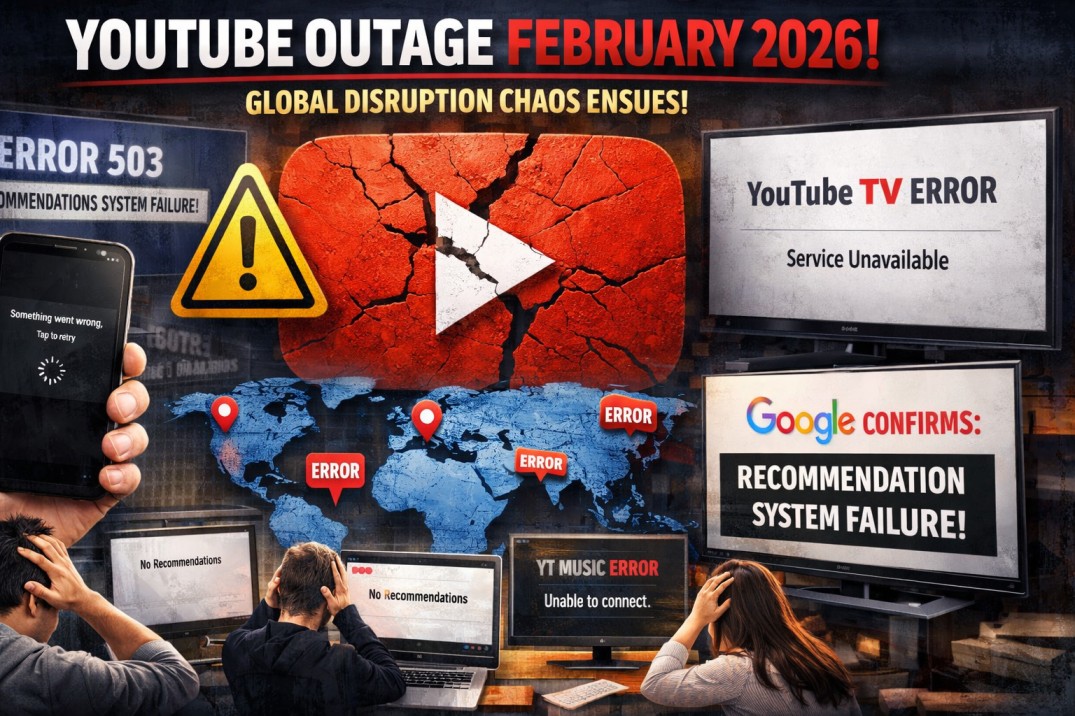
On February 17, 2026, YouTube experienced a significant global outage that disrupted access for millions of users across the world. The platform, owned by Google, saw a massive spike in reports starting in the evening hours, leaving many unable to browse recommendations, load the homepage, or fully use related services like YouTube Music, YouTube Kids, and YouTube TV.
The YouTube outage February 2026 quickly became a trending topic as frustrated users flooded social media and outage tracking sites with complaints. According to Downdetector, a popular real-time monitoring tool that aggregates user reports, the issues peaked with over 320,000 reports in the United States alone, and hundreds of thousands more globally. Some sources reported spikes nearing 800,000 in the US and combined figures exceeding a million when including international complaints.
When Did the YouTube Outage Start?
The problems began around 7:50 p.m. ET (which corresponds to 12:50 a.m. GMT the next day), aligning with primetime viewing hours on the US East Coast and late evening on the West Coast. Reports indicate the initial spike occurred slightly earlier in Pacific Time, around 4:45–5:00 p.m. PT (7:45–8:00 p.m. ET), with rapid escalation by 5:10 p.m. PT when Downdetector graphs showed a dramatic surge to over 338,000 reports.
Users primarily reported that the YouTube homepage appeared blank or displayed error messages like “Something went wrong. Try again.” Videos from direct links sometimes loaded, but personalized recommendations—the core of the YouTube experience—failed to appear across surfaces. This affected the web version, mobile apps, YouTube Music (where playlists and suggestions vanished), YouTube Kids (impacting family viewing), and even YouTube TV for some subscribers who faced login or channel access hurdles.
In the UK, reports exceeded 30,000 at peak times, while other regions including India (around 17,000 reports), Europe, and parts of Asia saw similar disruptions. The outage was truly global, though heaviest in North America due to higher user density and primetime overlap.
Google’s Official Confirmation and Cause of the Outage
Google’s YouTube team quickly acknowledged the problem via their official support channels and social media. In an early statement on X (formerly Twitter) from @TeamYouTube, the company noted: “We’re aware some of you are having issues accessing YouTube right now. Our teams are aware, and we’ll provide updates as soon as we have them.”
As reports mounted, YouTube provided more detail in a follow-up: “An issue with our recommendations system prevented videos from appearing across surfaces on YouTube (including the homepage, the YouTube app, YouTube Music and YouTube Kids). The homepage is back, but we’re still working on a full fix – more coming soon!”
This revelation pointed to a backend failure in YouTube’s sophisticated recommendation engine—the AI-driven system that powers personalized video suggestions, trending sections, and discovery features. The recommendations system is central to user engagement, helping billions of hours of watch time monthly by surfacing relevant content.
A small subset of users also reported login issues specifically with YouTube TV, Google’s live TV streaming service. The company clarified that these were related to the broader outage and assured fixes were in progress.
Timeline of the YouTube Outage February 2026
- ~4:45–5:00 p.m. PT (7:45–8:00 p.m. ET): Initial reports emerge, with spikes on Downdetector.
- 5:10 p.m. PT: Peak surge begins, reaching 338,000+ US reports quickly.
- ~5:30–7:50 p.m. ET: Widespread complaints flood social media; users share screenshots of blank homepages and error messages.
- Evening updates: YouTube acknowledges the issue and identifies the recommendations system as the culprit. Partial restoration starts, with the homepage reappearing for many.
- ~9:00–10:00 p.m. ET: Further updates indicate progress; some lingering issues with recommendations and YouTube TV.
- Late evening / early February 18: Final confirmation from YouTube: “The issue with our recommendations system has been resolved, and all of our platforms (YouTube.com, the YouTube app, YouTube Music, Kids, and TV) are back to normal! We really appreciate you bearing with us while we sorted this out.”
The entire disruption lasted several hours for most users, though partial functionality returned progressively.
Impact on Users and Broader Implications
For casual viewers, the outage meant frustration during peak entertainment hours—many were settling in for evening relaxation, catching up on news, tutorials, gaming streams, or Olympics-related content (given the timing around global events). Creators faced potential dips in real-time views, comments, and uploads, as the platform’s discovery features were crippled.
YouTube TV subscribers encountered additional headaches, with some unable to log in or access live channels. This highlighted how interconnected Google’s services are; a single backend glitch can cascade across apps and features.
The incident underscores the fragility of large-scale platforms reliant on complex AI systems. YouTube’s recommendation algorithm, powered by machine learning, processes vast data to personalize feeds. A failure here doesn’t just break search—it breaks the “infinite scroll” experience that keeps users engaged.
This wasn’t the first YouTube outage, but it ranked among the more widespread in recent years. Past incidents often stemmed from data center issues, network problems, or regional disruptions, but this one tied directly to core functionality.
How Users Reacted and Workarounds
Social media exploded with memes, complaints, and humor. Many joked about suddenly having time for “real life” or switching to competitors like TikTok, Netflix, or Vimeo. Others shared tips: accessing videos via direct links, using incognito mode, clearing cache, or checking subscriptions manually.
Downdetector maps showed clusters in major cities like New York, Los Angeles, Chicago, London, and beyond, confirming the global scale.
Resolution and Aftermath
By late February 17 into February 18, 2026, YouTube declared full resolution. The recommendations system was patched, restoring personalized feeds, trending sections, and full functionality across all platforms.
Google has not released a detailed post-mortem yet, but such incidents typically lead to internal reviews to prevent recurrence—improved redundancy, faster rollback mechanisms, or enhanced monitoring for AI components.
For users, the YouTube outage February 2026 served as a reminder of digital dependency. In an era where streaming dominates entertainment, even brief downtimes spark widespread discussion.
As the platform stabilizes, millions returned to their routines—watching cat videos, tutorials, music, and more—likely with a bit more appreciation for seamless tech.
Stay tuned to our site for the latest tech news, outage updates, and Google/YouTube developments. If you’ve experienced similar issues or have tips, share in the comments below!