Guwahati Airport New Terminal 2 Starts Domestic Flights from February 22, 2026: A Major Boost for Northeast Connectivity
Guwahati, the bustling gateway to Northeast India, is set for a transformative leap in aviation infrastructure as the much-awaited Integrated Terminal 2 (T2) at Lokpriya Gopinath Bordoloi International Airport (LGBI Airport) commences domestic flight operations from February 22, 2026. This development marks a significant milestone in enhancing connectivity, reducing congestion, and promoting economic growth across Assam and the entire Northeastern region.
Assam Chief Minister Dr. Himanta Biswa Sarma announced this exciting update during a recent press conference, confirming that domestic flights will shift to the state-of-the-art new terminal starting Saturday, February 22, 2026. For the time being, international flights will continue to operate from the existing old terminal, allowing a phased transition that ensures smooth services for all passengers.
The announcement comes nearly two months after Prime Minister Narendra Modi formally inaugurated the new terminal on December 20, 2025. The inauguration was part of a larger push to modernize infrastructure in the Northeast, with the Prime Minister also unveiling an impressive statue of Bharat Ratna Lokpriya Gopinath Bordoloi at the airport premises, honoring the legendary Assamese leader after whom the airport is named.
Massive Investment and Ambitious Capacity
Constructed at an approximate cost of ₹4,000 crore (with some reports indicating the total project cost, including associated facilities like maintenance, repair, and overhaul (MRO), nearing ₹5,000 crore), the new Integrated Terminal 2 represents one of the largest aviation investments in the region. Spanning nearly 1.4 lakh square meters, the terminal is seven times larger than the existing facility and has been designed to handle a staggering 13.1 million passengers annually.
This capacity marks a substantial increase from the current handling of around 6-7 million passengers per year at the older terminal. The terminal is equipped to manage up to 34 air traffic movements per hour—the highest in the Northeast—making it a future-ready hub capable of supporting the region’s growing air travel demand well into the coming decades.
Officials project that the new terminal will accommodate peak-hour loads of approximately 4,300 domestic passengers and additional international capacity when fully integrated. Features include 64 check-in counters, 20 self-check-in kiosks, multiple self-baggage drop points, advanced in-line baggage security screening, 10 aerobridges, and several baggage reclaim belts. The infrastructure also incorporates DigiYatra-enabled contactless processing, smart check-in systems, full-body scanners, AI-driven operations, and enhanced security measures for a seamless and secure travel experience.
India’s First Nature-Themed Airport Terminal: Blending Culture and Modernity
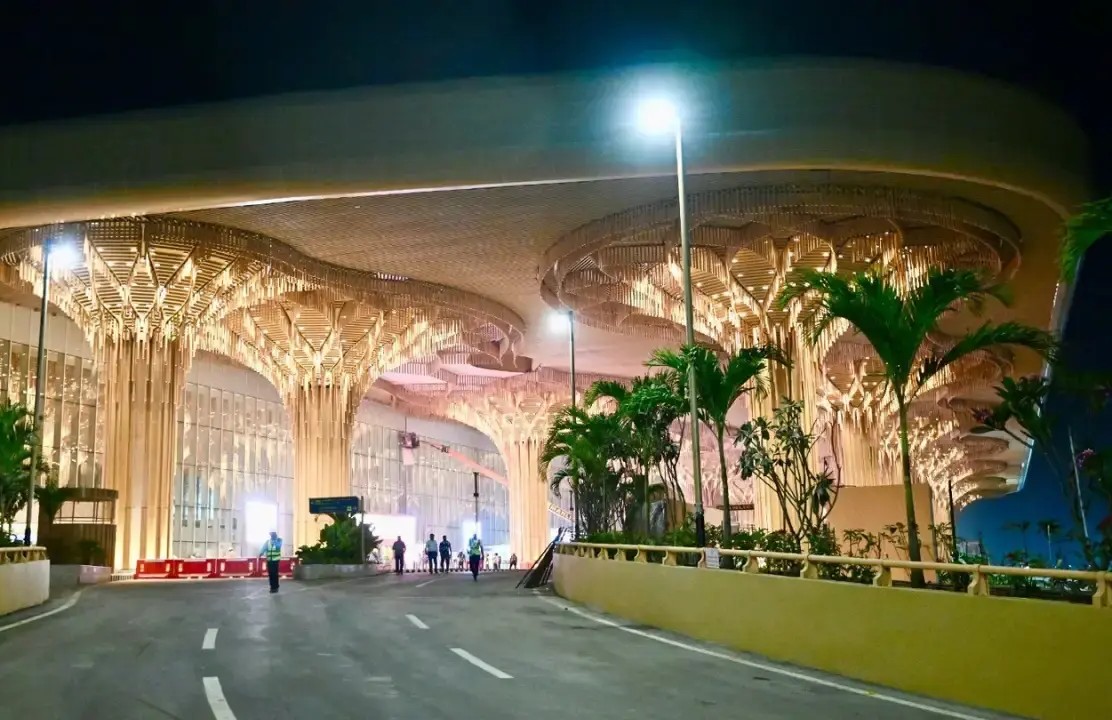
What sets the Guwahati Airport new terminal apart is its unique design philosophy. Dubbed India’s first nature-themed airport terminal, it revolves around the concept of “Bamboo Orchids,” drawing deep inspiration from Assam’s lush biodiversity, cultural heritage, and natural landscapes. The architecture beautifully integrates elements like bamboo structures, orchid-shaped columns, Kaziranga-inspired motifs, and a stunning “Sky Forest” featuring nearly 100,000 indigenous plants.
This thematic approach not only creates a visually captivating and calming environment for travelers but also celebrates Assam’s rich ecological and cultural identity. Local traditions are reflected throughout the terminal, from artistic installations to material choices, ensuring that the facility feels like a warm welcome to the Northeast rather than a generic airport structure. The blend of modern functionality with regional aesthetics positions Guwahati Airport as a world-class destination that proudly showcases Northeast India’s essence to domestic and future international visitors.
Passengers can look forward to significantly improved amenities, including:
- Enhanced security systems with faster processing
- More check-in counters and self-service options
- Advanced baggage handling systems for quicker retrieval
- Expanded boarding gates and aerobridges
- Spacious, comfortable waiting lounges with better seating and facilities
- Retail stores, dining options, and souvenir shops highlighting local crafts
- Reduced congestion leading to smoother journeys and shorter wait times
These upgrades are expected to drastically ease the pressure on the old terminal, which has long struggled with overcrowding due to surging passenger numbers in recent years.
Phased Operations and Initial Focus on Domestic Flights
Starting February 22, 2026, domestic operations will migrate to Terminal 2, with airlines like Akasa Air reportedly leading the transition for their flights to and from Guwahati. This phased approach allows authorities to fine-tune operations, staff training, and passenger flows before potentially shifting international services in the future.
The decision to begin with domestic flights ensures minimal disruption, as the majority of traffic at LGBI Airport is domestic. Travelers can anticipate faster check-in, reduced crowds, and an overall more comfortable experience right from day one. The new terminal’s operational readiness has been rigorously tested through programs involving international experts, guaranteeing a smooth launch.
Broader Impact on Northeast India: Tourism, Economy, and Connectivity
The commissioning of Guwahati Airport’s new Terminal 2 is more than just an infrastructure upgrade—it’s a game-changer for the Northeast region. As the primary aviation gateway for Assam and the seven sister states, LGBI Airport plays a pivotal role in tourism, trade, business travel, and connectivity.
With improved capacity and facilities, the terminal will support increased flight frequencies, new routes, and higher passenger volumes. This is expected to give a major boost to tourism in Assam—highlighting destinations like Kaziranga National Park, Majuli, Kamakhya Temple, and the tea gardens—as well as neighboring states. Enhanced air links will facilitate easier access for investors, professionals, and visitors, driving economic activities in sectors such as hospitality, handicrafts, agriculture exports, and services.
Authorities emphasize that this development will strengthen overall regional connectivity, reduce travel bottlenecks, and position Guwahati as a key hub in India’s aviation network. In the long term, the terminal is poised to handle future growth in both domestic and international passenger numbers, aligning with the government’s vision for a developed Northeast.
Looking Ahead: A New Era for Guwahati Airport
As February 22, 2026, approaches, excitement is building among frequent flyers, tourism stakeholders, and residents alike. The new terminal not only addresses immediate capacity constraints but also sets a benchmark for modern, culturally sensitive airport design in India.
For travelers planning trips to or through Guwahati, this means shorter queues, more comfort, and a truly memorable first impression of the Northeast. Stay tuned for updates on airline transitions, specific flight shifts, and any additional facilities rolling out post-launch.
This landmark project underscores the rapid progress in Northeast infrastructure under collaborative efforts between the central and state governments. Guwahati Airport’s new Terminal 2 is not just a building—it’s a symbol of progress, pride, and promising future for Assam and the entire region.