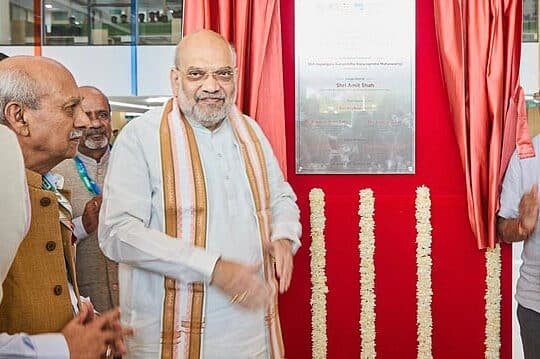
New Delhi, December 21, 2025 – Union Environment Minister Bhupender Yadav has strongly refuted claims that the recent Supreme Court-approved uniform definition of the Aravalli Range opens up mining in landforms below 100 meters height, stating that “no relaxation has been made at all” in protections for the ancient mountain chain.
The clarification comes amid widespread concerns raised by opposition leaders and environmentalists following the Supreme Court’s November 2025 order, which adopted a definition classifying Aravalli hills as landforms rising 100 meters or more above local relief. Critics, including Congress leaders Jairam Ramesh and Ashok Gehlot, alleged the move could exclude over 90% of the range from strict mining bans, potentially exacerbating ecological damage in the ecologically vital region.
Yadav emphasized that the new criteria protect the entire ecosystem: “It’s wrong to conclude that mining is permitted in all landforms below 100 metres height. Only 0.19% of the total 1.44 lakh sq km Aravalli area is eligible for mining, with the rest fully protected.” He highlighted that mining is prohibited within the lowest bounding contour encircling hills of 100 meters or more—regardless of internal landform height or slope—and within 500 meters of adjoining such hills.
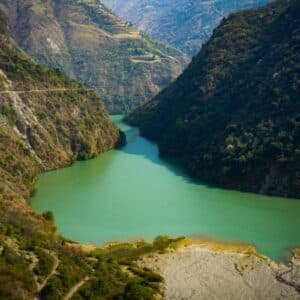
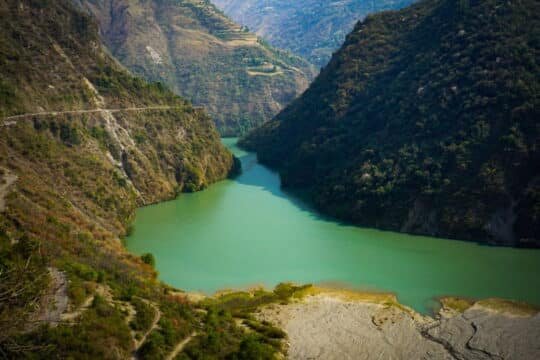
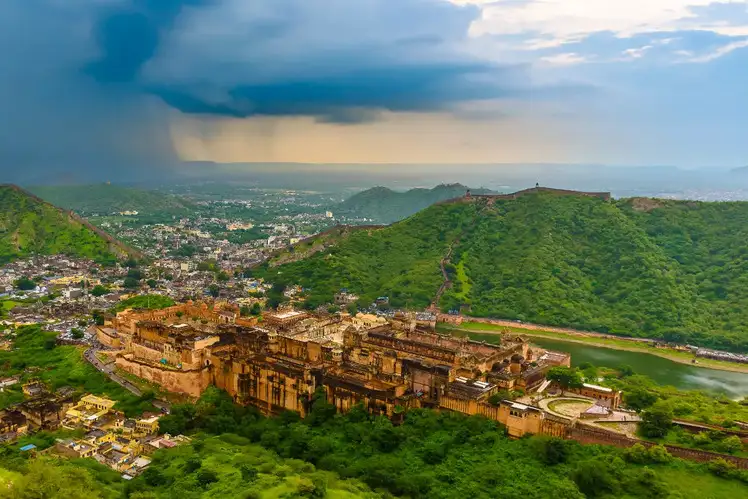
The Aravalli Range, one of India’s oldest fold mountain systems spanning about 670 km across Rajasthan, Haryana, Gujarat, and Delhi, serves as a critical “green barrier” against the Thar Desert’s advance. It supports diverse wildlife, aids groundwater recharge, and mitigates dust storms and pollution in the Delhi-NCR region. Past unchecked mining has led to habitat loss, erosion, and environmental degradation, prompting Supreme Court interventions since 2004.
The minister noted that all affected states unanimously agreed to the uniform “100 meters above local relief” standard, already in use in Rajasthan since 2006, to ensure objective and transparent regulation. “By defining Aravalli Hills this way, along with their supporting slopes, the entire ecological unit is protected,” Yadav added, urging an end to “spreading confusion.”
Despite the government’s assurances, environmental groups remain wary, arguing that lower ridges play key roles in biodiversity and water conservation. The Supreme Court has meanwhile paused new mining leases pending a comprehensive management plan.
This development underscores ongoing tensions between conservation needs and mineral extraction in the mineral-rich Aravallis, vital for India’s ecological balance.