Indian Students Come Back Home Safely from Iran: First Batch of 70 Evacuated via Armenia Amid Ongoing Regional Tensions
Indian Students Come Back Home: First Batch Safely Evacuated from Iran via Armenia Route
In a major relief to families across India, particularly in Jammu and Kashmir, the first batch of Indian students come back home safely after being stranded in Iran amid escalating regional tensions and conflict. Over 70 students, mostly medical trainees from Jammu and Kashmir, along with some pilgrims, arrived in New Delhi on Sunday morning via a coordinated route through Armenia. This marks the beginning of repatriation efforts for thousands of Indian nationals caught in the crossfire of the ongoing West Asia crisis.
The students had faced significant logistical challenges due to travel restrictions, closed airspace in Iran, and security concerns following heavy attacks on key cities like Tehran and Qom. The evacuation was facilitated through close collaboration between student associations, the Ministry of External Affairs (MEA), the Indian Embassy in Tehran, and local authorities.
Coordinated Effort Ensures Safe Return
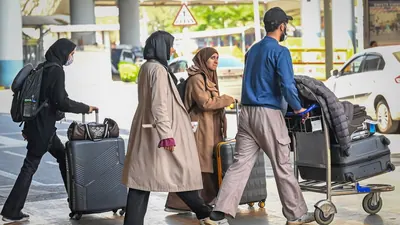
The journey began with students traveling by land from various locations in Iran, primarily Tehran and Qom, to the Armenia border. From there, they reached Yerevan’s Zvartnots International Airport and boarded a commercial flight (Flydubai Flight FZ8124) that departed on Saturday afternoon. The flight made a brief stop in Dubai before landing at Indira Gandhi International Airport in New Delhi early Sunday.
Upon arrival, many students boarded special buses arranged by the Jammu and Kashmir Government to head home, while others took connecting flights to Srinagar. This seamless transition highlighted the effective teamwork between government bodies and student organizations.
Dr. Mohammad Momin Khan, National Vice President of the All India Medical Students Association (AIMSA), described the operation as challenging yet successful. “It was a tough process involving constant coordination with local authorities, arranging secure transport, and ensuring the well-being of every student throughout the journey,” he said. “Teamwork and strong government support from the MEA made it possible to bring these students back safely.”
Nasir Khuehami, National Convenor of the Jammu & Kashmir Students Association (JKSA), emphasized the critical role of communication. “The safety of the students was always the top priority. The MEA, along with our associations, provided constant guidance, assistance, and real-time updates to the stranded individuals and their families,” he noted.
Khuehami also expressed gratitude to the Indian Embassy in Tehran for their “prompt intervention, coordination, and support” in making the evacuation possible. He highlighted how the process mirrored successful past operations but called for more comprehensive action ahead.
Another Flight and Ongoing Repatriation
While the first batch brought immense relief, the evacuation is far from over. A second flight carrying around 60 Indian nationals—including students and pilgrims—was scheduled to land in New Delhi late Sunday night. Sources indicate that additional flights are expected in the coming days as more students and citizens make their way out via safe corridors.
This phased approach comes after weeks of anxiety for families back home, who had been monitoring developments closely and appealing for urgent help. Many students, particularly medical ones pursuing studies in Iranian universities like Tehran University of Medical Sciences (TUMS), Iran University of Medical Sciences (IUMS), and Shahid Beheshti University of Medical Sciences (SBUMS), had been relocated earlier to safer areas like Qom (about 150 km from Tehran) by the Indian Embassy as a precautionary measure amid intensifying attacks.
Scale of the Crisis: Around 9,000 Indians Stranded
The situation in Iran remains precarious, with approximately 9,000 Indian citizens still in the country, according to MEA estimates. This includes a large number of students (many from Jammu and Kashmir, with others from Uttar Pradesh and various states), along with businesspersons, professionals, seafarers, factory workers, and pilgrims.
A significant portion—estimated at 1,000 to 1,200—are medical students from Jammu and Kashmir alone, studying in cities heavily impacted by the conflict. Tehran has faced repeated strikes, forcing relocations and heightening fears. Qom, while initially seen as safer, has also seen nearby incidents, prompting renewed calls for swift action.
Student groups like JKSA and AIMSA have been at the forefront, coordinating with the MEA to facilitate exits. Earlier attempts involved options via Azerbaijan as well, but the Armenia route proved viable due to accessible land borders and commercial flight connections.
Calls for a Full-Fledged Evacuation Operation
Nasir Khuehami stressed the need for a structured, government-led evacuation similar to Operation Ganga during the Ukraine crisis. “While we appreciate the support so far, the government urgently needs to launch a full-fledged evacuation operation to bring back all remaining stranded Indians,” he urged.
Families have voiced concerns over high costs of commercial tickets (often ₹1.5 lakh or more), visa requirements for transit countries, and the physical toll of long land journeys amid uncertainty. Some students reportedly funded their own travel after initial arrangements faced hurdles like flight cancellations from neighboring countries.
The MEA has maintained contact through control rooms and advisories, assisting those opting for self-arranged exits via Armenia or Azerbaijan. However, student leaders argue that a dedicated airlift or more subsidized options would ease the burden, especially for those with limited resources.
Relief for Anxious Families
This initial successful return has brought hope to thousands of families in Jammu and Kashmir and beyond. Parents who had lost contact due to internet disruptions or were receiving distress calls from bunkers and basements can now breathe easier for at least some of their loved ones.
The evacuation underscores India’s commitment to its citizens abroad during crises. Past operations in Ukraine, Sudan, and other conflict zones have set precedents, and stakeholders hope this momentum continues until all are safely home.
As more flights are anticipated, the focus remains on monitoring the situation closely and ensuring no one is left behind. The safe arrival of these Indian students come back home serves as a testament to coordinated diplomacy and community support in challenging times.
For updates on the ongoing evacuation from Iran, stay tuned to our website. If you have family members affected or need guidance, refer to official MEA channels.