The Regional Meteorological Centre (RMC) in Borjhar (Guwahati), under the India Meteorological Department (IMD), has issued an important weather update for Assam, forecasting rainfall in several districts tonight, Wednesday, February 25, 2026. This development signals a shift in weather patterns, bringing scattered to fairly widespread light to moderate rainfall accompanied by thunderstorms, lightning, and gusty winds in select areas of the state.
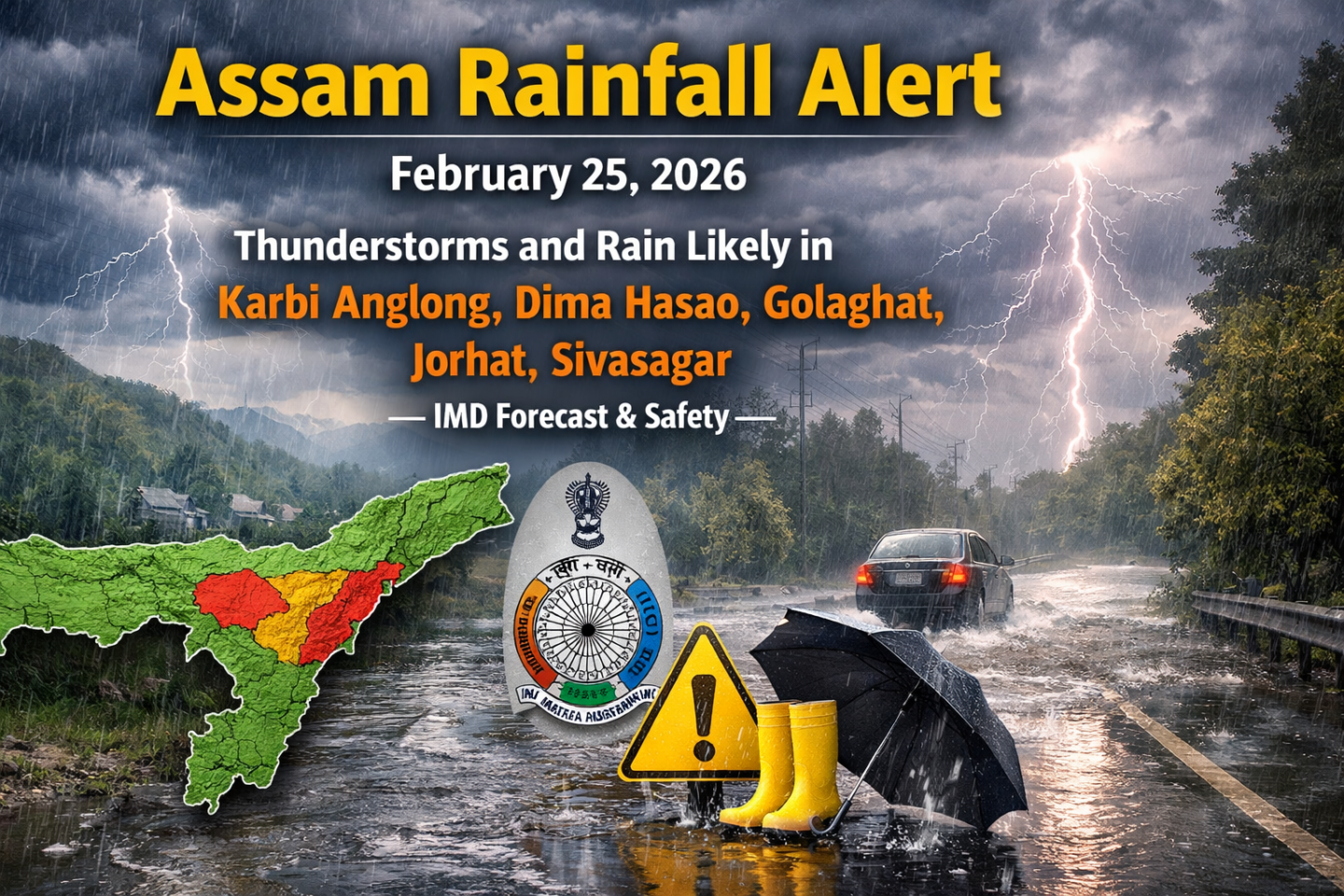
Assam Rainfall Alert February 25 2026: Thunderstorms and Rain Likely in Karbi Anglong, Dima Hasao, Golaghat, Jorhat, Sivasagar – IMD Forecast and Safety Tips
In a late-evening bulletin released today, the Regional Meteorological Centre in Borjhar has highlighted the likelihood of rainfall activity intensifying during the late evening and nighttime hours across specific districts. The affected regions include West Karbi Anglong, Dima Hasao, Karbi Anglong, Golaghat, Jorhat, and Sivasagar. These six districts (noted as five in initial reports but clarified with West Karbi Anglong as separate) have been placed under a weather alert, urging residents to exercise caution.
The forecast attributes this sudden change to increased atmospheric moisture combined with the influence of westerly winds, which are facilitating the development of convective activity. Such conditions are typical during transitional periods leading toward the pre-monsoon season, even in late February when Assam usually experiences drier winter-like weather. Historical data and recent IMD observations indicate that isolated thunderstorms can occur due to upper-air cyclonic circulations or shifting jet streams, as seen in broader Northeast India patterns this month.
According to the latest IMD updates, the expected rainfall is generally light to moderate, with probabilities in the affected areas ranging from isolated light showers to more widespread moderate downpours in pockets. While no heavy rainfall (exceeding significant thresholds like 7-11 cm in 24 hours) has been explicitly forecasted for these districts tonight, the accompanying thunderstorms and lightning pose risks, particularly in hilly and valley terrains. Gusty winds reaching 30-40 kmph could also occur, potentially affecting unsecured structures, outdoor activities, and power lines.
Why This Rainfall Alert Matters for Assam Residents
Assam, known for its vulnerability to weather extremes due to its geography—encompassing the Brahmaputra and Barak valleys, hilly districts like Karbi Anglong and Dima Hasao, and flood-prone lowlands—experiences occasional unseasonal weather events. February typically marks the tail end of winter, with average temperatures in places like Jorhat hovering around 25-30°C daytime highs and cooler nights. Rainfall in this period is usually sparse, but when it arrives with thunderstorms, it can disrupt daily life, agriculture, and travel.
For residents in the alerted districts:
- West Karbi Anglong and Karbi Anglong: These hilly areas are prone to landslides or soil erosion during sudden downpours, even if rainfall is moderate.
- Dima Hasao: Similar topography increases risks of road blockages or minor flash floods in low-lying spots.
- Golaghat, Jorhat, and Sivasagar: Located in the Upper Assam plains, these districts could see waterlogging in urban pockets or agricultural fields if showers persist.
The State Disaster Management Department under the Assam Government is actively monitoring the evolving situation. Officials have emphasized that no major severe weather risks, such as widespread flooding or cyclonic storms, are anticipated at this stage. However, vigilance remains key, especially given the nocturnal timing of the expected activity.
Broader Weather Context in Northeast India
This alert is not isolated to Assam. The IMD has indicated possibilities of similar scattered rainfall and thunderstorm activity across parts of the Northeast region, influenced by the same moisture influx and westerly systems. Neighboring states like Meghalaya, Arunachal Pradesh, and Nagaland may also witness isolated showers, though intensity varies.
Recent IMD national bulletins (as of February 25, 2026 evening) confirm scattered to fairly widespread light/moderate rainfall with thunderstorms and gusty winds over regions including Assam, aligning with the Guwahati centre’s specific district-level warnings. This comes amid a broader pattern where Northeast India has seen variable conditions in early 2026, with some areas recording below-normal rainfall in January-February, making this spell potentially beneficial for soil moisture replenishment.
Impact on Agriculture and Farmers’ Advisory
Experts from agricultural departments and IMD agro-meteorological units have noted that this unseasonal rainfall could prove advantageous for the farming community. Late February often sees rabi crops like mustard, pulses, and winter vegetables in fields across Assam. The incoming moisture helps maintain soil humidity, aiding crop growth and reducing irrigation needs in dry spells.
However, caution is paramount:
- Farmers are strongly advised to avoid venturing into open fields during active thunderstorms or lightning to prevent risks from strikes or flash accumulations.
- Protect harvested produce from sudden wetting.
- Monitor for any water stagnation that could lead to pest issues in standing crops.
This event underscores the importance of climate-resilient farming practices in Assam, where erratic weather patterns are becoming more noticeable due to changing atmospheric dynamics.
Safety Precautions and Public Advisory
The authorities have issued clear guidelines for the public to minimize risks:
- Stay indoors during heavy showers or thunder activity.
- Avoid open fields, tall trees, or elevated areas to reduce lightning exposure.
- Drivers should exercise caution on hilly roads or during low-visibility conditions caused by rain.
- Those traveling long distances, especially outdoors workers or commuters, should check real-time updates before heading out.
- Keep emergency contacts handy and follow local announcements from district administrations.
The Regional Meteorological Centre has committed to continuous monitoring over the next 24 hours, with fresh bulletins expected as conditions evolve. Residents are encouraged to rely on official sources such as the IMD website (mausam.imd.gov.in), RMC Guwahati portals, or state disaster management channels for the most accurate and timely information.
Conclusion: Staying Prepared in Changing Weather
As Assam navigates this brief spell of rainfall and thunderstorms on February 25, 2026, the focus remains on preparedness and safety. While the event appears limited in scale—no red or orange alerts for extreme weather—the combination of nocturnal timing, potential lightning, and district-specific impacts warrants attention.
This forecast serves as a reminder of Assam’s dynamic climate, where winter transitions can bring surprises. By heeding official advisories and staying informed, residents can ensure minimal disruption and turn this weather episode into a positive boost for agriculture.
For the latest Assam weather updates, including hour-by-hour changes and extended forecasts, bookmark official IMD channels and follow trusted local news sources. Stay safe, Assam!