The escalating US-Israel war on Iran reached a dramatic new phase over the weekend of March 7-8, 2026, as Israeli airstrikes—supported by American forces—targeted multiple oil storage facilities and fuel depots in and around Tehran, Iran’s bustling capital. These precision strikes ignited massive infernos, releasing enormous volumes of thick black smoke that enveloped the city, plunged visibility to near-zero levels, and triggered what residents and officials are describing as black acid rain in Iran. This toxic precipitation, laced with hydrocarbons, soot, and potentially acidic compounds, has sparked widespread alarm, health warnings, and an emerging public health crisis in a metropolis home to nearly 12-15 million people.
The phenomenon of black acid rain in Iran has dominated headlines globally, with eyewitness accounts painting apocalyptic scenes: skies darkened as if in perpetual night, streets coated in oily residue, vehicles damaged by falling particles, and residents suffering from respiratory distress, itchy eyes, throat irritation, and skin discomfort. Iran’s Red Crescent Society issued urgent advisories, warning that the rain could cause chemical burns, lung damage, and other severe effects due to contamination from burning petroleum products.
Black Acid Rain in Iran: Tehran Engulfed in Toxic Smoke and Hazardous Rainfall After Israeli Strikes on Oil Depots – Health Crisis Unfolds March 2026
Tehran Under Siege: Black Acid Rain in Iran Follows Devastating Israeli Strikes on Oil Infrastructure
In the early hours of Saturday night into Sunday, March 8, 2026, the skies over Tehran lit up with explosions as Israeli fighter jets, backed by US coordination in the ongoing conflict, unleashed a barrage of missiles on key fuel storage sites. The targets included major facilities such as the Shahran oil depot in northwestern Tehran, the Aghdasieh oil warehouse in the northeast, a southern refinery complex, and depots in nearby Karaj (Alborz province). Iranian state media, including Fars News Agency, confirmed strikes on at least four to five major oil storage and transfer sites, marking one of the most direct attacks on Iran’s energy heartland since the war intensified in late February.
The Israeli Defense Forces (IDF) swiftly claimed responsibility, stating via official channels that the facilities belonged to or supported the Islamic Revolutionary Guard Corps (IRGC) and were used to supply fuel to military operations, including missile launches against Israeli and regional targets. “These complexes distribute fuel to multiple military entities in Iran,” an IDF statement read, emphasizing the strategic intent to degrade Iran’s warfighting capabilities amid escalating exchanges.
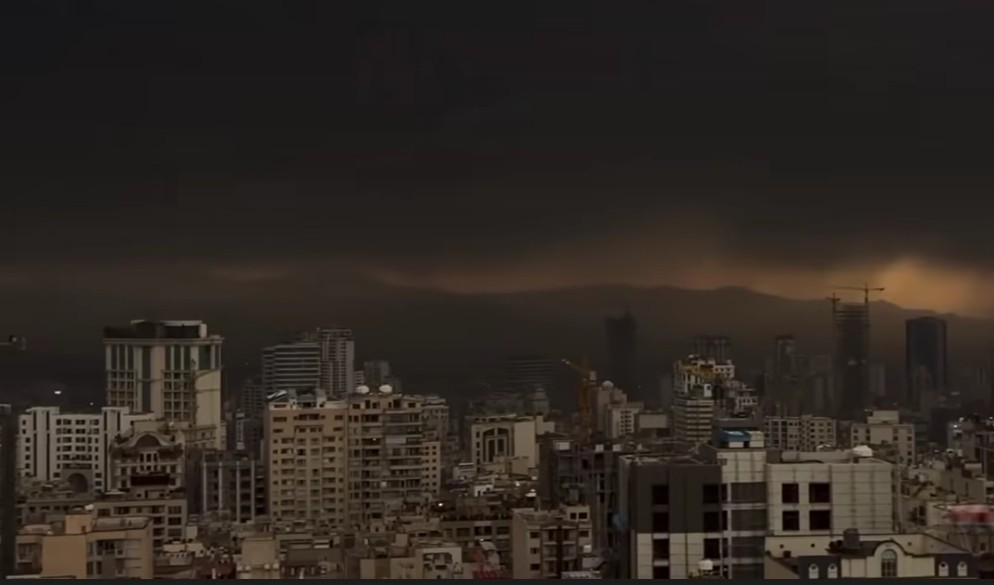
The immediate aftermath was catastrophic. Massive fireballs erupted, sending towering plumes of dense black smoke skyward. By dawn on Sunday, March 9, the smoke had coalesced into a vast, ominous cloud blanketing the capital. Residents reported the sun completely obscured, forcing many to switch on indoor lights in broad daylight—a scene The Guardian described as residents turning lights on amid “gloomy conditions” to navigate the disorienting darkness. Visibility dropped dramatically, evoking comparisons to historical disasters like the 1991 Kuwait oil fires or volcanic ash events.
As moisture-laden clouds interacted with the pollutant-heavy air mass, precipitation began falling across Tehran and surrounding areas. What should have been ordinary rain turned sinister: residents described a “strange drizzle” or oily droplets that left black streaks on buildings, cars, clothing, and skin. Online posts flooded social media with frantic messages labeling the scenes “apocalyptic.” Cars parked outdoors showed pitting and discoloration from hydrocarbon particles, while people reported immediate symptoms—burning eyes, irritated throats, coughing, and difficulty breathing.
Iran’s Red Crescent Society quickly issued public warnings, stating that the rain was contaminated with “toxic hydrocarbon compounds,” sulfur oxides, nitrogen oxides, and other combustion byproducts. “In the event of precipitation, the resulting rain is extremely dangerous and highly acidic,” the organization cautioned, advising citizens to stay indoors, avoid air conditioners (which could circulate contaminants), and seek medical help for exposure symptoms. They highlighted risks of skin burns, respiratory damage, and long-term health issues from inhaling or contacting the fallout.
This has become known as black acid rain in Iran—a term now trending worldwide as people search for explanations amid the chaos.
What Exactly Is Black Acid Rain in Iran? The Science Explained
To understand black acid rain in Iran, we must break down the chemistry and meteorology at play.
Traditional acid rain forms when sulfur dioxide (SO₂) and nitrogen oxides (NOₓ) from industrial emissions or fossil fuel combustion react with water vapor in the atmosphere to produce sulfuric and nitric acids. These lower the pH of rain below 5.6, making it corrosive.
In Tehran’s case, the source is far more immediate and intense: massive fires at oil depots burning crude oil, refined fuels, and storage tanks. Petroleum fires release:
- Particulate matter (soot and black carbon) — This gives the rain its “black” appearance, as tiny soot particles get scavenged by raindrops, turning them dark and oily.
- Volatile organic compounds (VOCs) and hydrocarbons — Unburned fuel vapors and partially combusted organics coat surfaces and contaminate water.
- Sulfur and nitrogen compounds — Oil often contains sulfur; high-temperature combustion produces SO₂ and NOₓ, contributing to acidity.
- Polycyclic aromatic hydrocarbons (PAHs) and heavy metals — Toxic byproducts linked to cancer risks with prolonged exposure.
When clouds form or existing ones pass through this polluted plume, raindrops act as “washout” agents, collecting aerosols and gases. The result: precipitation that’s not just acidic but laden with black particulates—hence black acid rain in Iran.
Experts note similarities to “oil rain” or “black rain” seen after the 1991 Gulf War oil fires or Hiroshima/Nagasaki nuclear events (though non-nuclear here). Iran’s environmental agency echoed Red Crescent warnings, urging residents to minimize outdoor activity, especially post-rainfall when contaminants settle.
Health officials fear a spike in respiratory illnesses, asthma exacerbations, and skin conditions in coming days. Tehran’s already poor air quality—often ranking among the world’s worst—has been compounded exponentially.
Eyewitness Accounts and On-the-Ground Horror
Tehran residents shared harrowing stories. One local, quoted anonymously, said: “Last night was horrible for Iran. This is not cloud, but smoke from the fuel depots… Right now, there is smoke in the air and people have hard time breathing because of the hydrocarbons and smoke combined with clouds.”
Another reported: “When it rained earlier today (on Sunday), it caused the fall of hydrocarbons and cars were damaged because of particles of hydrocarbons.”
Social media erupted with videos showing black-streaked windows, soot-covered streets, and people wearing masks or scarves. One viral post read: “The skies turned dark, completely covering the sun, causing disorientation.” Reports of throat irritation, watery eyes, and a pervasive petrochemical smell filled the air.
The Guardian interviewed Iranians who described the scene as “dark, like our future,” with soot on balconies, streets, and vehicles. Food scarcity fears emerged as supply chains disrupted, and escape from the city became difficult amid chaos.
Broader Conflict Context and Global Repercussions
These strikes mark a significant escalation in the US-Israel war on Iran, now in its second week following initial operations on February 28, 2026. The campaign began amid heightened tensions, including the assassination of key Iranian figures and retaliatory missile exchanges.
Targeting oil infrastructure is a strategic shift—aimed at crippling Iran’s economy and military logistics. Iran relies heavily on domestic fuel distribution; disrupting it could hamper IRGC operations and missile production.
Globally, oil markets reacted sharply. Brent crude surged past $100/barrel in early trading, with fears of disruptions in the Strait of Hormuz—through which 20 million barrels pass daily. Analysts warn this could eclipse the 1973 oil shock if prolonged.
Iran has vowed retaliation, with reports of drone strikes on regional targets, including Bahrain’s oil facilities. The conflict risks wider regional involvement, drawing in Gulf states and superpowers.
Public Health Crisis in Tehran
With a population exceeding 12 million, Tehran’s exposure is massive. Authorities urged indoor sheltering, mask use, and medical consultations for symptoms. Long-term risks include increased cancer rates from PAHs and chronic respiratory issues.
Environmental cleanup will be daunting—contaminated soil, water, and air could persist for months.
Conclusion: A City in Crisis
Black acid rain in Iran symbolizes the human and environmental toll of modern warfare. As Tehran grapples with toxic fallout, the world watches, concerned about health, energy security, and escalation. This event underscores the fragility of urban centers in conflict zones and the far-reaching consequences of targeting energy infrastructure.
Stay updated as this story develops—our team continues monitoring for the latest on black acid rain in Iran, health advisories, and geopolitical shifts.