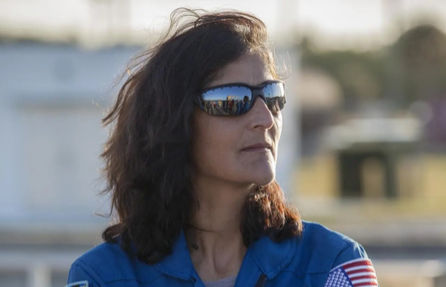
Sunita Williams Retires from NASA: Trailblazing Indian-Origin Astronaut Ends 27-Year Career with 608 Days in Space
Sunita Williams, the renowned Indian-origin NASA astronaut popularly known as Suni Williams, has officially retired from the agency after an extraordinary 27-year career dedicated to pushing the boundaries of human space exploration. Her retirement became effective on December 27, 2025, just after Christmas, and NASA made the announcement public on January 20, 2026.
Born on September 19, 1965, in Euclid, Ohio, to an Indian father from Gujarat and a Slovenian mother, Sunita Williams grew up in Needham, Massachusetts. She holds a bachelor’s degree in physical science from the United States Naval Academy and a master’s in engineering management from the Florida Institute of Technology. A retired U.S. Navy captain, she was an accomplished pilot with over 4,000 flight hours in more than 40 aircraft types before joining NASA in 1998.
Throughout her tenure, Sunita Williams became one of NASA’s most accomplished astronauts. She completed three missions to the International Space Station (ISS), accumulating a total of 608 days in space—the second-highest cumulative time among NASA astronauts. This remarkable endurance placed her among the elite in human spaceflight history.
Her first two missions included Expeditions 14/15 (2006-2007) and 32/33 (2012), where she served as flight engineer and later commanded Expedition 33, becoming one of the few women to lead the orbiting laboratory. During these flights, she demonstrated exceptional leadership, conducting scientific experiments and maintaining the station’s operations.
Sunita Williams‘ most recent and challenging mission began in June 2024, when she and fellow astronaut Butch Wilmore launched aboard Boeing’s Starliner spacecraft for what was intended as an eight-to-ten-day test flight—the first crewed mission for the vehicle. Technical issues, including thruster malfunctions and helium leaks, prevented a safe return on Starliner. NASA decided to bring the spacecraft back uncrewed, extending Williams’ and Wilmore’s stay dramatically.
The duo integrated into Expeditions 71 and 72, with Sunita Williams once again taking command of the ISS during Expedition 72. They spent 286 days in space on this extended mission—tying for the sixth-longest single spaceflight by an American astronaut—before safely returning to Earth in March 2025 aboard a SpaceX Crew Dragon as part of the Crew-9 mission.
This unplanned nine-and-a-half-month stay highlighted Williams’ resilience, adaptability, and professionalism. It also underscored the importance of NASA’s commercial crew partnerships, allowing backup options like SpaceX when issues arose with Boeing’s system.
One of Sunita Williams‘ most iconic achievements is her record-setting spacewalk portfolio. She completed nine spacewalks, totaling 62 hours and 6 minutes—the most by any female astronaut and the fourth-highest in NASA history overall. These extravehicular activities (EVAs) contributed to station maintenance, upgrades, and scientific installations, advancing our understanding of working in microgravity.
In a pioneering first, Sunita Williams became the first person to run a marathon in space during her 2007 mission. She completed the Boston Marathon distance on a treadmill aboard the ISS while Earth-bound runners participated below, symbolizing human determination and connecting space exploration with everyday achievements.
NASA Administrator Jared Isaacman praised her contributions in the retirement announcement: “Suni Williams has been a trailblazer in human spaceflight. Through her leadership aboard the space station, she shaped the future of exploration and paved the way for commercial missions to low Earth orbit. Her work advanced science and technology, laying the foundation for the Artemis missions to the Moon and journeys to Mars. Her extraordinary achievements will continue to inspire future generations to dream big.”
In her own words, Sunita Williams reflected on her career: “Anyone who knows me knows that space is my absolute favorite place to be. It’s been an incredible honor to have served in the Astronaut Office and have had the opportunity to fly in space three times. I had an amazing 27-year career at NASA, and that is mainly because of all the wonderful love and support I’ve received from my colleagues.”
Her Indian heritage has made her a source of immense pride for millions in India and the Indian diaspora. She carried cultural symbols like the Bhagavad Gita and Indian flags into space, inspiring young minds worldwide to pursue STEM fields. Recently, she has been touring India, engaging with students and honoring figures like the late Kalpana Chawla.
Sunita Williams‘ retirement marks the end of an era but the beginning of her next chapter. As NASA advances toward Artemis lunar landings and eventual Mars missions, her legacy endures through the pathways she helped forge for commercial spaceflight, international collaboration, and diverse representation in exploration.
Her story—from Navy pilot to record-breaking astronaut—serves as a powerful reminder that perseverance, innovation, and courage can take humanity to the stars. Sunita Williams leaves NASA not just with records, but with inspiration for generations to come.