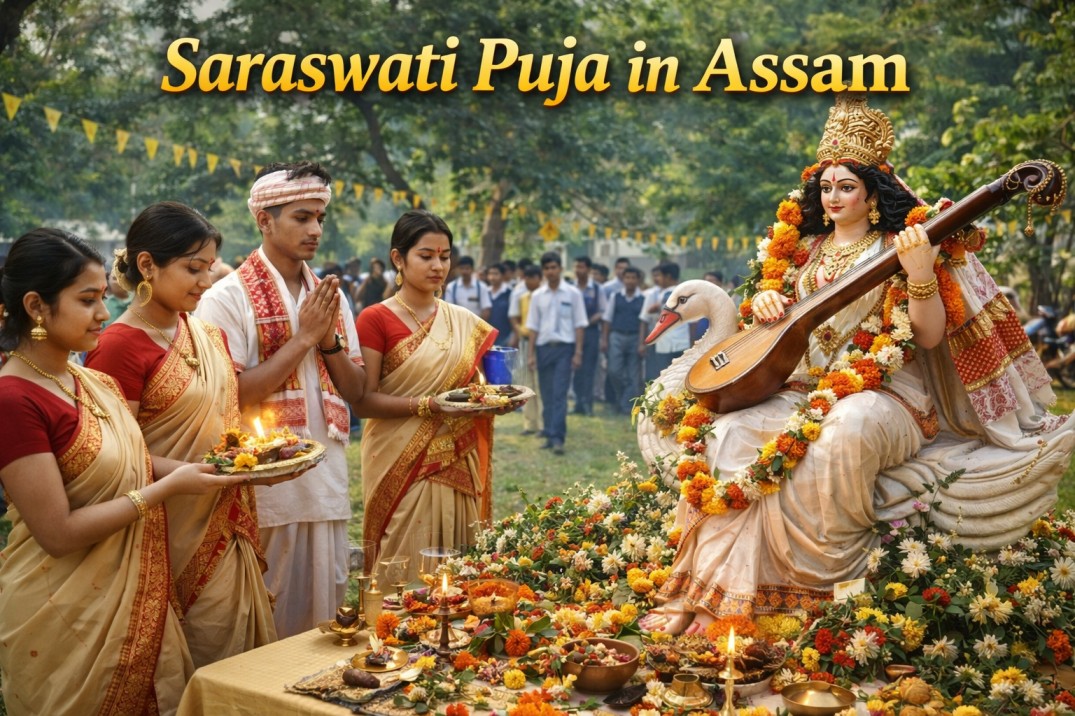
Saraswati Puja 2026 in Assam: Vibrant Celebrations Mark Basant Panchami with Devotion, Knowledge, and Festive Spirit Across Educational Institutions
Saraswati Puja 2026 in Assam: A Day of Knowledge, Devotion, and New Beginnings
Today, January 23, 2026, Assam is immersed in the sacred aura of Saraswati Puja 2026, coinciding with the auspicious occasion of Basant Panchami. Educational institutions across the state—from remote village schools to prominent colleges and universities in Guwahati, Jorhat, Dibrugarh, Silchar, and beyond—have transformed into vibrant centers of worship and learning. The air echoes with Vedic chants, the fragrance of incense fills every corner, and students in their finest attire offer prayers to Goddess Saraswati, the divine embodiment of knowledge, wisdom, music, arts, and literature.
Saraswati Puja 2026 falls on the Panchami Tithi of Shukla Paksha in the Hindu month of Magha, a day revered as Basant Panchami or Vasant Panchami. This festival heralds the arrival of spring, symbolizing renewal, freshness, and the blossoming of intellect. In Assam and other eastern states like West Bengal and Odisha, Saraswati Puja takes center stage, especially among students who view the Goddess as their guiding deity for academic success and creative pursuits.
The celebrations begin early in the morning during the auspicious muhurat. Devotees dress in yellow or white attire—colors associated with spring and purity—and gather before beautifully decorated idols or images of Maa Saraswati. She is depicted seated gracefully on a white swan (her vahana), clad in pristine white garments, holding a veena (symbolizing music and harmony), a book (representing knowledge), a rosary (for meditation), and a water pot (for purity). Her serene form inspires millions to seek freedom from ignorance and the illumination of true wisdom.
In Assam’s schools and colleges, the day unfolds with elaborate preparations. Classrooms, auditoriums, and open grounds are adorned with marigold flowers, mango leaves, banana plants, and colorful rangolis. A central altar features the idol of Goddess Saraswati flanked by musical instruments like the veena and tabla, writing tools such as pens and notebooks, textbooks, and musical scores. Students carefully place their new books, copies, and stationery before the deity, believing that worshipping these learning materials on this day ensures success in studies and examinations.
The puja rituals commence with the invocation of the Goddess through mantras and shlokas chanted by priests or senior students. Offerings include fresh flowers (especially white and yellow), fruits, sweets like kheer and malpua, betel nuts, and dakshina. A special highlight is the pushpanjali, where devotees shower flowers while reciting prayers. In many institutions, cultural programs follow the puja—students perform Saraswati Vandana, recite poems, sing bhajans, and present classical dances and music recitals dedicated to the Goddess of arts.
What makes Saraswati Puja in Assam truly unique is its deep connection with education. Unlike many other festivals, this day sees active participation from teachers, parents, and guardians alongside students. Schools organize special assemblies where principals and teachers deliver inspiring speeches on the importance of knowledge, discipline, and lifelong learning. Many young children perform their first akshara arambham (initiation into letters) on this day, marking the auspicious beginning of their educational journey.
Across rural and urban Assam, the festival unites communities. In villages, simple yet heartfelt pujas take place at community halls or homes, while in cities like Guwahati and Tezpur, larger events feature processions, idol immersions in water bodies (in some cases), and community feasts. The belief is strong: invoking Maa Saraswati on Basant Panchami removes obstacles in learning, sharpens intellect, enhances memory, and grants success in competitive exams, creative fields, and professional endeavors.
The spiritual essence of Saraswati Puja 2026 extends beyond rituals. It reminds everyone that true knowledge dispels darkness (tamaso ma jyotir gamaya) and leads to enlightenment. In an era of rapid technological advancement, the festival reinforces the timeless value of wisdom, critical thinking, and ethical learning—values that Goddess Saraswati embodies.
As Assam resonates with devotion today, families and institutions share prasad, exchange greetings, and wish each other success. The day ends with a sense of renewed energy and optimism, as students return home inspired to pursue their goals with greater dedication.
To all students, teachers, parents, and devotees across Assam and beyond: May Maa Saraswati shower her boundless blessings upon you this Saraswati Puja 2026. May she illuminate your minds, guide your pens, and lead you toward excellence in every sphere of life.
Jai Maa Saraswati!
Jai Vidyar Devi!
Happy Basant Panchami 2026!