The entire nation is gearing up to celebrate Republic Day on January 26, but heightened security alerts have been issued due to fears of terrorist attacks linked to Jaish-e-Mohammed’s ’26-26′ code conspiracy.
Republic Day 2026 Security Alert: Jaish-e-Mohammed ’26-26′ Terror Plot Prompts Nationwide High Vigilance
As India prepares to celebrate its 77th Republic Day on January 26, 2026, with grand parades, cultural performances, and national pride on full display, a shadow of concern looms large. Intelligence agencies have uncovered a chilling conspiracy by the Pakistan-based terrorist organization Jaish-e-Mohammed (JeM), codenamed “26-26”, aimed at disrupting the festivities through coordinated attacks. This has triggered one of the most stringent security mobilizations in recent years, particularly in Delhi, where the iconic parade along Kartavya Path is set to unfold.
The nation remains enthusiastic about the event. Preparations in Delhi include elaborate floats, marching contingents, and special performances, with artists from the Northeast, including Zubeen Garg’s popular Mayabini rendition, adding regional flavor. Yet, this joy is tempered by credible intelligence inputs pointing to imminent threats from JeM, potentially in collaboration with Al-Qaeda-linked groups, Khalistani elements, and even Bangladesh-based outfits.
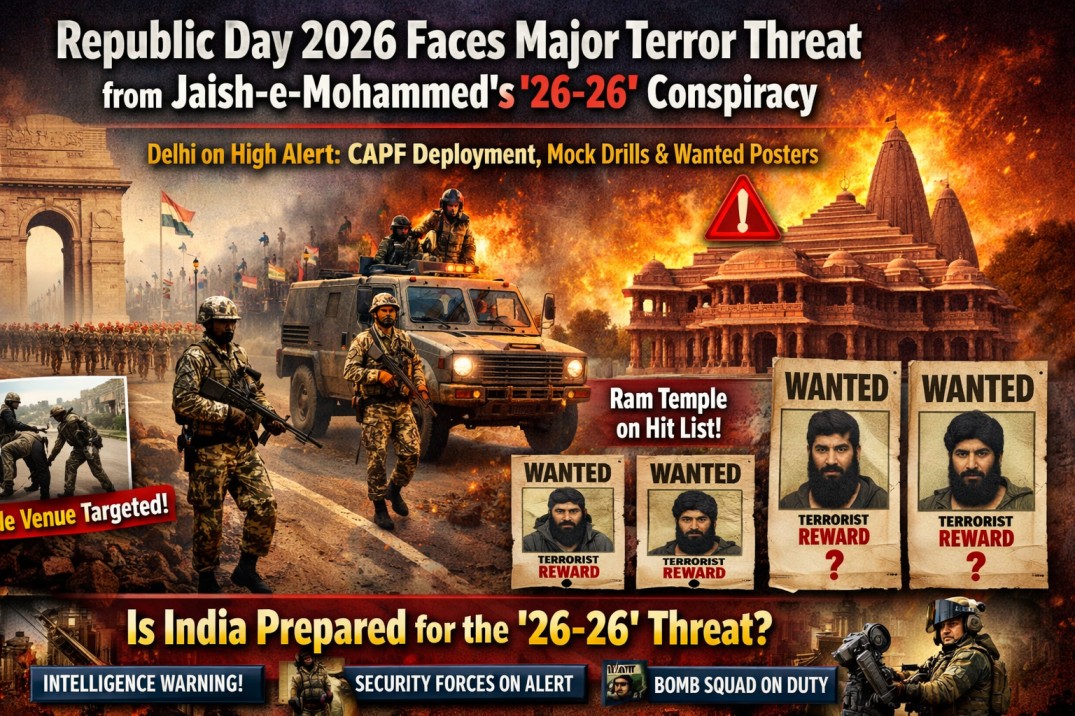
According to multiple intelligence reports, the “26-26“ code directly references January 26, signaling planned strikes on or before the day. Potential targets include the Republic Day parade venue in Delhi, the Ram Temple in Ayodhya, the Raghunath Temple in Jammu, other prominent temples nationwide, and densely populated urban centers. Delhi and other major cities have been placed on high alert, with additional Central Armed Police Forces (CAPF) personnel deployed across sensitive locations.
Security measures have been ramped up significantly. Wanted posters featuring suspected terrorists — including names like Mohammed Rehan, Mohammed Omar, Abu Sufiyan, Mohammed Shahid Fazl, Syed Mohammed Arshiya, and Mohammed Sarjil Akhtar — have been prominently displayed at railway stations, bus stands, markets, and crowded public areas. These individuals are linked to JeM and associated networks, with preparations for such attacks reportedly dating back to 2016. Mock drills are ongoing to test response readiness, while anti-drone units, snipers, and enhanced patrolling ensure layered protection.
This heightened vigilance revives painful memories of the Pahalgam attack on April 22, 2025, where terrorists brutally killed 26 tourists — mostly Hindus — after segregating them by religion in a scenic meadow near Pahalgam, Jammu and Kashmir. The attackers, linked to Pakistan-backed groups like The Resistance Front (an offshoot of Lashkar-e-Taiba), sparked nationwide outrage and prompted India’s decisive military response: Operation Sindoor.
Launched from May 7 to May 10, 2025, Operation Sindoor saw the Indian Army, Air Force, and Navy strike nine terrorist infrastructure sites in Pakistan and Pakistan-administered Kashmir. The tri-service operation targeted JeM and Lashkar-e-Taiba facilities, inflicting heavy damage without aiming at civilian or military targets initially. The brief but intense conflict brought the nuclear-armed neighbors to the brink, resembling wartime conditions, before a ceasefire was agreed upon through DGMO hotline communications.
Prime Minister Narendra Modi, addressing the nation post-operation, declared: “This is the new India. Anyone who casts an evil eye on the motherland will face strict action. Attacks on India will no longer be tolerated.” His words underscored a shift toward proactive deterrence against cross-border terrorism.
The Pahalgam incident also drew provocative reactions from across the border. Major General (Retd.) A L M Fazlur Rahman, a close associate of Bangladesh’s interim government leader Mohammed Yunus and former head of Border Guards Bangladesh, issued a stark warning. He suggested that if India attacked Pakistan, Bangladesh — potentially with Chinese support — should occupy India’s seven northeastern states, explicitly referencing the strategic “Chicken’s Neck” (Siliguri Corridor), the narrow land link connecting the Northeast to mainland India. Though Bangladesh distanced itself from the remarks and has limited actions to map-related disputes so far, India has treated such statements seriously, bolstering defenses along all frontiers.
Today’s Jaish-e-Mohammed threat echoes these tensions, with reports of possible coordination involving Punjab-based gangsters as foot soldiers for Khalistani and radical handlers abroad. Links to Bangladesh-based groups add another layer of complexity, highlighting multifaceted challenges to India’s internal security.
Security experts emphasize that while routine alerts precede Republic Day every year, the specificity of the “26-26“ code and named suspects elevates the current situation. Authorities urge citizens to remain vigilant and report suspicious activities immediately via helplines like 112.
As the nation approaches January 26, 2026, India’s security apparatus stands resolute. The celebrations will proceed with full grandeur, but with an unwavering commitment to safety. In the face of persistent threats from groups like Jaish-e-Mohammed, India’s message is clear: the spirit of the Republic remains unbreakable, and any attempt to disrupt it will meet a firm, unified response.