Prime Minister Narendra Modi Launches Nationwide HPV Vaccination Campaign: A Game-Changer in Cervical Cancer Prevention for India’s Girls
On February 28, 2026, Prime Minister Narendra Modi officially launched India’s much-anticipated nationwide HPV vaccination campaign from Ajmer, Rajasthan. This landmark initiative marks a pivotal moment in the country’s public health landscape, focusing on the prevention of cervical cancer — one of the leading causes of cancer-related deaths among women in India. By providing a free, single-dose HPV vaccine to girls aged 14 years, the government aims to protect future generations from this preventable disease and empower India’s “Nari Shakti” (women’s power).
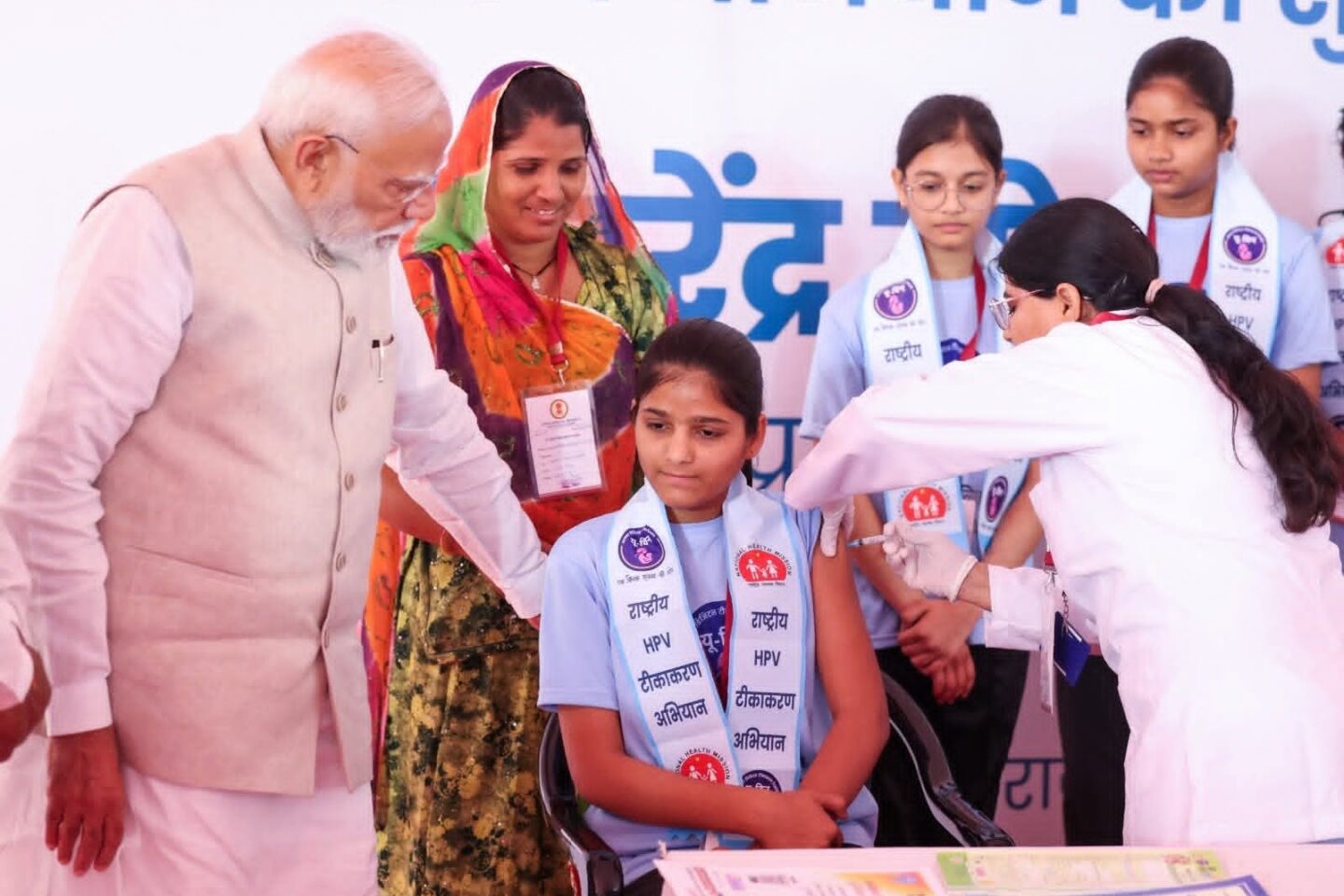
The event, held at Kayad in Ajmer, saw the Prime Minister personally inaugurating the campaign by administering the vaccine to several adolescent girls and engaging with beneficiaries to boost awareness and confidence. In his address, PM Modi emphasized the transformative potential of this drive, stating it as a crucial step to safeguard the health of mothers and daughters nationwide. “This campaign will make the girls of this country strong,” he remarked, highlighting its alignment with the vision of a healthier, self-reliant India.
Understanding Cervical Cancer: Why the HPV Vaccination Campaign is Critical
Cervical cancer remains the second most common cancer among Indian women, with over 1.2 lakh new cases and nearly 80,000 deaths reported annually, according to GLOBOCAN 2022 data. The disease is almost entirely preventable, as persistent infection with high-risk strains of the Human Papillomavirus (HPV) — particularly types 16 and 18 — accounts for more than 80% of cases in India.
Despite being largely avoidable through vaccination and early screening, cervical cancer continues to burden families and the healthcare system due to limited awareness, access barriers, and late detection. The nationwide HPV vaccination campaign directly addresses this by intervening before exposure to the virus occurs, offering lifelong protection through a simple, single-dose regimen.
Global evidence supports this approach: Over 500 million doses of HPV vaccines have been administered worldwide since 2006, with 93–100% effectiveness against vaccine-covered HPV types. Countries implementing widespread vaccination have seen dramatic reductions in HPV infections, precancerous lesions, and cervical cancer incidence. With this launch, India joins over 160 nations that have integrated HPV vaccination into national immunization programs, many adopting single-dose schedules for better coverage and efficiency.
Key Features of the Nationwide HPV Vaccination Campaign
The campaign, directed by the Union Ministry of Health and Family Welfare, uses the quadrivalent Gardasil 4 vaccine — a single-dose formulation protecting against HPV types 6, 11, 16, and 18. Types 16 and 18 are the primary culprits behind cervical cancer, while 6 and 11 cause genital warts.
- Target Group: All girls aged 14 years (and eligible cohorts above in the initial phase). Approximately 1.15–1.2 crore girls are expected to benefit annually.
- Free and Voluntary: The vaccine is provided at no cost, with informed consent from parents or guardians required.
- Delivery Points: Available at government facilities, including Ayushman Arogya Mandirs (Primary Health Centres), Community Health Centres, sub-district and district hospitals, and government medical colleges/hospitals.
- Administration Schedule: Launched in mission mode for an initial 90-day intensive phase, allowing daily vaccinations. It will later integrate into routine immunization days.
- Safety Measures: Sessions supervised by trained medical officers and healthcare teams. Sites linked to 24×7 emergency services for managing rare Adverse Events Following Immunization (AEFI). Cold chain integrity ensured through robust supply mechanisms in partnership with GAVI.
This single-dose strategy aligns with WHO recommendations (endorsed in 2022) and NTAGI guidance, making it programmatically efficient, cost-effective, and highly immunogenic when given at the optimal age before potential viral exposure.
The Launch Event in Ajmer: A Symbol of Commitment
The inauguration in Ajmer was more than a ceremonial start — it symbolized the government’s resolve to prioritize women’s health. PM Modi interacted with vaccinated girls, reassuring families about the vaccine’s safety and efficacy. Virtual participation from Chief Ministers, Health Ministers, and officials across states ensured a synchronized national rollout.
States like Delhi, Gujarat, and others have already begun implementation, with thousands of sessions planned. In Delhi, for instance, over 1.6 lakh girls are targeted, while Gujarat identified 5.43 lakh eligible beneficiaries. The campaign’s phased approach ensures equitable reach, even in remote areas.
Broader Impact on Preventive Healthcare and Women’s Empowerment
This HPV vaccination campaign represents a shift towards proactive, preventive healthcare in India. By addressing cervical cancer at its root, it reduces long-term treatment burdens, lowers mortality rates, and promotes gender equity in health access. Experts hail it as transformative, potentially accelerating WHO’s global goal of eliminating cervical cancer as a public health issue.
The initiative also builds public trust in vaccines, with stringent quality controls and transparent procurement. Parental awareness campaigns, school-based drives, and community outreach will play key roles in achieving high coverage.
What Parents and Guardians Need to Know
If you have a 14-year-old daughter, encourage her to get vaccinated at the nearest government health facility. The process is quick, safe, and backed by global science. No multiple doses are needed in this national program — one shot provides durable protection.
As India advances towards a “Swastha Nari” (healthy woman) vision, this campaign stands as a beacon of hope. It not only prevents disease but fosters a healthier, empowered future for millions of girls.
Stay updated on the nationwide HPV vaccination campaign and its progress. For more on preventive health, women’s wellness, and government initiatives, follow our health section.