Palm Sunday 2026: Date, Meaning, Biblical Story, Traditions & Celebrations on Palm Day
Palm Sunday 2026 falls on Sunday, March 29, marking the joyous yet solemn beginning of Holy Week in the Christian calendar. Also widely referred to as Palm Day, this important observance commemorates Jesus Christ’s triumphal entry into Jerusalem, an event filled with hope, prophecy fulfillment, and deep spiritual symbolism. As Christians across the world, including communities in Kolkata and West Bengal, prepare for Easter on April 5, 2026, Palm Day serves as a powerful reminder of humility, kingship, and the path from earthly acclaim to divine redemption.
For those searching “Palm Sunday 2026” or “Palm Day celebrations,” this comprehensive guide covers everything: the exact date, biblical accounts from all four Gospels, historical significance, global and local traditions, spiritual lessons, and practical ways to observe this sacred day. Whether you’re a devout Christian, curious about Christian festivals in India, or planning church services in Kolkata, read on for an in-depth exploration optimized to help you understand and celebrate Palm Day meaningfully.
What is Palm Sunday? Understanding Palm Day in 2026
Palm Sunday, or Palm Day as it is affectionately called in many cultural contexts, is the sixth and final Sunday of Lent. It kicks off Holy Week, the most sacred period in Christianity leading up to Easter Sunday. In 2026, Palm Sunday is observed on March 29, with Easter following on April 5. This timing aligns with the Western Christian tradition (Catholic, Protestant, and many others), while Eastern Orthodox Christians may observe it slightly differently, often on April 5 in 2026.
The name “Palm Sunday” or “Palm Day” derives directly from the Gospel accounts where crowds waved palm branches to welcome Jesus. These branches symbolized victory, peace, and royal welcome in ancient Jewish and Roman cultures. Today, the distribution of blessed palms (or local substitutes) remains the central visible tradition of Palm Day services worldwide.
Palm Day is also known as Palm Sunday of the Lord’s Passion or simply Passion Sunday in some liturgical calendars because the joy of the entry quickly transitions into readings of Christ’s suffering and crucifixion, foreshadowing Good Friday.
The Biblical Account of Jesus’ Triumphal Entry on Palm Day
The story of Palm Sunday is recorded in detail in all four canonical Gospels, underscoring its importance:
- Matthew 21:1-11
- Mark 11:1-11
- Luke 19:28-44
- John 12:12-19
As Jesus approached Jerusalem just days before the Passover festival, He instructed two disciples to bring Him a young donkey (or colt) that had never been ridden. This humble mode of transport deliberately fulfilled the prophecy in Zechariah 9:9: “Rejoice greatly, Daughter Zion! Shout, Daughter Jerusalem! See, your king comes to you, righteous and victorious, lowly and riding on a donkey, on a colt, the foal of a donkey.”
Unlike a conquering warrior on a horse, Jesus chose the donkey to emphasize peace, humility, and servant leadership. As He rode into the city, massive crowds spread their cloaks and palm branches on the road – a red-carpet welcome reserved for kings and victors.
The people shouted enthusiastically:
“Hosanna to the Son of David! Blessed is he who comes in the name of the Lord! Hosanna in the highest heaven!” (Matthew 21:9)
The word “Hosanna” comes from Hebrew and means “Save us now!” or “Save, we pray!” It was originally a plea for deliverance (from Psalm 118:25) but evolved into a shout of praise. On that first Palm Day, the crowds saw Jesus as the long-awaited Messiah who would liberate them from Roman rule and restore Israel’s glory.
This event carried rich symbolism. It occurred near Passover, when Jews recalled God’s deliverance from Egypt. Jesus’ entry mirrored the selection of the Passover lamb, pointing to His role as the ultimate sacrificial Lamb who would bring spiritual salvation.
The whole city was stirred, asking, “Who is this?” The crowds answered, “This is Jesus, the prophet from Nazareth in Galilee.” Yet, within days, the same enthusiasm would turn to cries of “Crucify him!” – highlighting the fickleness of human hearts and the profound contrast between earthly expectations and God’s redemptive plan.
Historical and Liturgical Significance of Palm Sunday / Palm Day
The observance of Palm Day dates back to the early centuries of Christianity. By the 4th century, pilgrims in Jerusalem were already reenacting Jesus’ entry with processions from the Mount of Olives into the city. Historical records from figures like the pilgrim Egeria describe these vibrant celebrations.
In Western Christianity, the blessing and distribution of palms became widespread during the medieval period. The liturgy beautifully balances celebration and solemnity: it begins with the blessing of palms and a joyful procession, then shifts to the reading of the Passion narrative (the full account of Jesus’ final days). This dual focus reminds believers that true kingship involves both glory and sacrifice.
Key theological themes on Palm Day include:
- Humility and Kingship: Jesus enters not as a military leader but as a gentle king.
- Fulfillment of Prophecy: Every detail aligns with Old Testament promises.
- Human Fickleness vs. Divine Faithfulness: The same crowds who shouted “Hosanna” later abandoned Him.
- Call to Discipleship: Followers are invited to welcome Christ not just in triumph but also in suffering.
In the Catholic tradition, it is formally called “Palm Sunday of the Lord’s Passion.” Many Protestant denominations emphasize the triumphal entry while still reading the Passion. Eastern churches often use willow or other branches, calling it “Flowery Sunday” or similar names.
How Christians Celebrate Palm Sunday / Palm Day Worldwide
Palm Day services are among the most visually striking in the Christian year. Typical elements include:
- Blessing of Palms: Priests or pastors bless fresh palm fronds (or substitutes like olive, willow, boxwood, or local foliage where palms don’t grow).
- Processions: Congregants wave palms while singing hymns such as “All Glory, Laud, and Honor” or “Hosanna, Loud Hosanna,” often processing into the church or around the grounds.
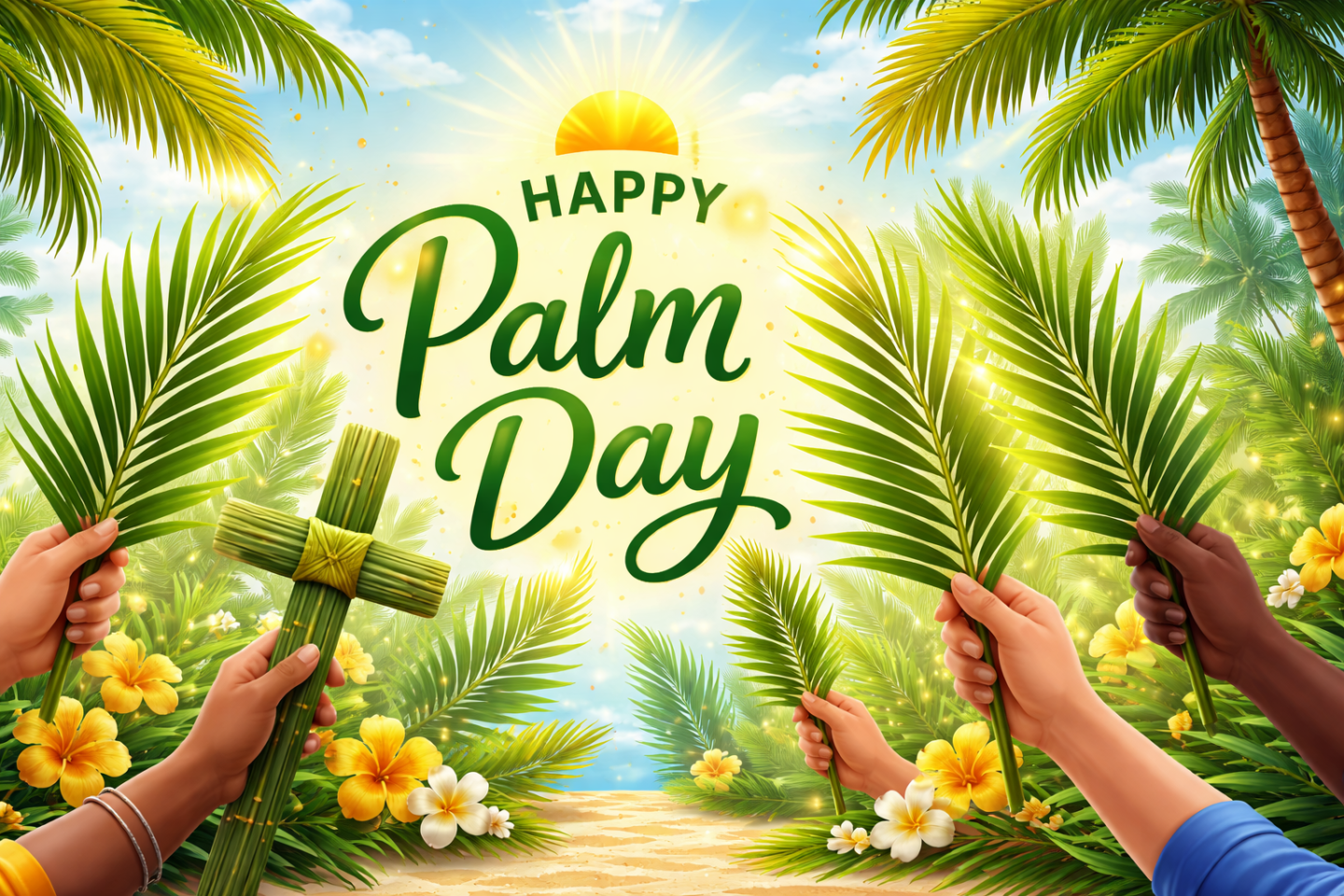
- Weaving Palm Crosses: Many fold the fronds into small crosses to take home.
- Passion Reading: A dramatic or participatory reading of Jesus’ suffering from the Gospels.
- Sermons on Kingship and Sacrifice: Messages explore what it means to crown Jesus as King in daily life.
Blessed palms are treated as sacramentals. Families display them behind crucifixes, in Bibles, or near religious images throughout the year. The following year, dried palms are traditionally burned to produce the ashes for Ash Wednesday, beautifully closing the liturgical cycle.
Global Traditions of Palm Sunday Celebrations
Customs vary richly across cultures, making Palm Sunday a truly universal feast:
- Philippines: Elaborate palaspas – intricately woven palm decorations – adorn homes, churches, and vehicles. Competitions for the most beautiful designs are common.
- Poland and Eastern Europe: Since real palms are rare, people create towering “artificial palms” from branches, dried flowers, ribbons, and colorful paper. These can reach several meters in height.
- Spain and Latin America: Vibrant street processions feature religious statues, live donkeys, and participants in traditional attire. In some places, children wave palms while singing.
- Jerusalem: Pilgrims retrace the original route from the Mount of Olives down into the Old City, waving palms in a moving reenactment.
- Italy: Olive branches often replace or supplement palms. Piazzas fill with vendors and families in spring clothing.
- Germany and Austria: Decorated “palm bushes” made from hazelnut branches, catkins, and ribbons are blessed.
- Russia and Slavic regions: Known as Verbnitsa (Willow Sunday), willow branches with catkins are used and blessed.
In many places, the day includes special meals or family gatherings, blending solemn reflection with communal joy.
Palm Sunday / Palm Day in India and Kolkata, West Bengal
India’s diverse Christian communities celebrate Palm Day with deep devotion. In Kolkata and across West Bengal, churches in areas with significant Christian populations (such as Park Street, Bowbazar, or missionary-founded areas) hold special services featuring palm processions adapted to local climates and available foliage.
Many Indian churches use coconut or date palm leaves when available, or substitute with banana leaves and local branches. Processions often include singing in English, Hindi, Bengali, or regional languages. The blend of universal Christian liturgy with Indian cultural expressions – such as flower garlands alongside palms – creates a unique worship experience.
Christians in Kolkata may attend morning or evening Masses/Services at cathedrals like St. Paul’s or smaller parish churches. Families bring home blessed palms to place in prayer corners. In some communities, the day includes sharing simple meals or reflecting together on the Passion story.
Although not a public holiday for all in West Bengal, many Christian institutions and families observe it as a day of worship and preparation for Holy Week. Government holiday lists often note related days like Easter Saturday or Sunday for Christian employees.
The celebration in India underscores Christianity’s global yet inculturated nature – Palm Day in Kolkata reminds believers that Jesus’ message of salvation transcends cultures while respecting local traditions.
Spiritual Reflection: What Palm Day Means for Us Today
Palm Sunday / Palm Day challenges modern believers with timeless questions:
- Do we welcome Jesus as King only when life feels triumphant, or do we follow Him through difficulty?
- Are we quick to shout “Hosanna” in praise but hesitant to “carry our cross” in daily obedience?
- How does the contrast between the cheering crowds and the later betrayal speak to human nature and the need for genuine faith?
The day encourages humility, praise, and readiness. It invites Christians to examine their hearts: Is Jesus truly Lord of our lives, or do we reshape Him to fit our expectations?
As Holy Week unfolds – through Maundy Thursday (the Last Supper and foot-washing), Good Friday (the Crucifixion), Holy Saturday, and the explosive joy of Easter Sunday (the Resurrection) – Palm Day sets the stage for Christianity’s central mystery: God’s sacrificial love conquering sin and death.
In a fast-paced world, Palm Day offers a moment to slow down, reflect, and realign priorities. Many use the day for intentional prayer, Scripture reading, or family devotions focused on the themes of kingship and redemption.
Practical Tips for Observing Palm Sunday 2026
- Attend Church Services: Join a local service for the palm blessing and procession. In Kolkata, check parish schedules in advance.
- Bring or Make Palms: If attending in person, participate actively. At home, you can weave simple palm crosses as a family activity.
- Read the Biblical Accounts: Spend time reading the Gospel passages aloud with family or in personal devotion.
- Reflect on Hosanna: Meditate on the meaning of “Save us now” – what areas of your life need Christ’s saving power today?
- Display Blessed Palms: Keep them visible as a year-round reminder of faith.
- Prepare for Holy Week: Use Palm Day to plan prayer times, fasting, or acts of service leading to Easter.
- Share the Story: Discuss the significance with children or newcomers to faith, emphasizing Jesus’ humility and love.
For those unable to attend physically, many churches stream services online, allowing virtual participation in Palm Day celebrations.
Why Palm Day Remains Relevant in 2026 and Beyond
In 2026, as the world continues to face challenges – from personal struggles to global uncertainties – the message of Palm Sunday resonates powerfully. Jesus entered Jerusalem knowing His path led to the cross, yet He did so willingly out of love. Palm Day reminds us that true victory often comes through sacrifice, and that earthly acclaim is fleeting compared to eternal relationship with God.
The day bridges the Old and New Testaments, showing God’s faithfulness across history. It calls believers to live as citizens of God’s kingdom – marked by humility, service, and unwavering trust even when circumstances shift dramatically.
Whether celebrated in grand cathedrals in Europe, vibrant processions in Latin America, intimate gatherings in Indian homes, or online from Kolkata, Palm Day unites Christians in proclaiming Jesus as King.
Conclusion: Embracing the Journey of Palm Day to Easter
Palm Sunday 2026 on March 29 offers a beautiful invitation: Wave your palms in praise, reflect on the biblical story, participate in rich traditions, and commit anew to following Christ through every season of life.
As Holy Week 2026 begins, may the shouts of “Hosanna” echo in your heart, not just as a historical cry but as a present prayer: “Save us now, Lord Jesus.” From the triumphal entry on Palm Day to the empty tomb on Easter, the journey reveals the depth of God’s love and the hope available to all.
This Palm Sunday / Palm Day, whether in Kolkata, across India, or anywhere in the world, let the symbolism of the palm branches remind you of victory through the cross. Prepare your heart for the full story of redemption that Holy Week and Easter unfold.
Happy Palm Sunday 2026! May your celebration of Palm Day bring deeper faith, renewed hope, and lasting joy.