Nitish Kumar Takes Oath as Rajya Sabha MP on April 10, 2026: End of Era in Bihar as NDA Prepares New Government and Next Chief Minister
Nitish Kumar Rajya Sabha Oath Marks Major Political Shift in Bihar
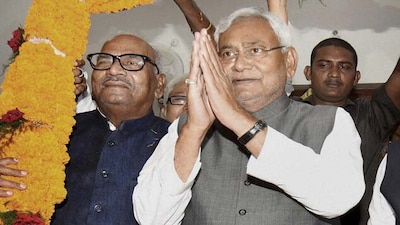
In a landmark development in Indian politics, Bihar’s long-serving Chief Minister Nitish Kumar is set to take oath as a member of the Rajya Sabha on Friday, April 10, 2026. This move signals the end of his extended tenure as the state’s top leader and opens the door for a new NDA-led government in Bihar.
Nitish Kumar arrived in New Delhi on Thursday, accompanied by senior JD(U) leaders including national working president Sanjay Kumar Jha and Bihar minister Vijay Kumar Chaudhary. Speaking to reporters at the airport, Kumar simply stated, “I have arrived to take the oath.” The oath will be administered in the chamber of Rajya Sabha Chairman CP Radhakrishnan.
This transition comes after Nitish Kumar was elected to the Rajya Sabha and formally resigned from the Bihar Legislative Council on March 30, 2026. His decision to move to the upper house of Parliament reflects a strategic shift from state-level governance to national politics, where he is expected to play a broader role within the NDA alliance.
Background: Nitish Kumar’s Illustrious Political Journey in Bihar
Nitish Kumar, often credited with transforming Bihar’s governance landscape over the past two decades, has been a dominant figure in the state’s politics. Known for his focus on infrastructure, law and order, women’s empowerment, and development initiatives, his leadership style—popularly referred to as the ‘Nitish Model’—has been widely discussed across political circles.
Under his tenure, Bihar witnessed significant improvements in road connectivity, education, healthcare access, and electricity supply. Programs aimed at holistic development, including special attention to backward regions and marginalized communities, became hallmarks of his administration. Supporters argue that these efforts helped pull Bihar out of a cycle of underdevelopment and gave it a new direction.
JD(U) MLA Jayant Raj Kushwaha described the moment as a “critical juncture,” emphasizing the impact of Kumar’s two-decade-long leadership. “It’s merely a formality now,” he told ANI, highlighting how Nitish Kumar’s Rajya Sabha entry paves the way for him to take on broader national responsibilities while his legacy continues in the state.
Bihar minister Vijay Kumar Chaudhary reinforced this sentiment, stating that the new NDA government in Bihar will “certainly follow the Nitish Kumar-created ‘Nitish model’, as it has been running for the past 20 years.” He assured that progress achieved under Kumar’s guidance will remain the guiding principle for future governance.
Details of the Oath-Taking Ceremony and Immediate Developments
The oath-taking event on April 10, 2026, is expected to be attended by key figures, including Bihar Deputy Chief Ministers Samrat Choudhary and Vijay Kumar Sinha, who also arrived in the national capital on Thursday. Their presence underscores the unity within the NDA alliance during this transitional phase.
Following the ceremony, Nitish Kumar is likely to participate in high-level discussions with Prime Minister Narendra Modi and Union Home Minister Amit Shah. Sources indicate that these meetings will chart the roadmap for the formation of the next government in Bihar, including the selection of the new Chief Minister and the distribution of ministerial portfolios.
JD(U) national working president Sanjay Kumar Jha had earlier indicated that the process of forming a new government would begin after April 13, once the inauspicious period of ‘Khadmas’ (or Kharmas) ends. Bihar minister Vijay Kumar Chaudhary confirmed that Nitish Kumar would resign as Chief Minister in three or four days after taking the oath, allowing “new individuals” to be appointed as Chief Minister and ministers.
The NDA is expected to elect a new Chief Minister of Bihar around April 14. A BJP core committee meeting involving the deputy chief ministers is also anticipated in Delhi to discuss leadership and power-sharing arrangements.
Unity Within NDA and Continuation of Development Agenda
Leaders from both JD(U) and BJP have emphasized the seamless nature of this transition. State BJP President Nitin Nabin dismissed any suggestions of discord within the ruling coalition, confirming the NDA’s cohesive strategy and Kumar’s scheduled oath-taking.
” Bihar will have an NDA Government and will certainly follow the Nitish Kumar-created ‘Nitish model’,” reiterated Vijay Kumar Chaudhary. This assurance aims to calm any anxieties among the public and party workers about potential policy shifts.
Samrat Choudhary, one of the deputy chief ministers, has previously stated that the new government will continue to function under Nitish Kumar’s guidance, ensuring continuity in developmental priorities.
Nitish Kumar himself, when asked about his reasons for the move, remarked: “I have accomplished a lot of work in Bihar. Now I felt that I should remain here [in Delhi], and that is what I am doing. I will step down from my role there and work here.”
This statement reflects a sense of fulfillment from his long stint as Chief Minister and a desire to contribute at the national level, possibly influencing policy matters concerning Bihar and eastern India from within Parliament.
What the ‘Nitish Model’ Entails and Its Legacy
The ‘Nitish Model’ refers to a governance approach characterized by:
- Strong emphasis on law and order and improved police functioning.
- Massive push for infrastructure, including highways, bridges, and rural roads.
- Focus on education and skill development, with special schemes for girls’ education.
- Women-centric policies, such as reservations and empowerment initiatives.
- Alcohol prohibition and social reforms aimed at reducing domestic violence and improving family welfare.
- Targeted development for Extremely Backward Classes (EBCs), Mahadalits, and other marginalized sections.
Over 20 years, these initiatives reportedly led to measurable improvements in Bihar’s Human Development Index indicators, economic growth rates (relative to its previous baseline), and investor confidence. Critics and supporters alike acknowledge that Kumar’s pragmatic coalition politics and administrative acumen played a key role in stabilizing the state after decades of turmoil.
As the new NDA government prepares to take shape, maintaining this momentum while addressing emerging challenges like employment generation, urbanization, and climate-resilient agriculture will be crucial.
Potential Candidates and Power-Sharing in the New Bihar Government
While no official name has been announced for the next Chief Minister, speculation within political circles points toward senior NDA leaders, possibly from the BJP or JD(U), given the alliance’s dynamics. The presence of Deputy Chief Ministers Samrat Choudhary and Vijay Kumar Sinha in Delhi meetings suggests they could play pivotal roles in the new setup.
The distribution of ministerial portfolios is also expected to be finalized during the high-level NDA huddle involving PM Modi, Amit Shah, and Nitish Kumar. This ensures that key stakeholders from both major alliance partners have adequate representation, maintaining internal balance.
JD(U) sources have stressed that the transition is smooth and that Nitish Kumar’s experience will continue to guide the party and the government from his new position in the Rajya Sabha.
Broader Implications for Bihar Politics and National NDA Strategy
Nitish Kumar’s move to the Rajya Sabha comes at a time when national politics is witnessing realignments. By stepping into Parliament, he brings decades of administrative experience and grassroots insights from one of India’s most populous and politically significant states.
For Bihar, this marks the end of an era dominated by one of its most recognizable political figures. Many residents, across party lines, credit Kumar with restoring a sense of governance and hope in a state long plagued by negative perceptions.
The NDA’s ability to manage this transition without disrupting developmental work or creating instability will be closely watched. Opposition parties, including the RJD-led Mahagathbandhan, are likely to monitor the situation and raise questions about policy continuity and public welfare.
However, NDA leaders remain confident. “The entire NDA, including leaders from the BJP and its allies, is united in carrying forward Nitish Kumar’s governance model,” said Vijay Choudhary.
Public Reaction and Expectations from the New Leadership
In Bihar, reactions to Nitish Kumar’s impending exit as Chief Minister have been mixed but largely respectful of his contributions. Many citizens express gratitude for the improvements seen during his tenure, while younger voters look forward to fresh energy and new ideas under the upcoming leadership.
Social media and local discussions highlight curiosity about who the next Chief Minister will be and how the new team will tackle persistent issues like migration, unemployment, and industrial growth.
Political analysts note that the ‘Nitish Model’ has become a brand in itself, and any new government ignoring its core principles risks losing public support. Hence, the emphasis from NDA leaders on continuity appears strategically sound.
Timeline of Key Events in This Political Transition
- March 16, 2026: Nitish Kumar elected to Rajya Sabha.
- March 30, 2026: Resigns from Bihar Legislative Council.
- April 9, 2026: Kumar arrives in New Delhi with senior aides.
- April 10, 2026: Oath as Rajya Sabha member.
- Post-April 13, 2026: Expected resignation as Chief Minister.
- April 14, 2026 (approx.): NDA likely to elect new Chief Minister and form new government.
This carefully orchestrated timeline ensures constitutional propriety and minimal disruption to state administration.
Conclusion: A New Chapter for Bihar Under NDA with Nitish Kumar’s Enduring Influence
As Nitish Kumar prepares to take oath in the Rajya Sabha on April 10, 2026, Bihar stands at the cusp of a new political chapter. His departure from the Chief Minister’s post after years of dedicated service does not signify an end but a evolution in his role—from hands-on state administrator to a senior national voice within the NDA.
The upcoming NDA government in Bihar has the responsibility to build upon the foundations laid over the past two decades. With promises to uphold the ‘Nitish Model’, alliance leaders aim to deliver continued progress, stability, and inclusive growth for the people of Bihar.
This development will undoubtedly shape Bihar’s political narrative in the coming months and years. For now, all eyes remain on the oath-taking ceremony and the high-level meetings in New Delhi that will decide the face of the state’s next government.