Nepal Election Result 2026: 60% Turnout Fuels Historic Youth Victory
The Nepal Election Result marks a pivotal moment in the nation’s history, as the country successfully concluded its first general election on March 5, 2026, following the dramatic Gen Z protests of September 2025 that toppled the previous government. This parliamentary poll, held under an interim administration led by former Chief Justice Sushila Karki—Nepal’s first woman prime minister—saw millions of voters participating peacefully to elect the 275-member House of Representatives amid high expectations for change.
Nepal’s journey to this historic Nepal Election Result began in turmoil. In early September 2025, the government imposed a sweeping ban on 26 major social media platforms, including Facebook, Instagram, YouTube, WhatsApp, X (formerly Twitter), Signal, and others. Officials justified the move by citing noncompliance with new registration requirements under the Ministry of Communication and Information Technology, aiming to curb fake news and regulate digital spaces. However, for Nepal’s youth—particularly Generation Z, who rely heavily on these platforms for communication, education, remote work, remittances coordination, and political expression—the ban felt like a direct attack on freedom of speech and daily life.
This sparked immediate outrage. What started as online discontent quickly spilled onto the streets. On September 8, 2025, thousands of mostly young protesters, including students in school uniforms, gathered in Kathmandu and other cities under the loose banner of “Gen Z” or “Youths Against Corruption.” The demonstrations were leaderless at first, coordinated via alternative apps like Viber, TikTok (where accessible via VPNs), and even Discord servers. Protesters demanded not only the restoration of social media access but also an end to rampant corruption, nepotism (“Nepo Kids” became a viral hashtag mocking elite families’ lavish lifestyles), widespread unemployment (youth unemployment hovered around 20-21%), economic stagnation, and greater governmental accountability.
The situation escalated tragically. Security forces responded with tear gas, water cannons, rubber bullets, and eventually live ammunition. On that single day, at least 19 protesters—many unarmed students, including a reported 12-year-old—were killed in clashes, marking one of the deadliest days in Nepal’s modern democratic history. Hundreds were injured. The violence fueled further fury. By September 9, protests turned chaotic: mobs set fire to government buildings, including parts of parliament, the Supreme Court, police stations, and residences linked to political elites. Reports indicated at least 74 people dead overall and over 2,000 injured by the end of the unrest, which lasted several days until a nationwide curfew and army deployment restored order.
The Gen Z protests achieved their core demand swiftly: the social media ban was lifted amid the chaos. More significantly, the pressure forced Prime Minister K.P. Sharma Oli to resign, toppling his coalition government. In a remarkable twist reflecting the digital-native nature of the movement, youth groups used online polls on platforms like Discord to nominate an interim leader. Former Chief Justice Sushila Karki, known for her anti-corruption stance during her tenure, emerged as the choice. On September 12, 2025, she was sworn in as Nepal’s first female interim prime minister, tasked with stabilizing the country and overseeing fresh elections.
The protests highlighted deep structural issues in Nepal. Despite remittances accounting for about 33% of GDP and supporting many households, the domestic economy offered few opportunities, pushing youth abroad or into precarious gig work. Corruption scandals involving former leaders and officials eroded trust. The “Nepo Kids” phenomenon—where children of politicians flaunted luxury while ordinary youth struggled—became a symbol of inequality. The movement echoed similar youth-led uprisings in Sri Lanka (2022) and Bangladesh (2024), where economic mismanagement and elite impunity sparked regime change.
Fast-forward to March 5, 2026: Nepal went to the polls in this charged atmosphere. Over 18.9 million eligible voters cast ballots across 165 constituencies to form the House of Representatives, with additional proportional representation seats. More than 3,400 candidates from 65 parties contested, but attention focused on three major figures:
- Balendra Shah (popularly known as Balen), the 35-year-old rapper-turned-politician and former Kathmandu mayor, leading the Rastriya Swatantra Party (RSP). Backed heavily by Gen Z voters, he campaigned on anti-establishment themes, health, education for the poor, and youth empowerment.
- K.P. Sharma Oli, the veteran communist leader seeking a comeback after his ouster.
- Gagan Thapa, heading the traditional Nepali Congress with reformist promises.
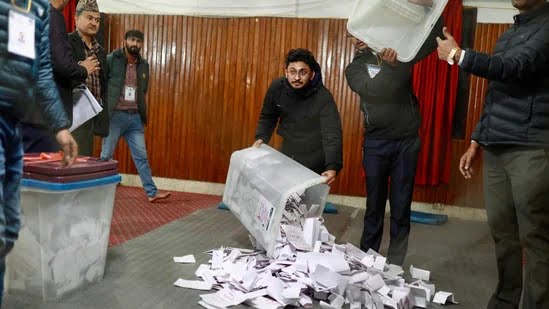
The Election Commission deployed massive security—over 300,000 personnel—to ensure peace. Polling began at 7 a.m. and ended at 5 p.m., with initial turnout estimates around 60%. Acting Chief Election Commissioner Ram Prasad Bhandari thanked voters for their enthusiastic participation, describing the process as successful despite “special circumstances.”
Joint Secretary and Spokesperson Narayan Prasad Bhattarai emphasized the collaborative effort: “This election was planned in special circumstances. There were some doubts among the people about the success of the selection, but due to the effective cooperation from political parties, candidates, all voters, Govt of Nepal, the private sector, the media and all sectors, we were able to successfully conclude the elections.”
He highlighted the positive role of young voters: “Gen Z has been very much supportive in this election. Their participation in this election process has also been positive in terms of Candidates as well as voters.”
The polling was largely peaceful, with only minor incidents reported. This stood in stark contrast to the violence of 2025, signaling a return to democratic normalcy under interim leadership. Preliminary vote counting began immediately, with early trends showing strong performances by newer, youth-oriented parties like RSP in several constituencies.
The Nepal Election Result carries profound implications. It tests whether the energy of the Gen Z protests can translate into lasting reform. Will traditional parties adapt to youth demands for transparency and jobs? Can Nepal address unemployment, reduce reliance on remittances, and tackle corruption head-on? The peaceful conduct boosts confidence in institutions, but full results—expected over days due to manual counting—will shape the next government.
As Nepal counts votes, the world watches this Himalayan democracy navigate post-uprising recovery. The Nepal Election Result isn’t just about seats; it’s about whether the voices of a frustrated generation can drive meaningful change.