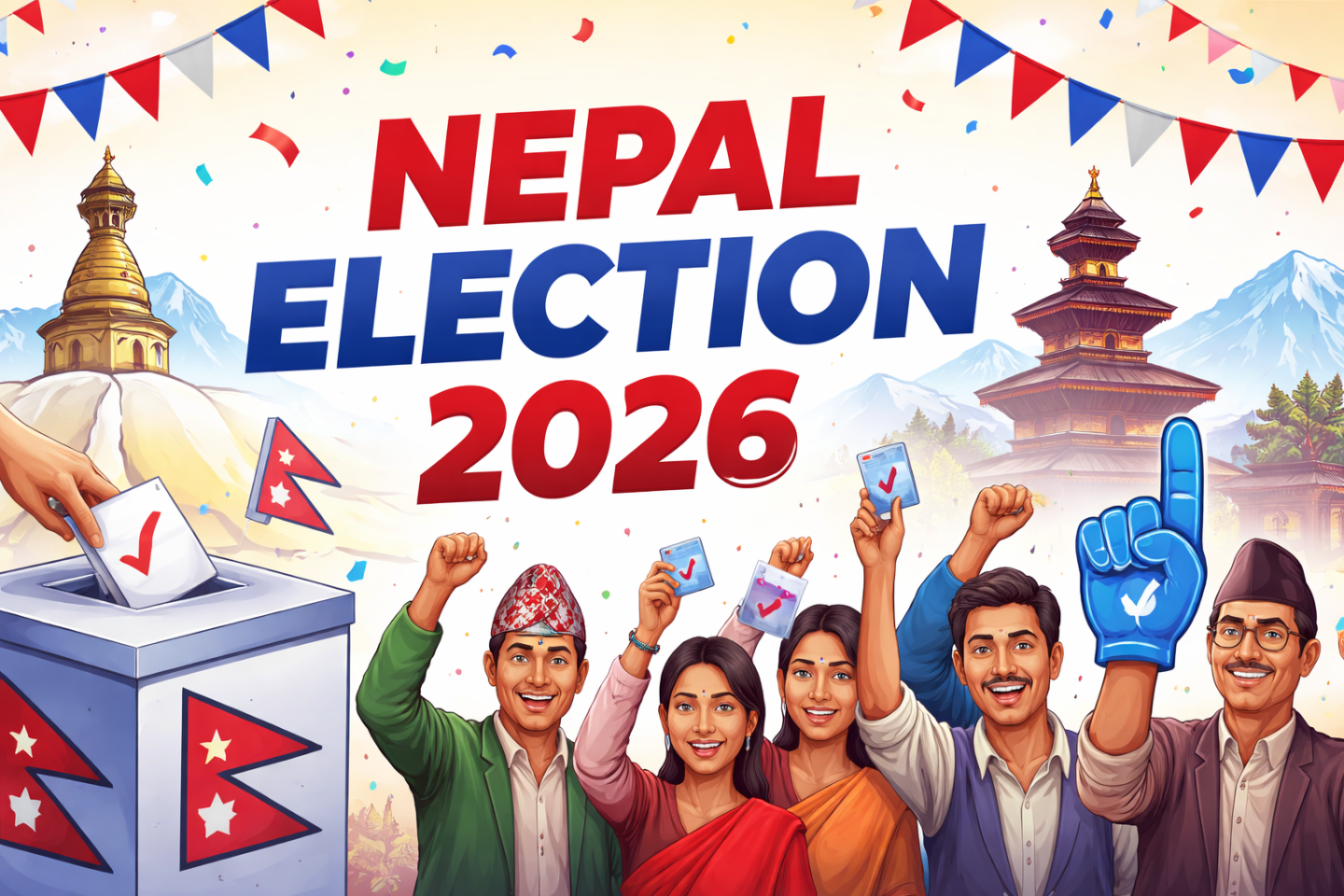
Nepal Election 2026: Historic Clash Between KP Sharma Oli, Balendra Shah, and Gagan Thapa as Youth Demand Ends Era of Veteran Leaders
Nepal is in the midst of a defining moment in its democratic journey as the Nepal Election 2026 unfolds today, March 5, 2026. This early general election to the 275-member House of Representatives marks the first nationwide vote since the dramatic Gen Z-led anti-corruption uprising in September 2025 that claimed dozens of lives, forced the resignation of then-Prime Minister KP Sharma Oli, and led to the dissolution of parliament. An interim government under former Chief Justice Sushila Karki bridged the gap until this pivotal poll.
With nearly 19 million eligible voters (approximately 9.66 million men, 9.24 million women, and a small number in the ‘other’ category) casting ballots across 165 first-past-the-post (FPTP) constituencies and through proportional representation (PR) for the remaining 110 seats, the Nepal Election 2026 reflects deep public yearning for accountability, employment, and an end to chronic political instability. Voting began at 7:00 AM local time and closes at 5:00 PM, with over 10,900 polling stations and more than 23,000 booths operational nationwide.
More than 3,400 candidates from dozens of parties are contesting the direct seats, with many more on party lists. Analysts widely predict no single party will secure a clear majority (138 seats needed), setting the stage for intense coalition negotiations that could stretch weeks or months.
The Epic Battleground: Jhapa-5 – KP Sharma Oli vs Balendra Shah
At the heart of the Nepal Election 2026 narrative stands Jhapa Constituency No. 5 in eastern Nepal’s Koshi Province – a traditionally quiet area transformed into a national flashpoint. This seat, long considered the impregnable fortress of veteran leader KP Sharma Oli, now hosts one of the most symbolic confrontations in recent Nepali politics.
KP Sharma Oli, the 74-year-old chairperson of the Communist Party of Nepal (Unified Marxist-Leninist) – CPN-UML – is fighting to reclaim his political relevance after last year’s ouster. A four-time former prime minister known for his hardline Marxist stance, nationalist rhetoric, and close ties to China, Oli has dominated Jhapa-5 in multiple past elections, winning convincingly in most cycles. His campaign in the Nepal Election 2026 emphasizes experience, stability, infrastructure development, and resistance to what he calls “foreign-influenced chaos” from the 2025 protests. Confined largely to his home turf this time – unlike his nationwide barnstorming in previous polls – Oli has intensified door-to-door efforts to counter the youth surge.
Challenging him directly is Balendra Shah, popularly known as Balen, the 35-year-old former mayor of Kathmandu and a senior figure in the centrist Rastriya Swatantra Party (RSP). A former rapper and civil engineer turned politician, Shah burst onto the scene with his 2022 Kathmandu mayoral win and has since become the embodiment of youth frustration with entrenched elites. In the Nepal Election 2026, Shah’s RSP positions him as the prime ministerial face, urging voters to “ring the bell” – a direct reference to the party’s election symbol – to signal sweeping change against corruption, nepotism, and economic stagnation.
Jhapa-5, home to roughly 163,000 voters, encapsulates the generational divide gripping Nepal. Shah’s high-profile challenge has energized young voters, independents, and even some disillusioned UML supporters. Reports suggest the race has tightened dramatically, with Shah gaining significant traction through social media savvy, direct communication, and promises of transparent governance and job creation. Voter sentiments echo this shift: Shiv Shrestha, a 57-year-old Jhapa resident, captured the mood saying, “So many people, including Gen Z, sacrificed their lives. There has to be change. Corruption must stop, and more employment opportunities should be created here in Nepal. What happened last year should not happen again.”
This head-to-head contest in Jhapa-5 is more than a local race – it’s a referendum on whether Nepal’s youth can convert street momentum into electoral power in the Nepal Election 2026.
Gagan Thapa: Reforming from Within as Nepali Congress PM Candidate
Another major contender shaping the Nepal Election 2026 is Gagan Thapa, the 49-year-old president of Nepal’s oldest democratic party, Nepali Congress. Having risen through internal party reforms – including a special general convention in January 2026 that installed him as leader – Thapa has been declared the party’s prime ministerial candidate.
Thapa, a former student activist imprisoned in the 1990s for pro-democracy efforts, vows to dismantle the “old age club” of veteran leaders who have rotated power for decades. His platform blends institutional experience with calls for generational renewal, anti-corruption drives, inclusive governance, and economic revival. Thapa aims to position Nepali Congress as a reformed, reliable alternative capable of delivering stability while addressing youth grievances from the 2025 protests.
In a landscape fractured by the RSP’s rise and UML’s resilience, Thapa’s leadership offers a middle path: change without complete upheaval.
Broader Landscape: Key Issues, Parties, and Challenges
The Nepal Election 2026 unfolds against a backdrop of profound discontent. The 2025 Gen Z protests, sparked by corruption scandals, economic hardship, unemployment, and perceived elite capture, resulted in deadly clashes and governmental collapse. Key voter concerns include:
- Eradicating systemic corruption
- Creating domestic jobs to curb migration
- Balancing relations with India and China
- Ending frequent government changes that hinder development
Major parties include CPN-UML (led by Oli), Nepali Congress (Thapa), RSP (Shah as key face), former Maoist factions, and smaller groups. The RSP, only a few years old, has surged by attracting young, urban, and tech-savvy candidates, including many under 40.
Nepal’s electoral system combines FPTP for 165 seats and nationwide PR for 110, promoting representation but complicating majorities. The rugged Himalayan terrain complicates logistics: Ballot boxes from remote areas may take days to reach counting centers. The Election Commission targets FPTP results within 24 hours of counting start (often delayed by transport), with full PR tallies potentially taking 2–3 more days.
No clear frontrunner exists, and coalition-building will likely determine the next government. Past patterns suggest prolonged negotiations.
When to Expect Results in Nepal Election 2026
Voting closed at 5:00 PM today. Initial FPTP results from accessible areas could emerge late tonight or early March 6, with comprehensive direct-seat outcomes over the next day or two. Proportional representation results, essential for final seat distribution, may finalize by early next week.
The Nepal Election 2026 outcome will signal Nepal’s direction: continuity under veterans like Oli, reformist renewal via Thapa, or bold youth-led transformation through Shah. Whatever the verdict, this poll represents a generational turning point for the Himalayan nation.