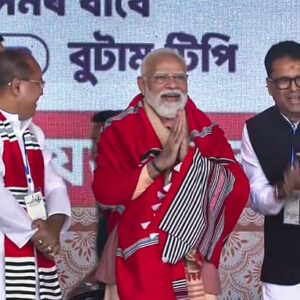
In a carefully crafted gesture that blends symbolism with substance, Prime Minister Narendra Modi has taken his campaign for the upcoming Assam Assembly Election to the very heart of the state’s economic and cultural identity—its tea gardens. During a day-long tour of poll-bound Assam, the Prime Minister made a poignant visit to the Manohari Tea Estate in Dibrugarh, where he stepped off the political stage and onto the lush green fields to engage directly with the community that forms the backbone of Assam’s heritage.
For voters across the state, especially the tea tribe communities who have long been a decisive factor in Assam’s electoral arithmetic, this visit sends a powerful message. As the Assam Assembly Election draws closer, Narendra Modi’s hands-on approach—literally plucking tea leaves alongside workers—reflects a strategy aimed at consolidating support among a demographic that has historically swung elections. This article delves into the significance of the Prime Minister’s tea garden visit, his subsequent rallies, and what it means for the political landscape of the Northeast.
A Walk Through the Manohari Tea Estate: Modi Joins the Pluckers
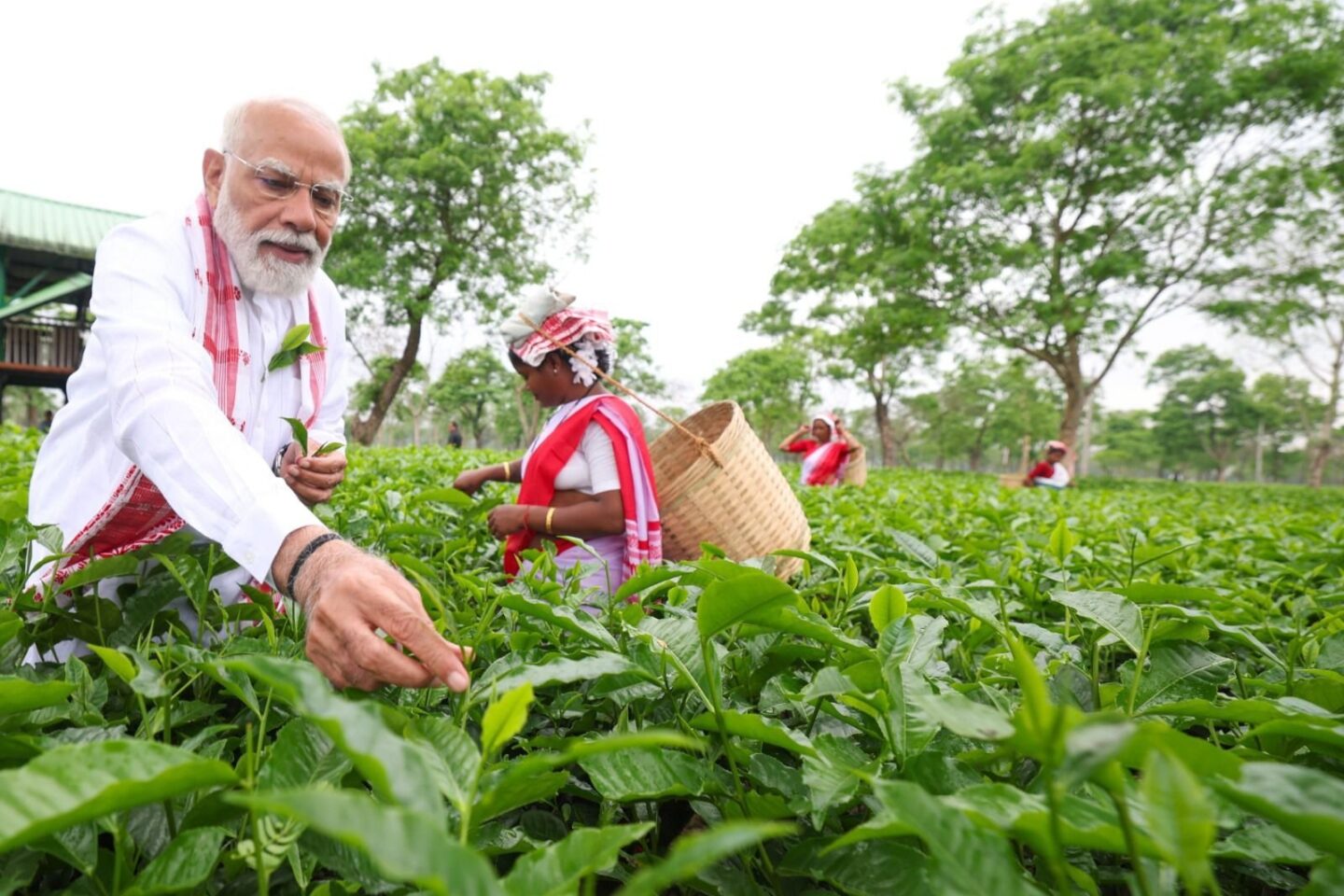
The image was striking: the Prime Minister of India, dressed in a simple white kurta, walking through the manicured rows of tea bushes at the Manohari Tea Estate in Dibrugarh. Surrounded by 19 women workers dressed in traditional white sarees with red borders—the iconic attire of Assam’s tea garden communities—Narendra Modi participated in the daily ritual of tea leaf plucking.
Half an Hour of Engagement
For nearly thirty minutes, Modi observed the workers’ routines, listening intently to their concerns. He was seen carefully placing freshly plucked leaves into traditional bamboo baskets, a gesture that demonstrated respect for the labour that goes into every cup of Assam tea. But beyond the photogenic moments, the visit carried substantive purpose.
The Prime Minister engaged in conversations covering a range of issues critical to the tea garden communities:
- Education: Workers shared their aspirations for better schooling facilities for their children.
- Healthcare: Discussions touched upon access to medical services and the Ayushman Bharat scheme.
- Wages: The issue of fair wages and the implementation of the Tea Garden Workers’ Welfare schemes were part of the dialogue.
This wasn’t merely a photo opportunity. By spending significant time in the field, Narendra Modi signalled to the tea tribe population—estimated to number in the millions across Assam—that their concerns are a priority for the government.
Celebrating Cultural Heritage: The Jhumur Dance Performance
Following his interaction with the workers, the Prime Minister witnessed a traditional Jhumur dance performance presented by the tea garden workers. The Jhumur, a vibrant folk dance form originating from the tea tribe communities, is an integral part of Assam’s cultural tapestry. It is typically performed during harvest seasons and festive occasions, telling stories of joy, labour, and community bonding.
By showcasing this cultural tradition, the Prime Minister highlighted the rich heritage of the tea garden communities, which often remain underrepresented in mainstream political discourse. For the workers, seeing their cultural expression acknowledged on a national platform was a moment of validation.
The Political Context: Why Tea Gardens Matter in the Assam Assembly Election
The Assam Assembly Election cannot be understood without recognising the electoral significance of the tea tribe communities. Spread across districts like Dibrugarh, Tinsukia, Golaghat, Jorhat, and Sonitpur, tea garden workers and their descendants constitute a substantial voting bloc—often numbering over 20-25 seats where their influence is decisive.
Historical Voting Patterns
Historically, the tea tribes were considered a Congress stronghold, owing to the party’s long association with labour unions and welfare initiatives. However, since 2014, the BJP has made significant inroads into this community, leveraging schemes like Ayushman Bharat, housing for all, and the distribution of land pattas (rights) to garden workers.
Modi’s visit to the Manohari Tea Estate is part of a sustained BJP effort to consolidate this vote bank. By physically participating in their daily labour and listening to their concerns, he is attempting to build an emotional connection that transcends traditional party loyalties.
Key Demands of Tea Garden Workers
For the tea tribe communities, the election hinges on several core issues:
- Higher Minimum Wages: Workers have long demanded a revision of daily wages to keep pace with inflation.
- Land Rights: Many workers live on garden land without formal ownership; pattas remain a critical demand.
- Healthcare Access: While schemes like Ayushman Bharat have helped, the lack of well-equipped hospitals in garden areas remains a concern.
- Education Infrastructure: The community seeks better schools and scholarships for higher education.
During his interaction, Narendra Modi assured workers of continued focus on these issues, linking them to the broader developmental agenda of his government.
Campaign Rallies: Gogamukh and Behali
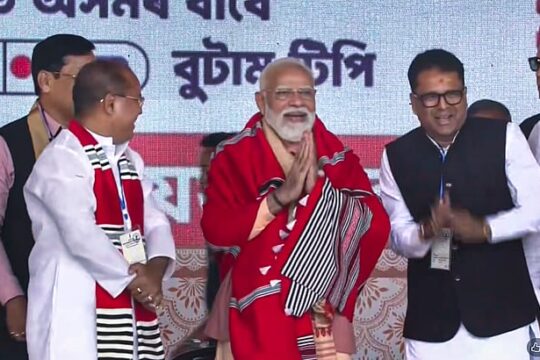
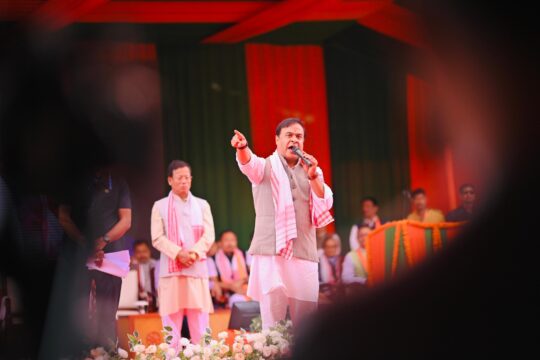
After his cultural immersion in Dibrugarh, the Prime Minister proceeded to address election rallies at two key locations: Gogamukh in Dhemaji district and Behali in Biswanath district. These rallies marked the continuation of his campaign blitz for the Assam Assembly Election, following the earlier groundwork laid by Union Home Minister Amit Shah.
Gogamukh, Dhemaji: The Upper Assam Focus
Dhemaji, located in upper Assam, is a district that has faced challenges of floods and economic underdevelopment. In his rally at Gogamukh, Modi is expected to highlight the infrastructure projects aimed at flood control and connectivity in the region. The district also has a significant tribal population, making it a crucial battleground for the BJP as it seeks to expand its footprint beyond its traditional urban bases.
Behali, Biswanath: Consolidating the Brahmaputra Belt
Behali in Biswanath district is situated along the northern bank of the Brahmaputra. This region, known for its wildlife sanctuary and tea gardens, represents a mix of rural agrarian voters and tea tribe communities. The rally here serves to reinforce the BJP’s message of development and stability, countering opposition narratives that seek to highlight local grievances.
The “Double-Engine” Narrative: Modi’s Central Message
Across his campaign engagements, Narendra Modi has consistently emphasised the concept of a “double-engine” government—where the BJP is in power both at the Centre and in the state. During his tea garden visit and subsequent rallies, this message is expected to feature prominently.
The argument is straightforward: when the same party governs at both levels, development schemes are implemented faster, without bureaucratic friction or political sabotage. For tea garden workers, this translates into faster rollout of welfare schemes, smoother implementation of wage hikes, and greater attention to infrastructure projects like roads, schools, and hospitals.
Cultural Connect vs. Political Messaging: A Balanced Approach
What sets Narendra Modi’s campaign style apart in the Assam Assembly Election is his ability to blend cultural engagement with hard political messaging. The tea garden visit was not merely about policy—it was about belonging. By dressing in a simple white kurta, sitting with the workers, and participating in their daily routine, the Prime Minister projected himself as someone who respects the dignity of labour.
This approach resonates particularly well in Assam, where voters value leaders who show genuine interest in local traditions. The selfie he took with the workers at Manohari Tea Estate is likely to go viral on social media, serving as a powerful campaign tool that reaches millions of voters across the state.
Opposition Reactions and the Road Ahead
While the BJP is leveraging Modi’s popularity and his cultural outreach, the opposition Congress is attempting to counter by focusing on local issues such as unemployment, the Citizenship Amendment Act (CAA), and inflation. Congress leaders have questioned whether the Prime Minister’s visit will translate into tangible benefits for tea workers beyond the election season.
The coming weeks will see intensified campaigning from all sides. With Modi’s visit now complete and Amit Shah expected to return in April, the BJP is pulling out all stops to secure a third consecutive term in Assam.
Frequently Asked Questions (FAQ)
1. Why did Narendra Modi visit a tea garden in Dibrugarh?
Narendra Modi visited the Manohari Tea Estate in Dibrugarh as part of his campaign for the Assam Assembly Election. The visit was aimed at connecting with tea garden workers, understanding their concerns regarding wages, healthcare, and education, and showcasing the government’s commitment to their welfare.
2. What is the significance of tea garden workers in the Assam Assembly Election?
Tea garden workers and their descendants form a substantial voting bloc in Assam, influencing the outcome in approximately 20–25 assembly constituencies. Their support has historically been crucial for electoral success, making them a key focus for all political parties.
3. What were the main issues discussed during Modi’s interaction with tea workers?
During his nearly half-hour interaction, Narendra Modi discussed key issues including education facilities, healthcare access under schemes like Ayushman Bharat, and wages. Workers shared their daily challenges and aspirations, which the Prime Minister acknowledged.
4. What is the Jhumur dance witnessed by the Prime Minister?
The Jhumur is a traditional folk dance performed by tea garden communities in Assam. It is typically accompanied by rhythmic songs and reflects the cultural heritage, joys, and struggles of the tea tribe population. Modi witnessed this performance following his engagement with workers at the Manohari Tea Estate.
5. Where did Narendra Modi hold election rallies after the tea garden visit?
After visiting the Manohari Tea Estate in Dibrugarh, the Prime Minister proceeded to address election rallies at Gogamukh in Dhemaji district and Behali in Biswanath district as part of his campaign schedule for the Assam Assembly Election.
Conclusion: A Campaign Rooted in Cultural Connection
As the Assam Assembly Election approaches, Prime Minister Narendra Modi’s visit to the Manohari Tea Garden represents more than just a campaign stop—it is a strategic and symbolic effort to deepen the BJP’s connect with a community that has long been at the heart of Assam’s identity. By stepping into the tea fields, listening to workers’ concerns, and celebrating their cultural traditions, Modi has reinforced the message that the BJP sees the tea tribe not merely as a vote bank, but as an integral part of India’s development story.
With rallies in Gogamukh and Behali adding to the momentum, the BJP is leaving no stone unturned in its pursuit of a third straight term. For voters in Assam, the coming weeks will offer a clear choice between continuity with a government that promises peace and development, and an opposition seeking to capitalise on local grievances.