The historic Jonbeel Mela, also popularly known as Jonbil Mela, has officially begun today, January 22, 2026, on the picturesque banks of Jonbeel Lake in Assam’s Morigaon district. This centuries-old cultural extravaganza, running from January 22 to 24, 2026, continues to captivate visitors with its unique revival of the ancient barter system, symbolizing enduring harmony between hill and plain communities.
Jonbeel Mela 2026: A Living Heritage of Barter Trade and Unity in Assam
Morigaon, Assam – January 22, 2026: The iconic Jonbeel Mela, one of India’s rare surviving fairs where trade thrives exclusively through barter, kicked off today amid festive fervor on the shores of Jonbeel near Jagiroad in Morigaon district. Spanning three vibrant days from January 22 to January 24, 2026, this historic event draws thousands of participants and tourists, reinforcing Assam’s rich cultural tapestry and promoting brotherhood between the hills and plains.
Rooted in over 500 years of tradition, the Jonbeel Mela traces its origins to the 15th century. It was initially organized as a platform for political and economic exchanges between the Tiwa (Lalung) kings, particularly the Gobha Raja (or Gova Deoraja), and hill tribes such as the Karbi, Khasi, and Jayantia, along with plains dwellers. Held annually post-Magh Bihu in the third or fourth week of January, the mela preserves a barter-only economy that has largely vanished from the modern world, making it a unique living heritage site.
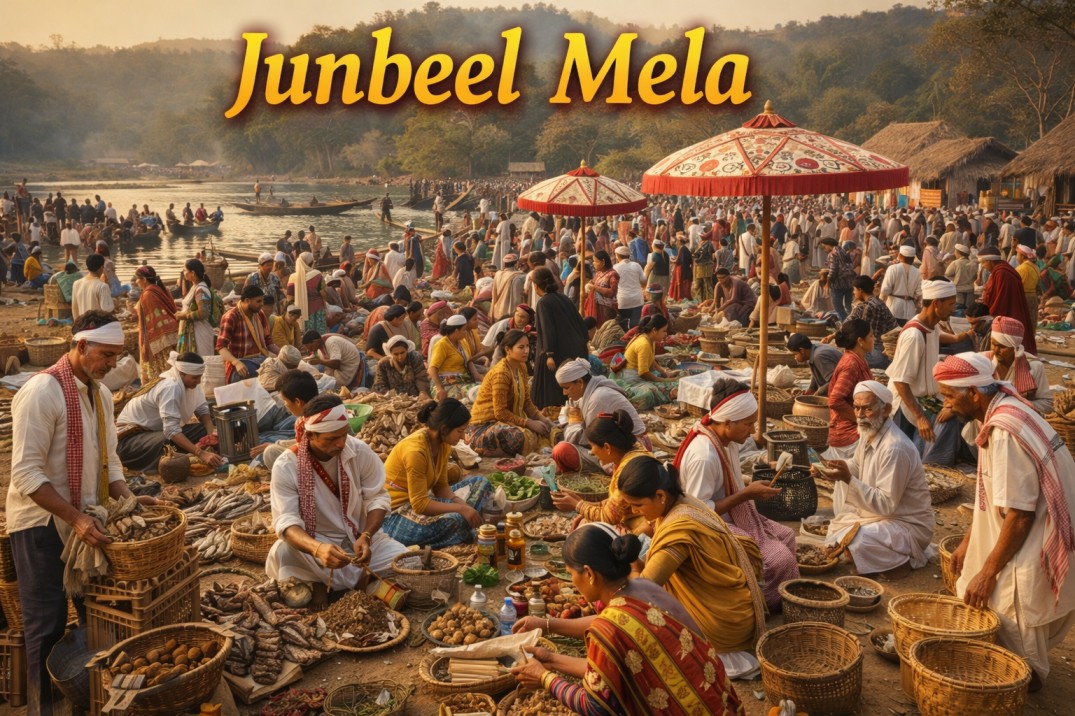
This year, preparations by the fair management committee, led by secretary Jursing Bordoloi, are complete. As decided by the darbar of the Gova Deoraja Royal Palace, the event adheres strictly to its traditional format. Modern currency is rendered invalid, and all transactions occur through direct exchange of goods. Participants from over a hundred villages—primarily from Karbi Anglong, Meghalaya, and neighboring hill regions—arrive laden with agricultural produce, forest items, handmade crafts, spices, rice, vegetables, fish, and more. These “hill uncles and aunts” (mama-mami in local parlance) meet their counterparts from the plains, fostering bonds of mutual respect and trade.
The barter system remains the mela’s heartbeat. Visitors witness lively haggling where a basket of hill oranges might swap for plains rice or fish—echoing pre-monetary economies. This practice not only sustains cultural memory but also highlights Assam’s indigenous economic ingenuity.
Key Highlights of Jonbeel Mela 2026 Programme
The three-day schedule is packed with cultural and traditional elements:
- January 22 (Day 1): The mela opens with a ceremonial flag-hoisting, auspicious rituals, and the symbolic inauguration of traditional Tiwa household elements tied to community life. Hill communities begin arriving with goods, setting the stage for exchanges.
- January 23 (Day 2): The historic barter haat (market) is formally opened in the morning, followed by a grand community fishing event in the Jonbeel waters—a joyful collective activity that adds excitement and fresh catches to the barter pool.
- A major ceremonial highlight includes Assam Chief Minister Dr. Himanta Biswa Sarma conferring the Rajbhatta—a royal subsistence grant or allowance—upon 22 Tiwa kings in the traditional Tiwa royal court (raj darbar). This gesture honors the Tiwa community’s royal heritage and underscores governmental support for indigenous traditions.
Throughout the days, attendees enjoy a poets’ meet featuring Tiwa and Assamese language poets, mesmerizing traditional dance and music performances showcasing diverse ethnic rhythms, and a delectable food festival offering local delicacies like rice beer, pithas, smoked meats, and seasonal harvest treats.
Cultural and Social Significance
Closely linked to the Tiwa (Lalung) community, the Jonbeel Mela transcends mere trade—it’s a powerful emblem of Assam’s cultural heritage. It embodies harmony, brotherhood, and peaceful coexistence between hill tribes and plains people, a message especially relevant in today’s diverse society. By preserving the barter system, the fair educates younger generations about ancestral ways while attracting tourists interested in authentic Northeast Indian experiences.
Located just 3 km from Jagiroad and about 65 km from Guwahati, Jonbeel Lake’s crescent-shaped wetland provides a scenic backdrop, enhancing the mela’s appeal. Thousands flock annually from across Assam, other states, and even abroad, making it a must-visit for cultural enthusiasts, historians, and travelers exploring Assam’s festivals.
As the Jonbeel Mela 2026 unfolds, it reaffirms Assam’s commitment to safeguarding intangible heritage amid modernization. Whether you’re drawn by the thrill of barter trading, the vibrant performances, or the spirit of unity, this fair offers an unforgettable glimpse into Northeast India’s soul.