Tehran, January 11, 2026 – Iran is witnessing one of its most intense waves of anti-government protests in recent years, now entering its third week. What began as economic grievances on December 28, 2025, has transformed into widespread calls for regime change, with demonstrations spreading to over 180 cities across all 31 provinces.
The unrest erupted in Tehran‘s historic bazaar when merchants and shopkeepers staged strikes over the dramatic collapse of the Iranian rial, rampant inflation exceeding 70% for food items, and acute shortages of basic goods. Prices for essentials like cooking oil, chicken, and rice surged overnight, prompting bazaaris — traditionally regime supporters — to close shops and take to the streets. Economic frustrations quickly evolved into broader political demands, with protesters chanting against Supreme Leader Ayatollah Ali Khamenei and the clerical establishment.
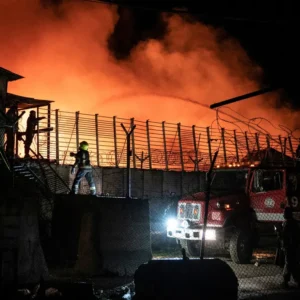
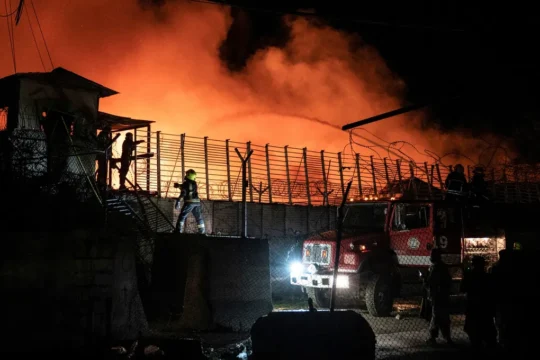
Authorities responded with a severe crackdown, imposing a near-total internet blackout and communication restrictions since early January to disrupt coordination and limit information flow. Human rights groups report escalating violence: the US-based Human Rights Activists News Agency (HRANA) estimates at least 78 protesters killed and over 2,600 arrested as of January 10, with some sources citing higher figures, including dozens of security personnel deaths. Hospitals in Tehran are reportedly overwhelmed, with accounts of live ammunition use, mass injuries, and forced removals of bodies.
The protests have spilled beyond Iran’s borders. Solidarity demonstrations have erupted in major cities like Paris, Berlin, and Washington, D.C., including outside the White House.
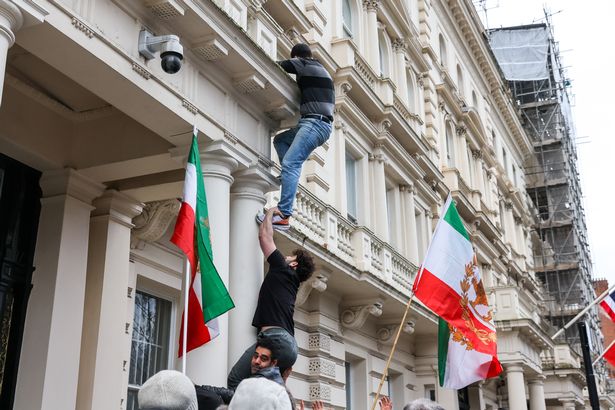
A dramatic incident unfolded in London on January 10, where a protester scaled the balcony of the Iranian embassy in Kensington, tore down the current Islamic Republic flag, and briefly hoisted the pre-1979 Lion and Sun flag — the historic symbol of Iran’s monarchy before the 1979 Islamic Revolution. Crowds below cheered as the emblem, now a powerful sign of opposition and resistance, waved for several minutes before being removed. Metropolitan Police arrested two individuals for aggravated trespass, though it’s unclear if the flag-changer was among them.
The Lion and Sun flag, used officially for centuries and tied to the Pahlavi era, has re-emerged as a key protest symbol, representing rejection of the current regime and nostalgia for pre-revolutionary Iran. It has appeared frequently in videos from inside the country.
U.S. President Donald Trump has repeatedly warned the Iranian leadership against harming protesters. In recent statements, he described Iran as “in big trouble,” urged authorities not to “start shooting,” and declared the U.S. “stands ready to help” the Iranian people achieve freedom. Trump threatened strong intervention — including potential military action — if killings continue, saying, “You better not start shooting because we’ll start shooting too.” U.S. officials have discussed options like airstrikes on Iranian military sites, though no immediate action is confirmed.
The situation remains highly fluid, with reports of continued large-scale protests despite the blackout, arson against regime symbols, and fears of further escalation. International observers, including the UN human rights chief, have called for independent investigations into the violence.
As economic woes deepen under sanctions and internal mismanagement, these protests represent a major challenge to the Islamic Republic’s stability. The world watches closely as the movement grows.