Holi 2026: Complete Guide to Festival of Colors Date, Traditions, Regional Celebrations in India & Assam Phakuwa
Holi, popularly known as the Festival of Colors, stands as one of India’s most vibrant, energetic, and unifying festivals. As spring arrives, Holi sweeps across the nation with an explosion of colors, music, dance, laughter, and unbreakable bonds of togetherness. Celebrated primarily within Hindu communities but joyfully embraced by people from all religions, castes, and backgrounds, Holi transforms streets, neighborhoods, and hearts into a living canvas of pink, green, blue, yellow, red, and every shade in between.
With Holi 2026 approaching rapidly—falling on March 3–4, 2026—excitement is building nationwide. This year, the festival aligns perfectly with the full moon (Purnima) in the Hindu lunar month of Phalguna. Holika Dahan (the bonfire ritual) takes place on the evening of March 3, 2026, while the main color-throwing extravaganza, known as Rangwali Holi or Dhulandi, unfolds on March 4, 2026. Communities across India, including in Assam where it’s lovingly called Phakuwa or Dol Jatra, are gearing up for two days of pure joy and renewal.
The Historical and Mythological Significance of Holi
The roots of Holi stretch back thousands of years, deeply embedded in ancient Hindu scriptures, Puranas, and timeless folklore. Two core legends define its spiritual essence and enduring popularity.
First is the powerful story of Prahlada and Holika. The tyrannical demon king Hiranyakashipu, blessed with near-invincibility, proclaimed himself a god and demanded universal worship. His young son, Prahlada, remained an unwavering devotee of Lord Vishnu, refusing to bow to his father. Furious, Hiranyakashipu ordered his sister Holika—granted immunity from fire—to carry Prahlada into a blazing pyre, intending to burn him alive. Through divine grace, Prahlada emerged unscathed while Holika was consumed by the flames. This tale of unshakeable faith triumphing over evil is commemorated every year through Holika Dahan, the sacred bonfire lit on the eve of Holi. Communities gather around massive wood piles, offer prayers, perform parikrama (circumambulation), and symbolically burn away negativity, ego, and past grudges.
The second beloved legend centers on the divine playfulness of Lord Krishna and Radha. In the sacred land of Braj (encompassing Mathura and Vrindavan), young Krishna—known for his mischievous charm—would tease Radha and the gopis by playfully smearing them with colors. What began as affectionate fun evolved into a profound expression of divine love, equality, and joy. This tradition gave birth to the colorful aspect of Holi, where throwing gulal (dry powder) and colored water symbolizes breaking social barriers, forgiving old enmities, and embracing life’s vibrant beauty.
Together, these myths weave themes of renewal after winter’s dormancy, the victory of good over evil, forgiveness, devotion, and the fertile promise of spring. Holi isn’t just a festival—it’s a cultural reset button that invites everyone to let go of divisions and celebrate unity.
When is Holi 2026? Dates, Timings, and Muhurat
For Holi 2026, the key dates are confirmed based on the Hindu Panchang:
- Holika Dahan (Chhoti Holi): Evening of Tuesday, March 3, 2026. This marks the start, with bonfires lit after sunset to honor the Prahlada-Holika legend.
- Rangwali Holi / Dhulandi: Wednesday, March 4, 2026. The full day dedicated to playing with colors, water, music, and feasting.
The Phalguna Purnima tithi (full moon) begins on March 2 evening and concludes on March 3, aligning the main celebrations accordingly. Note that local variations in muhurat (auspicious timings) may apply depending on regional panchangs, but March 3-4 remains standard across most of India.
In places like Assam, celebrations often extend beyond two days, especially in Vaishnavite centers like Barpeta Satra, where Doul Utsav or Phakuwa unfolds over several days with devotional processions, Bhaona (traditional plays), and unique rituals.
How Holi 2026 is Celebrated: Traditions and Customs
Holi celebrations unfold in two distinct phases, blending spirituality with unbridled merriment.
Holika Dahan (Chhoti Holi)
On the eve, families and neighborhoods build bonfires using wood, cow dung cakes, and sometimes symbolic effigies. People circumambulate the fire, offer grains and coconuts, and chant mantras. The flames represent the destruction of evil forces. After the ritual, people share sweets like gujiya, puran poli, and malpua around the warmth of the fire.
Rangwali Holi (Dhulandi)
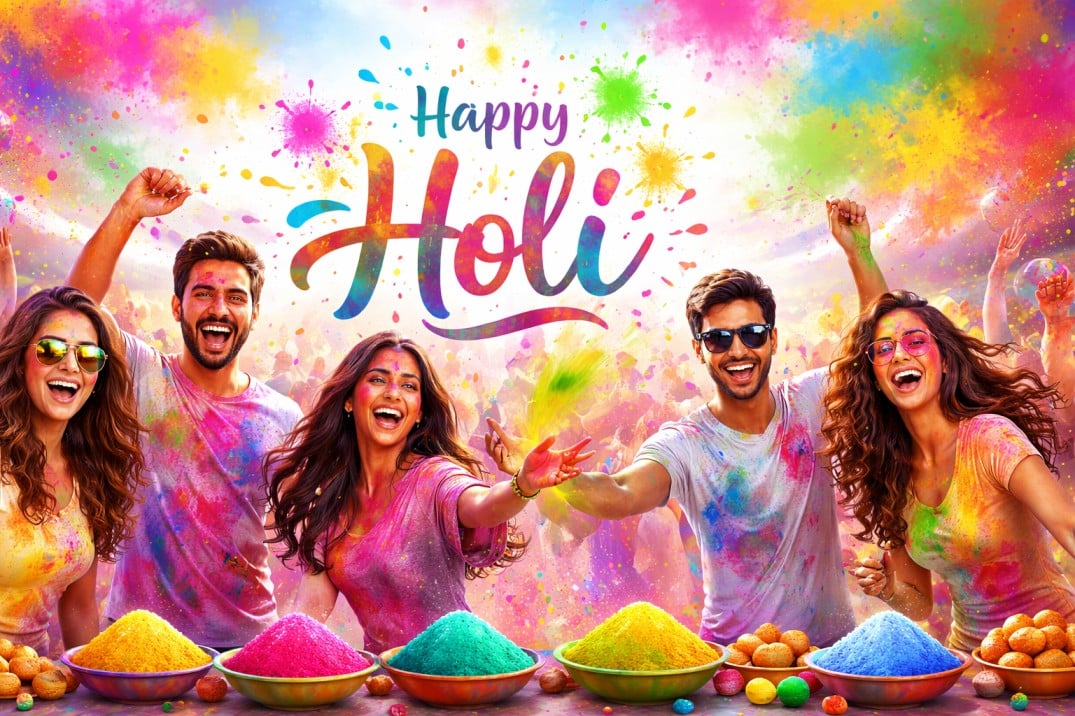
The next morning explodes into color chaos! Dressed in old white clothes (perfect for turning into colorful art), people arm themselves with pichkaris (water guns), buckets of colored water, and bowls of gulal. Streets become battlegrounds of joy—friends chase each other, strangers become instant buddies, and even authority figures join the fun. Music blasts from speakers—classic Holi songs, folk tunes, and Bollywood hits like “Rang Barse” and “Badri Ki Dulhania.” Social hierarchies dissolve; everyone is equal under layers of color.
As the day progresses, people visit homes to apply abir-gulal on elders’ feet as a mark of respect, exchange sweets, and enjoy feasts. In many areas, bhang (cannabis-infused) thandai adds a euphoric twist (consumed responsibly).
Traditional Holi foods are a highlight:
- Gujiya: Crispy deep-fried dumplings stuffed with khoya, nuts, coconut, and cardamom.
- Thandai: Refreshing spiced milk drink, often with almonds, fennel, rose petals, and sometimes bhang.
- Malpua: Sweet pancakes soaked in sugar syrup.
- Dahi vada, papri chaat, spicy snacks, and seasonal treats like imli (tamarind) water.
Regional Variations: Diversity in Holi Celebrations Across India
While the core spirit unites India, Holi’s expression varies beautifully by region.
- Mathura & Vrindavan (Uttar Pradesh): The spiritual heartland. Week-long festivities include temple processions, Lathmar Holi in nearby Barsana and Nandgaon (women playfully “beat” men with sticks), and Phoolon ki Holi (flower-throwing) in some temples.
- Barsana & Nandgaon: Iconic Lathmar Holi—a mock battle of love where women chase men with lathis (sticks), and men defend with shields.
- Rajasthan (Jaipur, Udaipur): Regal parades with elephants, folk performances, and palace gatherings—often more elegant and subdued.
- West Bengal: Called Dol Jatra or Basant Utsav, it’s devotional with flower colors, swings for deities, and Rabindra Sangeet recitals.
- South India: More temple-centric, focusing on Holika bonfires and rituals rather than mass color play.
- Assam (Phakuwa / Dol Jatra): In Assam, particularly in North Guwahati and areas like Barpeta, Holi is known as Phakuwa or Doul Utsav. Celebrations emphasize devotion through Vaishnavite traditions established by Srimanta Sankardeva. In Barpeta Satra, the festival spans multiple days (often March 2-6 in 2026), featuring idol processions, Satriya dance and music, Bhaona performances depicting Krishna’s life, and community color play called Fakuwa. Swings (doul), devotional songs, and feasts create a serene yet joyful atmosphere unique to Assamese culture.
Modern Holi: Global Reach, Eco-Friendly Trends, and Urban Festivities
In contemporary times, Holi has evolved while preserving its essence. Urban India hosts massive public events with celebrity performances, foam parties, DJs, and laser shows. The festival has gone global via the Indian diaspora—iconic “Festival of Colors” events draw thousands in Utah (USA), London, Sydney, and beyond.
A major modern shift is toward sustainability. Chemical colors once caused skin irritation and pollution; now, eco-friendly gulal made from natural sources like turmeric (yellow), beetroot (purple), henna, and flower petals dominates markets. Organic brands promote skin-safe, biodegradable options, encouraging “Green Holi” initiatives.
Safety tips for Holi 2026 include using natural colors, protecting eyes and skin, staying hydrated, and celebrating responsibly.
The Deeper Symbolism and Message of Holi
Beyond the vibrant chaos lies profound wisdom:
- Colors symbolize life’s joy, diversity, and vibrancy.
- Throwing color on others promotes forgiveness—washing away grudges.
- It dismantles barriers of caste, class, age, and status—for one day, all are equal.
- Like spring’s bloom, Holi celebrates renewal, letting go of negativity for fresh beginnings.
In a divided world, Holi’s message of unity, love, and forgiveness remains timeless.
Bura na mano, Holi hai! (Don’t mind, it’s Holi!)
As Holi 2026 approaches on March 3-4, whether you’re in the colorful streets of Mathura, the devotional satsangs of Assam’s Phakuwa, or joining a global event, embrace the spirit fully. Prepare your pichkaris, stock up on gujiya and natural gulal, forgive old foes, and dive into the rainbow of joy. Holi isn’t just a festival—it’s a reminder that life is messy, colorful, unpredictable, and utterly beautiful.
Happy Holi 2026 to all! May your days be filled with colors of happiness and love.