Canadian PM Mark Carney Embarks on Landmark Indo-Pacific Tour: Visits to India, Australia, and Japan to Strengthen Trade, Energy, Technology, and Defence Ties
In a strategic move to bolster Canada’s position in an increasingly complex global landscape, Prime Minister Mark Carney has announced a major diplomatic tour across the Indo-Pacific region. From February 26 to March 7, 2026, the Canadian leader will visit three key democracies—India, Australia, and Japan—to forge deeper economic, technological, and security partnerships. This 10-day itinerary underscores Canada’s renewed focus on diversifying trade away from over-reliance on traditional partners, attracting fresh investments, and unlocking opportunities for Canadian workers and businesses in high-growth sectors.
The announcement, made by the Prime Minister’s Office on February 23, 2026, comes at a pivotal time for Canada. As the world grapples with geopolitical shifts, supply chain vulnerabilities, and emerging technologies, Carney’s government is prioritizing the Indo-Pacific as a cornerstone of its foreign and economic policy. The tour aims to expand collaborations in trade, energy transition, artificial intelligence (AI), critical minerals, and defence—areas where Canada possesses significant strengths and where the visited nations offer complementary advantages.
Background: Mark Carney’s Rise to Prime Minister and Foreign Policy Vision
Mark Carney, sworn in as Canada’s 24th Prime Minister in March 2025 after a dramatic leadership transition within the Liberal Party, brings a unique background to the role. A renowned economist and former Governor of both the Bank of Canada (2008–2013) and the Bank of England (2013–2020), Carney entered politics without prior elected experience but quickly established himself as a steady hand amid economic challenges. His ascent followed Justin Trudeau’s resignation amid political turbulence, culminating in Carney’s landslide victory in the Liberal leadership race and subsequent federal election win in April 2025.
Since taking office, Carney has emphasized building “strategic autonomy” for Canada while defending sovereignty and values like democracy and human rights. In speeches at forums such as the World Economic Forum in Davos 2026, he has highlighted the need for middle powers to collaborate in a “more divided and uncertain world.” This Indo-Pacific tour represents a practical manifestation of that vision, particularly as Canada seeks to reduce economic dependency amid ongoing trade frictions with the United States.
The Itinerary: A Three-Nation Focus on the Indo-Pacific
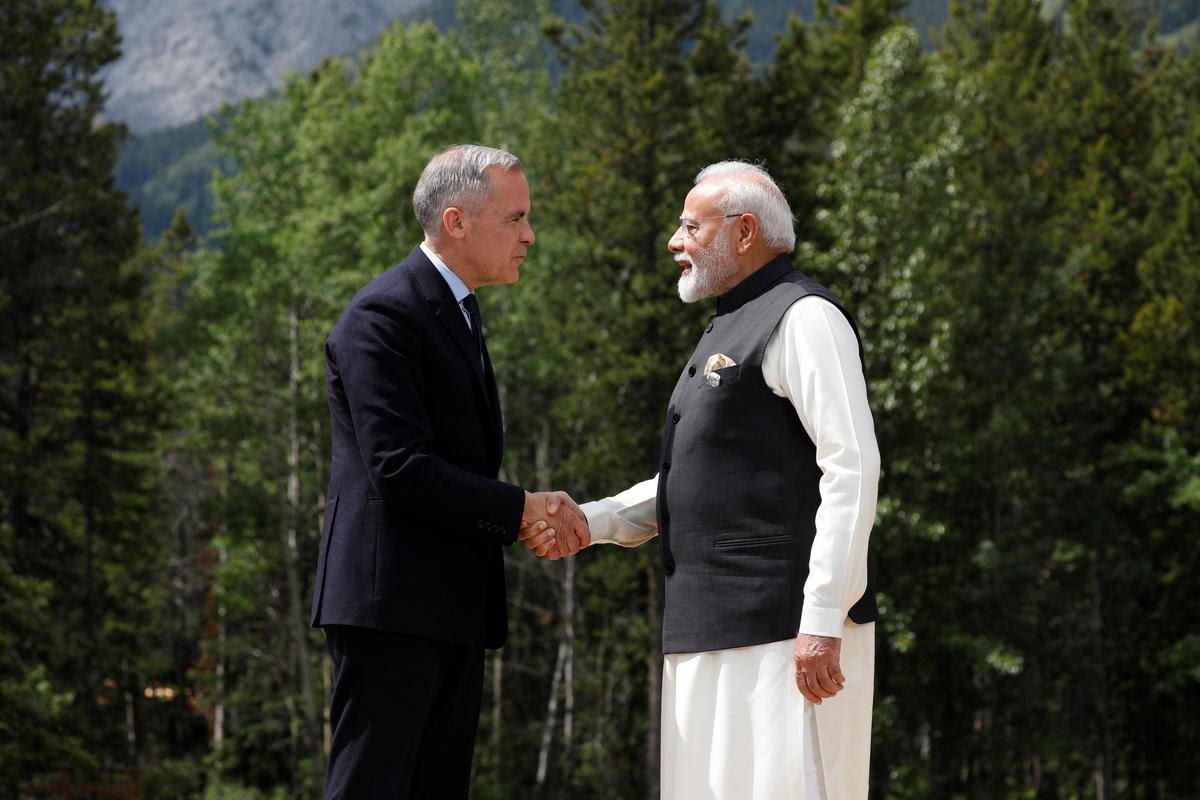
The visit kicks off in India, where Carney will arrive on February 26, 2026. He will spend time in Mumbai engaging with business leaders, investors, and industry stakeholders before heading to New Delhi. The highlight will be a bilateral meeting with Indian Prime Minister Narendra Modi, expected to cover a broad agenda aimed at “elevating and expanding” the Canada-India relationship.
Discussions are anticipated to center on ambitious new partnerships across multiple domains:
- Trade and Investment: Exploring ways to increase bilateral trade volumes, which have lagged behind potential despite complementary economies. Canada’s vast resources in energy and minerals align well with India’s growing demand.
- Energy: Collaboration on clean energy transitions, including potential uranium exports from Canada to fuel India’s nuclear ambitions and joint ventures in renewables.
- Technology and AI: Deepening ties in artificial intelligence, where Canada is a global leader through hubs like Toronto and Montreal, and India excels in talent and application development.
- Talent and Culture: Enhancing people-to-people links, including student exchanges, skilled migration, and cultural initiatives to build long-term goodwill.
- Defence: Strengthening strategic dialogue on maritime security, joint exercises, and defence technology sharing in the Indo-Pacific context.
This visit is widely viewed as a major step toward resetting and revitalizing Canada-India ties, which faced strains in recent years but are now poised for renewal under Carney’s pragmatic leadership.
Following India, Carney will travel to Australia for meetings with Prime Minister Anthony Albanese. The agenda here includes addressing both houses of the Australian Parliament—a rare honor for a Canadian prime minister, marking the first such address in nearly two decades. Key topics will encompass trade diversification, advanced technologies including AI, defence cooperation, and maritime security in the Indo-Pacific.
The tour concludes in Japan, where Carney will engage with Prime Minister Sanae Takaichi. Discussions are expected to emphasize critical minerals supply chains, energy security, technology partnerships, and defence alliances—reflecting shared concerns over regional stability and economic resilience.
Strategic Importance: Why the Indo-Pacific Matters to Canada
Canada’s Indo-Pacific Strategy, first outlined in 2022 and now amplified under Carney, positions the region as vital for long-term prosperity. The area accounts for a growing share of global GDP, innovation, and trade routes. By deepening ties with India, Australia, and Japan—members of frameworks like the Quad (Quadrilateral Security Dialogue)—Canada aims to:
- Diversify export markets and reduce vulnerabilities in supply chains, particularly for critical minerals essential to electric vehicles, batteries, and green technologies.
- Attract foreign direct investment into Canadian sectors like clean energy and AI.
- Enhance security cooperation amid rising geopolitical tensions, including concerns over maritime domains and hybrid threats.
This tour also signals Canada’s intent to play a more active role as a middle power, bridging Atlantic and Pacific interests while promoting rules-based international order.
Potential Outcomes: Agreements, MOUs, and Long-Term Impact
The visit holds strong promise for tangible results. New trade agreements, memoranda of understanding (MOUs), and investment pacts could emerge, particularly in critical minerals and AI. For instance, Canada’s abundant reserves of lithium, nickel, and cobalt could support India’s and Japan’s clean energy goals, while joint R&D in AI could foster innovation ecosystems.
In the defence realm, enhanced cooperation could include technology transfers, joint training, and intelligence sharing—contributing to regional stability without escalating tensions.
For Canada-India relations specifically, the Modi-Carney meeting offers a platform to move beyond past frictions toward a forward-looking partnership. Analysts see potential for a comprehensive economic agreement or sectoral deals that could boost bilateral trade significantly in the coming years.
Broader Context: Global Implications and Canada’s Economic Goals
This diplomatic push aligns with Carney’s domestic priorities of building a stronger, more resilient economy. By securing new partnerships, Canada aims to create jobs, drive innovation, and ensure energy security for its citizens.
As the world navigates uncertainties—from trade disruptions to technological disruptions—this tour positions Canada as a reliable, values-driven partner in the Indo-Pacific. It also reinforces alliances among like-minded democracies committed to open markets, innovation, and security.
In summary, Prime Minister Mark Carney’s visit to India, Australia, and Japan from February 26 to March 7, 2026, is more than a routine diplomatic trip—it’s a bold statement of Canada’s strategic reorientation toward one of the world’s most dynamic regions. With high-stakes meetings, including the pivotal encounter with PM Narendra Modi, the tour promises to unlock new opportunities and strengthen ties that will shape Canada’s future for decades to come.