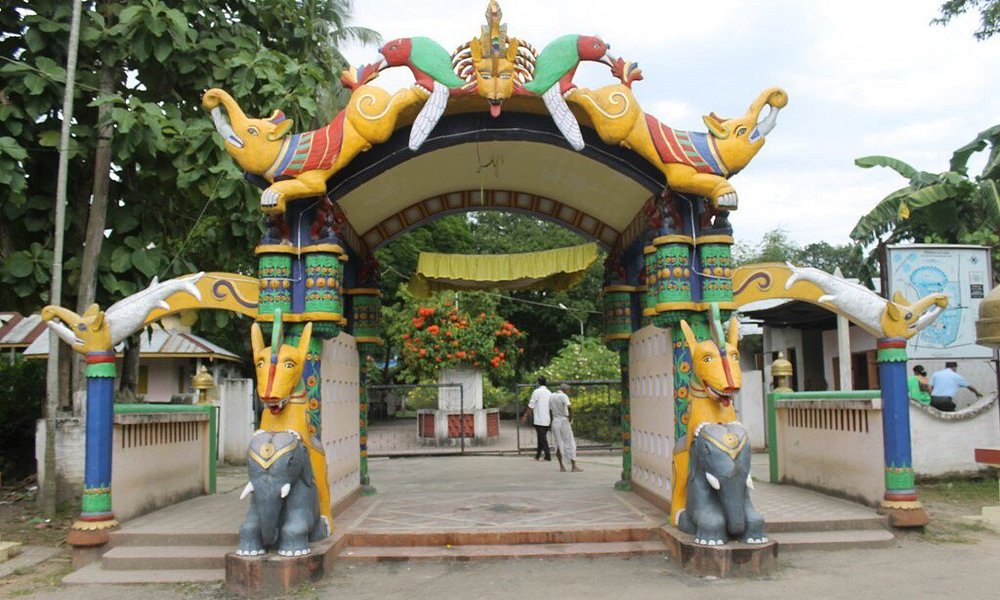
The Assam government has announced plans to introduce a mandatory traditional dress code for visitors above the age of 12 at Batadrava Than, the sacred birthplace of Mahapurush Srimanta Sankardev. This initiative, led by Chief Minister Himanta Biswa Sarma, aims to preserve the cultural and spiritual sanctity of the revered Mahapurush Srimanta Sankardev Avirbhav Kshetra in Nagaon district.
Assam Government to Implement Mandatory Traditional Dress Code at Batadrava Than for Visitors Over 12: CM Himanta Biswa Sarma Announcement
Batadrava Than, often referred to as the spiritual heart of Assam’s Neo-Vaishnavite tradition, is set to welcome devotees and visitors in a more culturally aligned manner. Chief Minister Himanta Biswa Sarma made the key announcement on March 3, 2026, during his visit to the site on the second day of the five-day Doul Festival (also known as Phaguwa or Dol Jatra in Assamese tradition). This festival celebrates the divine love of Radha-Krishna and holds immense significance at Vaishnavite institutions like Batadrava Than.
CM Himanta Biswa Sarma’s Statement on Batadrava Than Dress Code
While offering prayers and participating in rituals at the sacred complex, CM Sarma addressed the growing concerns over inappropriate attire at the site. He stated: “We have noted that visitors have been entering the Avirbhav Kshetra wearing different kinds of attire. People want to maintain its sanctity. Therefore, we have decided that visitors above 12 years of age will have to wear traditional attire to visit Batadrava.”
He further clarified that the proposal is under active consideration by the government. “Usually government process takes two to three days. Once that’s done, we will make it mandatory,” Sarma added. Children below 12 years will be exempt from this rule, ensuring family visits remain accessible while upholding decorum for older devotees and tourists.
The Chief Minister’s remarks came amid ongoing efforts to reinforce cultural protocols at key religious sites in Assam. This move aligns with broader initiatives to protect Assam’s indigenous heritage, particularly in places tied to Srimanta Sankardev’s legacy.
Historical and Cultural Significance of Batadrava Than
Batadrava Than holds unparalleled importance in Assamese culture as the birthplace of Mahapurush Srimanta Sankardev (1449–1568), the 15th-16th century Vaishnavite reformer, poet, playwright, and saint who founded the Ekasarana Dharma or Neo-Vaishnavism. His teachings emphasized devotion (bhakti), equality, and rejection of caste rigidities, profoundly shaping Assam’s social, literary, and artistic landscape.
The site, located in Nagaon district, includes the Avirbhav Kshetra — the place of Sankardev’s manifestation or birth. It features temples, prayer halls (namghars), museums, and spaces for cultural performances like Bhaona (devotional plays) and Sattriya dance. Devotees visit to pay homage, participate in kirtans, and experience the serene environment dedicated to Lord Krishna.
In recent years, the site has undergone massive transformation. The Rs 227-crore redevelopment project, titled Mahapurush Srimanta Sankardev Avirbhav Kshetra, spanned over 162 bighas of land. It involved extensive eviction drives to remove encroachments, ensuring the site’s purity and accessibility. Union Home Minister Amit Shah officially inaugurated the revamped complex on December 29, 2025, highlighting its role in cultural revival and linking it to larger efforts for protecting indigenous identity.
Why a Traditional Dress Code at Batadrava Than?
The decision to enforce a traditional dress code stems from public feedback and observations during high-footfall events like the Doul Festival. Visitors in modern or casual western clothing (such as jeans, shorts, or revealing outfits) have reportedly diminished the spiritual ambiance at this sacred space.
In many Indian religious sites — such as temples in Odisha (e.g., Puri Jagannath), Kerala (e.g., Guruvayur), or Tamil Nadu (e.g., Tirupati) — dress codes are already enforced to maintain sanctity. Assam’s move mirrors this trend, emphasizing respect for Vaishnavite customs where modesty, simplicity, and traditional garments like dhoti-kurta for men, mekhela chador or gamosa-infused attire for women are preferred.
Traditional Assamese attire includes:
- For men: Dhoti, kurta, seleng or gamosa.
- For women: Mekhela sador, riha or pat silk variants.
- Accessories like gamosa (traditional towel-scarf) often used as a mark of respect.
The exemption for children under 12 acknowledges practical considerations for families while ensuring adults set an example.
Broader Context: CM Sarma’s Visit and Political Comments
During the same visit, CM Sarma participated in the “Phaku Diya” ritual — the ceremonial application of phaku (a sacred red powder) on the idol of Lord Krishna (referred to as Gosain). This forms a central part of Doul Festival observances.
Shifting to politics, Sarma criticized the Congress party, accusing it of focusing on certain constituencies and alienating Assamese interests. He claimed internal rifts in the opposition, particularly between leaders like Gaurav Gogoi and Akhil Gogoi, revolve around such issues. However, the primary focus remained on cultural preservation at Batadrava Than.
Implications for Devotees and Tourists Visiting Batadrava Than
Once implemented (expected within days as per CM Sarma), the dress code will apply to all visitors over 12 entering the main premises. Authorities may provide guidelines or facilities for changing attire if needed. This could boost cultural tourism by attracting those interested in authentic experiences while deterring casual visits that disregard traditions.
The rule reinforces Assam’s commitment to safeguarding its Vaishnavite heritage amid modernization. It also sets a precedent for other satras (monasteries) and religious sites in the state.
What Traditional Attire Means for Batadrava Than Visitors
- Men — Dhoti with kurta or shirt, often accompanied by a gamosa.
- Women — Mekhela chador, salwar kameez in traditional fabrics, or riha.
- Avoid: Shorts, sleeveless tops, revealing clothes, or heavy modern fashion.
This ensures harmony with the site’s ethos of devotion and humility.
As Assam continues to promote its rich cultural legacy through redevelopment projects and policy measures, the traditional dress code at Batadrava Than stands as a significant step toward preserving the sanctity of one of its most revered spiritual landmarks. Devotees and tourists are advised to stay updated on official notifications for smooth visits.