Assam Assembly Strength Increase from 126 to 189 Seats: Himanta Biswa Sarma Announces Major Expansion Due to Women’s Reservation – Revival of Amguri Constituency Likely
Assam Assembly Strength Increase: A Game-Changer for Women’s Empowerment and Regional Representation
In a significant development that could reshape Assam’s political landscape, Chief Minister Himanta Biswa Sarma has announced the possibility of a major Assam Assembly strength increase from the current 126 seats to 189—a net addition of 63 seats—once the women’s reservation policy is fully implemented in state legislatures.
The announcement came during a high-energy election rally in Nazira under Sivasagar district on Saturday, where the CM was campaigning vigorously for the BJP candidate Mayur Borgohain in the upcoming Assam Assembly elections. This move not only highlights the BJP-led government’s commitment to gender empowerment but also addresses long-standing local sentiments regarding abolished constituencies like Amguri.
The proposed expansion aligns with the national Women’s Reservation Act (Nari Shakti Vandan Adhiniyam), which reserves one-third of seats for women in the Lok Sabha and state assemblies. While the exact timeline for implementation in states depends on delimitation exercises post-census, Sarma’s statement has sparked widespread discussions on how this Assam Assembly strength increase could enhance representation, boost development, and revive historically significant areas.
Background: Why Assam Assembly Strength Increase to 189 Seats?
Assam currently has a 126-member Legislative Assembly. The women’s reservation bill mandates approximately 33% seats for women, which, without increasing the total number of seats, would require rotating or reallocating existing constituencies. To avoid disrupting current male representatives and maintain proportional representation, many states—including Assam—are considering an overall expansion of assembly strength.
According to CM Sarma’s address:
“There is a possibility that 63 more seats will be added to the existing 126 Assam assembly seats due to women’s reservation. And when that happens, we will try to revive the abolished Amguri Assembly seat again.”
This would bring the total to 189 seats, ensuring that the reservation for women (roughly 63 seats) does not come at the cost of reducing general or other category seats. Such an expansion is being discussed nationally as well, with similar proposals for Parliament where the Lok Sabha strength might rise significantly to accommodate the quota without affecting incumbents.
Experts note that this Assam Assembly strength increase would be a landmark step toward inclusive democracy in the state, where women’s representation in the assembly has historically remained low—often below 10% in recent elections. Greater numbers of women MLAs could lead to more focused policies on education, health, women’s safety, and rural development.
The Amguri Constituency Revival: Addressing Local Sentiments Post-Delimitation
A key highlight of the CM’s speech was the assurance regarding the Amguri Assembly constituency, which was abolished during the recent delimitation exercise conducted by the Election Commission of India.
During delimitation, parts of the historic Amguri seat were merged—one portion into Sivasagar and another into Nazira. This decision had triggered protests and even led to the resignation of then-AGP MLA Pradip Hazarika from party posts, citing dilution of the constituency’s identity.
CM Sarma directly addressed the emotional connect of Amguri residents:
“After delimitation, one part of Amguri constituency went to Sivasagar and one part went to Nazira. When the 63 additional seats are added due to women’s reservation, we will revive the abolished Amguri seat again.”
To reassure locals in the interim, the Chief Minister promised:
- No government offices will be shifted from the Amguri area until the constituency is restored.
- Additional offices could be set up in the region in the meantime to support administrative needs and development.
This commitment is seen as a strategic outreach to voters in Sivasagar district, blending the broader Assam Assembly strength increase narrative with hyper-local issues. Reviving Amguri would not only restore a sense of identity but also potentially create new opportunities for political representation in the area.
Nazira Rally: High-Stakes Contest and the “Double-Engine Government” Pitch
The announcement was made while addressing a large gathering in support of Mayur Borgohain, the BJP candidate contesting against sitting Congress MLA and Leader of Opposition Debabrata Saikia in Nazira.
Nazira has traditionally been a Congress stronghold. Debabrata Saikia, son of former Chief Minister Tarun Gogoi, has held the seat since 2011. In the 2021 elections, he narrowly defeated Mayur Borgohain by just 683 votes (a margin of 0.63%). The 2026 rematch is being viewed as a prestige battle, with the BJP intensifying efforts to breach this bastion.
CM Sarma urged voters to support Borgohain, emphasizing the benefits of a “double-engine government” — with the same party (BJP) in power at both the Centre and the state:
“The double-engine government has delivered roads, welfare schemes and transformation across Assam. Voting for Mayur Borgohain means continuing this progress in Nazira.”
He highlighted achievements under the BJP government, including infrastructure development, welfare programs, and overall transformation in Upper Assam. The personal campaigning by the Chief Minister signals the importance the ruling party attaches to wresting Nazira.
Political analysts, including Rupak Bhattacharjee, point out that while anti-incumbency could play a role, voters in the region may prioritize development-focused issues. The Assam Assembly strength increase announcement adds a forward-looking dimension to the campaign, positioning the BJP as a party thinking beyond the immediate election toward long-term empowerment and administrative efficiency.
Women’s Reservation in Assam: Current Scenario and Future Impact
Women’s political representation in Assam has been modest. In the 2021 Assembly elections, only about 4.76% of MLAs were women. Even in the ongoing 2026 polls, out of 722 candidates, only 59 are women—indicating persistent challenges despite high female voter turnout (women often outnumber men in turnout in many constituencies).
The national Women’s Reservation Act aims to change this by reserving one-third seats. Implementation requires a delimitation process based on the latest census. Once rolled out:
- Assam could see around 63 seats reserved exclusively for women candidates.
- The overall Assam Assembly strength increase to 189 would allow rotation of reserved seats without displacing existing ones.
- This could empower women leaders, bring gender-sensitive policies to the forefront, and address issues like maternal health, girl child education, and women’s safety more effectively.
Assam has previously shown progressive steps, such as passing bills for 50% women’s reservation in municipal bodies. The proposed assembly expansion builds on this momentum.
Delimitation in Assam: Context and Controversies
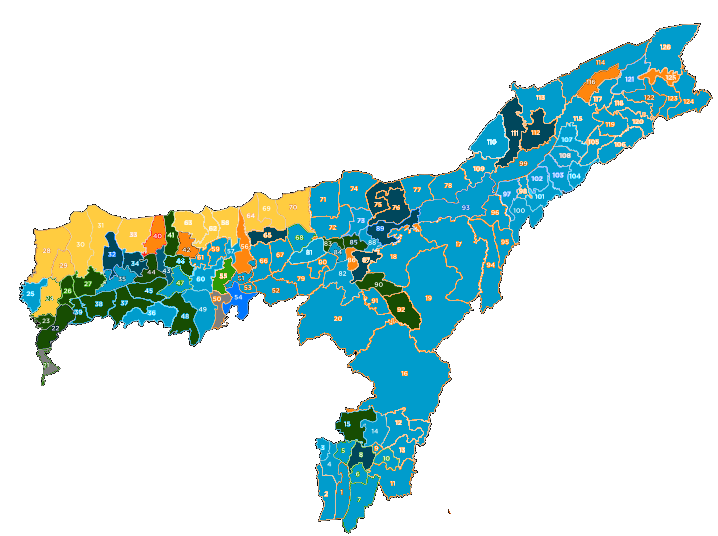
The recent delimitation exercise redrew boundaries of assembly and parliamentary constituencies in Assam to reflect population changes while maintaining the total at 126 seats. It led to the abolition or merger of some seats, including Amguri, sparking debates over fairness and regional identity.
Critics argued it affected certain communities or historical constituencies. The ruling alliance maintained it was a neutral, population-based exercise mandated by the Constitution.
CM Sarma’s promise to revive Amguri using the additional seats from women’s reservation cleverly links two major issues: gender justice and restoration of local aspirations. This could help mitigate any lingering resentment from delimitation.
Broader Implications of Assam Assembly Strength Increase
- Enhanced Representation: More seats mean better coverage of diverse regions, ethnic groups, and demographics in Assam.
- Women’s Empowerment: Direct reservation will encourage more women to enter politics, potentially increasing their numbers from the current low single digits.
- Development Focus: Additional MLAs could accelerate localized development projects, especially in rural and tea garden areas.
- Electoral Dynamics: The expansion, if timed post-2026 elections, might influence future delimitation and candidate selection strategies for all parties.
- National Precedent: Assam’s approach could influence other states contemplating similar expansions for smooth implementation of the women’s quota.
Nazira Contest: Key Issues and Voter Sentiments
Nazira, part of the Jorhat Lok Sabha constituency, features a mix of urban and rural voters. Key issues likely to influence the outcome include:
- Infrastructure and road connectivity
- Employment opportunities for youth
- Welfare schemes delivery
- Women’s safety and empowerment (especially relevant given the reservation announcement)
- Local identity and administrative convenience (linked to Amguri revival)
The Congress will rely on its traditional base and the Saikia family’s legacy, while the BJP will push the development narrative under the “double-engine” model and the visionary Assam Assembly strength increase promise.
With polling scheduled for April 9, 2026 (single phase across Assam), the campaign intensity is rising. The Chief Minister’s rally has given a strong boost to Borgohain’s prospects in this high-profile contest.
Conclusion: A Vision for a Stronger, More Inclusive Assam
CM Himanta Biswa Sarma’s announcement at the Nazira rally positions the BJP government as forward-thinking and responsive to both national mandates and local aspirations. The potential Assam Assembly strength increase from 126 to 189 seats due to women’s reservation represents a transformative opportunity for gender parity in politics.
By linking it with the revival of the abolished Amguri constituency, the CM has addressed emotional and administrative concerns of Sivasagar residents while campaigning for progress in Nazira.
As Assam gears up for the 2026 Assembly elections, this development underscores key themes: women’s empowerment, equitable representation, and sustained development under stable governance. Whether the expansion materializes soon or in the near future, it has already ignited conversations on building a more inclusive democratic framework in the state.
Voters in Nazira and across Assam will weigh these promises against ground realities as they head to the polls. The Assam Assembly strength increase narrative is likely to resonate strongly with women voters and those seeking long-term political reforms.