Assam Assembly Election 2026: Complete Schedule, Key Issues, Alliances, Opinion Polls & Predictions for April 9 Polls
Assam Assembly Election 2026: High-Stakes Battle for the Soul of Assam as Polling Nears on April 9
With just days to go before Assam goes to the polls, the Assam Assembly Election 2026 has emerged as one of the most crucial electoral battles in Northeast India. On April 9, 2026, approximately 2.5 crore registered voters across 126 assembly constituencies will decide the fate of the next government in a single-phase election. Vote counting is scheduled for May 4, 2026, and the entire process must conclude by May 6, 2026.
The election comes at a pivotal moment for Assam, where issues of identity, land, development, illegal immigration, recurring floods, and governance are at the forefront. Chief Minister Himanta Biswa Sarma is seeking a third consecutive term for the BJP-led NDA, while a revived opposition alliance aims to capitalise on any anti-incumbency. This in-depth guide covers everything you need to know about the Assam Assembly Election 2026 – from schedule and alliances to key issues, delimitation changes, opinion polls, and what the outcome could mean for the state.
Election Schedule and Key Dates for Assam Assembly Election 2026
The Election Commission of India (ECI) announced the complete schedule for the Assam Assembly Election 2026 on March 15, 2026. Unlike multi-phase polls in some other states, Assam will vote in a single phase on Thursday, April 9, 2026.
- Gazette Notification: March 16, 2026
- Last Date for Nominations: March 23, 2026
- Scrutiny of Nominations: March 24, 2026
- Last Date for Withdrawal of Candidature: March 26, 2026
- Date of Polling: April 9, 2026 (Single Phase – All 126 Seats)
- Date of Counting of Votes: May 4, 2026
- Completion of Election Process: May 6, 2026
Security arrangements are expected to be stringent, especially in sensitive border areas and regions with a history of insurgency. With polling stations spread across diverse terrains – from the Brahmaputra valley to hilly and tea garden areas – high voter turnout (which stood at over 82% in 2021) will be closely watched.
Background: From 2021 Victory to 2026 Challenge in Assam Assembly Election 2026
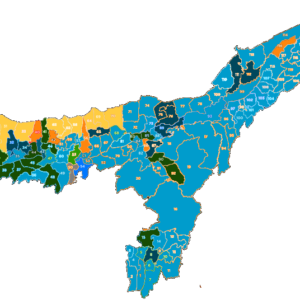
In the 2021 Assam Assembly elections, the BJP-led National Democratic Alliance (NDA) secured a decisive win with 75 seats (BJP alone won 60). The opposition Mahajot, mainly Congress (29 seats) and AIUDF (16 seats), managed around 50 seats combined. This victory allowed Himanta Biswa Sarma to take over as Chief Minister from Sarbananda Sonowal, marking a shift towards a more assertive style of governance focused on “jati, mati, bheti” (identity, land, homeland).
The BJP consolidated support among indigenous communities, tea tribes, and other groups through welfare schemes, infrastructure development, and a firm stance on infiltration. The opposition, meanwhile, raised concerns over the Citizenship Amendment Act (CAA) and the National Register of Citizens (NRC). Five years on, the Assam Assembly Election 2026 is being viewed as a test of whether the ruling alliance can achieve a hat-trick or if a united opposition can engineer a comeback.
Key Players and Alliances Shaping the Assam Assembly Election 2026
Ruling NDA Led by BJP and Himanta Biswa Sarma
The National Democratic Alliance (NDA), comprising the BJP, Asom Gana Parishad (AGP), and United People’s Party Liberal (UPPL), enters the fray with significant momentum. Himanta Biswa Sarma, contesting from Jalukbari for a sixth term, remains the face of the campaign. The BJP aims to expand its footprint and ideally cross the 64-seat majority mark independently.
The alliance has emphasised development initiatives, anti-encroachment drives, and protection of indigenous rights. BJP has already released candidate lists, with AGP announcing 26 candidates and other allies fielding their share. Sarma’s leadership is seen as a major asset, with many voters associating him with decisive governance.
Opposition Asom Sonmilito Morcha (ASM)
The opposition has revived the Asom Sonmilito Morcha (ASM), a six-party alliance led by the Indian National Congress. Congress state unit chief Gaurav Gogoi plays a key role alongside partners like Raijor Dal (led by Akhil Gogoi), Assam Jatiya Parishad (AJP led by Lurinjyoti Gogoi), CPI(M), CPI(ML) Liberation, and others.
Seat-sharing has been finalised after some initial hiccups, with Congress contesting the majority of seats. The alliance seeks to tap into anti-incumbency on issues such as floods, unemployment, and alleged divisive politics. Notably, the three prominent Gogois – Gaurav, Akhil, and Lurinjyoti – are expected to feature in high-profile contests, adding a layer of regional interest.
Other players include the Trinamool Congress (TMC), which has announced an independent list of candidates (starting with 17 names), Aam Aadmi Party (AAP), and smaller regional outfits. The All India United Democratic Front (AIUDF)’s position remains fluid but influential in minority-dominated pockets.
Major Issues Dominating the Assam Assembly Election 2026 Campaign
Several critical issues are shaping voter sentiment in the Assam Assembly Election 2026:
- Identity, Immigration, and the Assam Accord
The Assam Accord, NRC, and CAA remain emotional flashpoints. The ruling NDA defends the CAA as safeguarding persecuted minorities while continuing eviction drives against alleged illegal encroachers. The opposition accuses the government of selective targeting and demands stricter border sealing alongside a fair NRC review. Protection of “Axomiya” identity and land rights is central to the discourse. - Development, Flood Control, and Welfare
Recurring Brahmaputra floods continue to devastate lives and livelihoods. The BJP has promised massive investments to make Assam “flood-free,” alongside infrastructure boosts worth thousands of crores. Job creation – with a target of two lakh government jobs – schemes for women (like Orunodoi extensions), tea garden workers, and indigenous communities feature prominently in the ruling party’s Sankalp Patra. The opposition highlights unemployment and questions the pace of development. - Delimitation and Demographic Changes
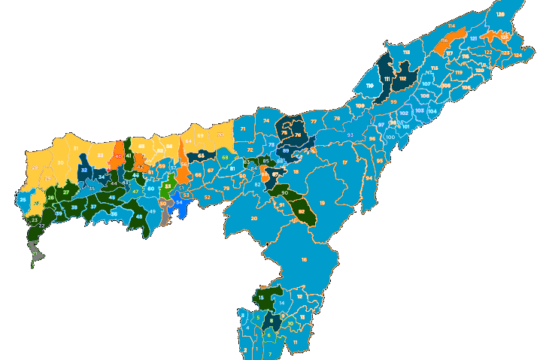
The recent delimitation exercise, based on the 2001 census, has redrawn boundaries for the 126 seats. While the total number of constituencies remains unchanged, the number of Muslim-majority seats has reportedly decreased from around 35 to about 20-25. Reserved seats for Scheduled Tribes have increased from 16 to 19, and for Scheduled Castes from 8 to 9. The government calls it a step towards fair representation; the opposition alleges “gerrymandering” that dilutes certain communities’ influence. This change is expected to significantly impact electoral math in the Assam Assembly Election 2026. - Governance Record vs Anti-Incumbency
The ruling side showcases improved law and order, welfare outreach, infrastructure projects, and a strong anti-infiltration position. The opposition raises concerns over floods, rising prices, business sentiments, and alleged polarisation. Women voters (nearly half the electorate) and youth (around 30% aged 18-29) could prove decisive, with parties competing through direct-benefit schemes.
Additional talking points include proposals for a Uniform Civil Code (excluding tribal areas) and measures against “Love Jihad,” which add ideological colour to the campaign.
Campaign Update and Manifestos in Assam Assembly Election 2026
As of early April 2026, campaigning is at its peak with roadshows, rallies, and door-to-door outreach dominating headlines. The BJP unveiled its 31-point Sankalp Patra (manifesto), promising development, ideological commitments, job creation, and flood mitigation. Congress and its allies have released multiple candidate lists, crossing 100 names combined, while focusing on unity and alternative governance.
High-profile battles include potential contests involving the Gogois in constituencies like Jorhat, Sivasagar, and others. Intense seat adjustments and last-minute alliances have kept political observers on edge. Security remains tight given Assam’s sensitive geography.
Opinion Polls and Predictions for Assam Assembly Election 2026
Recent pre-poll surveys (as of March 2026) largely favour the NDA. Several opinion polls project the BJP-led alliance winning between 80-98 seats, with some estimating even higher (96-98 in one survey). Congress and allies are projected in the 26-40 range, depending on the pollster. Himanta Biswa Sarma consistently emerges as the preferred Chief Ministerial choice for a significant section of voters (around 48% in one survey).
However, nearly 10% undecided voters could swing outcomes in close contests. Regional variations – Upper Assam, Barak Valley, Bodoland areas, and tea belts – will play a crucial role. While polls suggest a comfortable edge for the ruling alliance, the final result on May 4 will depend on turnout, alliance cohesion, and last-minute shifts.
Outlook: What the Assam Assembly Election 2026 Means for the Future
The Assam Assembly Election 2026 is far more than a routine state poll. It represents a referendum on Himanta Biswa Sarma’s assertive governance model, the politics of identity in the Northeast, and the opposition’s ability to present a credible united front.
If the NDA returns to power, it could accelerate development projects, infrastructure push, and cultural protection measures. A surprise opposition victory would signal strong anti-incumbency and a demand for alternative priorities on floods, jobs, and unity.
Regional dynamics in Upper Assam, Lower Assam, Barak Valley, and autonomous council areas add layers of complexity. High voter engagement, especially among women and first-time voters, will be a key barometer of democratic vibrancy.
As polling day on April 9 approaches, the people of Assam stand at a crossroads – choosing between continuity with a focus on development and identity assertion, or a shift towards broader inclusive priorities. The results on May 4 will not only shape the state’s government for the next five years but also influence political narratives across the Northeast and beyond.
Stay tuned to our news website for live updates, constituency-wise analysis, candidate profiles, and post-poll insights on the Assam Assembly Election 2026. Your vote matters – exercise it wisely on April 9.