Artemis II Mission Makes History: Astronauts Break Apollo 13 Record, Name Lunar Crater After Commander’s Late Wife Carroll in Emotional Tribute
Artemis II Mission: Historic Lunar Flyby Breaks Records and Touches Hearts with Personal Tribute
In a landmark achievement for human spaceflight, NASA’s Artemis II mission has captivated the world as four astronauts ventured farther from Earth than any humans in history. On Monday, April 6, 2026, the crew aboard the Orion spacecraft named Integrity surpassed the long-standing Apollo 13 distance record from 1970, reaching a maximum distance of approximately 252,756 miles from our planet. This Artemis2 milestone not only reestablishes humanity’s presence in deep space but also delivers an unforgettable emotional story of love, loss, and legacy etched onto the lunar surface.
The crew—NASA astronauts Commander Reid Wiseman, Pilot Victor Glover, and Mission Specialist Christina Koch, alongside Canadian Space Agency astronaut Jeremy Hansen—completed a daring lunar flyby, observing the mysterious far side of the Moon with human eyes for the first time in decades. They reestablished contact with Mission Control after a tense 40-minute communications blackout, one of the longest in spaceflight history, while witnessing stunning Earthrise and even a total solar eclipse from their unique vantage point in cislunar space.
This Artemis II mission marks the first crewed test flight of NASA’s Artemis program, paving the way for future lunar landings and eventual Mars exploration. As the astronauts now head home for a planned splashdown later this week, their journey blends cutting-edge science, international collaboration, and profound human moments that remind us why we reach for the stars.
Breaking the Ultimate Distance Record: Artemis II Surpasses Apollo 13
The pinnacle of the day’s achievements came when the Orion spacecraft pushed beyond the previous human distance record. Apollo 13, in 1970, had set the mark at about 248,655 miles from Earth during its ill-fated but heroic mission. The Artemis2 crew eclipsed that by more than 4,000 miles, with NASA confirming the maximum distance at roughly 252,756 miles.
This wasn’t just a numerical triumph. It represented decades of technological advancement since the Apollo era. The Orion spacecraft, designed for deep space missions, demonstrated its capability to support humans far from Earth’s protective magnetosphere. Radiation levels, life support systems, and navigation were all put to the ultimate test during this free-return trajectory around the Moon.
At approximately 12:56 p.m. CDT on April 6, the crew officially broke the record. Shortly after, they initiated a six- to seven-hour lunar observation window, passing within about 4,067 miles of the lunar surface. This close approach allowed unprecedented real-time study of lunar geology, including basins like Orientale and Hertzsprung on the far side.
Mission Control in Houston tracked every moment, updating plans based on crew reports of subtle color variations—shades of browns and blues—that could reveal mineral compositions and surface ages. Images and data captured during the flyby are expected to provide scientists with fresh insights once downlinked.
The record-breaking feat also carried symbolic weight. Canadian astronaut Jeremy Hansen reflected on it, honoring past explorers while challenging future generations: “As we surpass the distance humans have ever traveled from Earth, we do so honoring the extraordinary efforts… We choose this moment to challenge this generation and the next to make sure this record is not long-lived.”
The Communications Blackout: Isolation Behind the Moon
One of the most dramatic elements of the Artemis II mission was the planned 40-minute communications blackout. As Orion slipped behind the Moon, the lunar mass blocked all radio signals to Earth. This “loss of signal” (LOS) period tested not only the spacecraft’s autonomy but also the crew’s resilience in complete isolation—the longest such blackout in human spaceflight history.
During this time, the astronauts were truly on their own, relying on pre-loaded procedures and onboard systems. When they reemerged, they joyfully reestablished contact, describing the awe-inspiring views. Earthrise—the moment our blue planet peeked over the lunar horizon—provided a powerful reminder of humanity’s home.
The crew also observed features of the lunar far side never before seen directly by human eyes. This region, perpetually hidden from Earth, holds clues to the Moon’s formation and early solar system history. Their observations during the flyby add to the growing body of knowledge that will inform Artemis III and beyond.
Adding to the celestial spectacle, the astronauts witnessed a total solar eclipse from their perspective. With the Moon passing between them and the Sun, they donned protective glasses to safely view the event—an experience unique to their position in space.
A Heartfelt Tribute: Naming a Lunar Crater “Carroll” in Memory of Reid Wiseman’s Wife
Amid the scientific and record-breaking milestones, an profoundly emotional moment unfolded that has captured global attention. During the lunar observation window, the crew spotted an unnamed bright crater on the Moon’s far side, northwest of Glushko crater, near the boundary between the near and far sides.
Canadian astronaut Jeremy Hansen radioed Mission Control with a special request. He proposed naming two small craters: one “Integrity,” after the Orion spacecraft’s name and the mission’s core value, and the other “Carroll,” in honor of Commander Reid Wiseman’s late wife, Anne Carroll Taylor Wiseman.
Carroll Wiseman, a dedicated pediatric nurse practitioner, passed away on May 17, 2020, at age 46 after a five-year battle with cancer. Born in Virginia Beach, Virginia, she graduated from First Colonial High School, James Madison University, and Virginia Commonwealth University. She was a loving mother to daughters Ellie and Katherine, and a supportive partner who encouraged Reid’s astronaut dreams even during her illness.
The proposal moved Wiseman to tears. His crewmates embraced him in a group hug inside the spacecraft, a moment of shared humanity thousands of miles from home. Hansen described the crater as “a bright spot on the Moon” visible from Earth at certain times, ensuring Carroll’s memory would endure.
” A number of years ago we started this journey and our close astronaut family — we lost a loved one,” Hansen said. “There’s a feature in a really neat place on the moon… We would like to call it Carroll.”
The daughters, Ellie and Katherine, learned of the tribute through Mission Control. Wiseman, now a single father, had shared a touching pre-launch photo with his girls in front of the SLS rocket, captioning it: “I love these two ladies, and I’m boarding that rocket a very proud father.”
The formal naming requires approval from the International Astronomical Union (IAU), but the crew’s proposal from 400,000 kilometers away carries unique weight—no committee could replicate the perspective or emotion behind it. Two craters now stand as testaments: “Integrity” for the mission and “Carroll” for a life of love and resilience.
This personal story has drawn widespread focus to Reid Wiseman’s family. Carroll’s 2020 obituary highlighted her as a beloved wife, mother, sister, and daughter. She left behind not just her immediate family but a legacy of care through her nursing career. Wiseman has spoken in the past about the difficult conversations with his daughters regarding contingencies for the mission, underscoring the human risks of spaceflight.
The moment underscored the crew’s bond. As professional astronauts representing NASA and the CSA, they also functioned as a tight-knit family supporting one another through joy and grief.
Presidential Endorsement: Trump Congratulates the Crew
Following the flyby, U.S. President Donald Trump called the astronauts aboard Orion from the White House. “Today you’ve made history,” he told them, praising their courage and the mission’s success. The call came as the crew began their return journey, reinforcing national pride in the Artemis program.
The endorsement highlights the mission’s broader significance: reviving American leadership in space while fostering international partnerships, as seen with Canada’s contribution through Jeremy Hansen.
The Crew Behind Artemis II: Profiles and Preparation
Reid Wiseman (Commander): A U.S. Navy Captain and veteran astronaut, Wiseman brings extensive experience. Selected for Artemis II, he has balanced his professional demands with fatherhood since Carroll’s passing. His leadership during the emotional crater-naming moment exemplified grace under pressure.
Victor Glover (Pilot): The first Black astronaut to pilot a spacecraft on a long-duration mission (previously on Crew-1 to the ISS), Glover contributes expertise in spacecraft operations.
Christina Koch (Mission Specialist): Holder of the record for longest single spaceflight by a woman (328 days on ISS), Koch’s background in electrical engineering and science operations adds depth to observations.
Jeremy Hansen (Mission Specialist): The first Canadian to fly to the Moon, Hansen represents international collaboration in Artemis. His role in proposing the crater name highlighted crew unity.
The team trained rigorously for years, simulating every phase from launch to splashdown. Issues like toilet functionality and email access were resolved pre-flight, ensuring focus on science and safety.
Technical Highlights of the Orion Spacecraft and Mission Profile
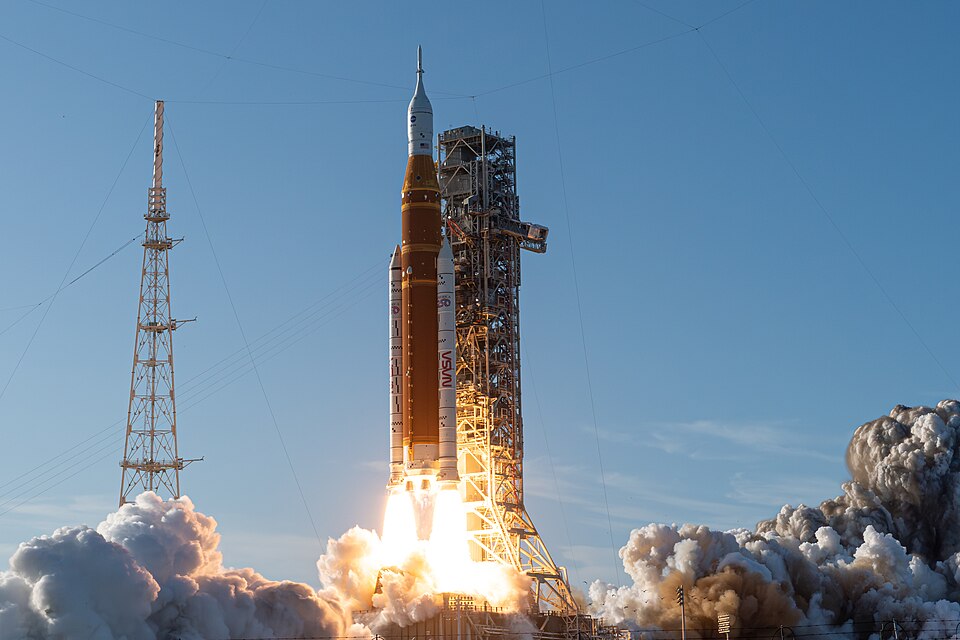
Launched on April 1, 2026, aboard the Space Launch System (SLS) from Kennedy Space Center, Orion performed a translunar injection before entering lunar sphere of influence. The free-return trajectory ensures safe return even without propulsion.
Key systems tested include heat shield performance (critical for reentry), communication arrays, and environmental controls for deep space. The 10-day mission culminates in a Pacific Ocean splashdown near San Diego.
Data from Artemis2 will refine designs for Artemis III, targeting a crewed lunar landing as early as 2028.
Broader Context: Artemis Program and Future of Space Exploration
Artemis II is the second major flight in NASA’s Artemis program, following the uncrewed Artemis I in 2022. It builds on Apollo legacies while emphasizing sustainability, diversity, and commercial partnerships.
The program aims to land the first woman and first person of color on the Moon, establish a long-term presence, and use lunar resources for deeper space travel, including Mars.
International partners like Canada (via the Canadian Space Agency) contribute hardware and expertise, such as the Canadarm3 for future lunar gateways.
Public interest in Artemis2 has surged, with live streams, social media, and educational outreach inspiring a new generation of scientists and explorers.
The Human Element: Why These Moments Matter
Spaceflight has always intertwined technology with emotion—from Apollo 8’s Earthrise photo to the Apollo 13 survival story. The Artemis II mission adds another layer: a crater named for a nurse who supported her husband’s dreams through illness, witnessed by her daughters from Earth.
It humanizes astronauts often seen as superhuman. Reid Wiseman’s journey—from considering stepping away during Carroll’s diagnosis to commanding this mission—illustrates resilience. Carroll’s encouragement, as shared in family accounts, allowed him to pursue his passion.
The group hug in orbit, tears shared across vacuum, and proposal from deep space remind us that exploration expands not just our knowledge but our capacity for empathy and connection.
What’s Next for the Artemis II Crew and Program
As the astronauts return, NASA will analyze data for system validation. Splashdown is expected Friday evening. Post-mission debriefs, medical evaluations, and public engagements will follow.
The crater names “Integrity” and “Carroll” await IAU review, potentially becoming permanent features on lunar maps.
Looking ahead, Artemis III will attempt a landing, with subsequent missions building a lunar base. Commercial companies and international agencies continue to play key roles.
Conclusion: A New Chapter in Humanity’s Cosmic Journey
The Artemis II mission has delivered more than technical success. It broke records, advanced science, fostered international goodwill, and created an enduring personal legacy on the Moon. From the record distance and far-side observations to the tender tribute for Carroll Wiseman, this Artemis2 flight reminds us that space exploration is ultimately about people—our dreams, losses, loves, and shared future.
As the crew heads Earthward, the world watches with pride. Their journey inspires us to look up, push boundaries, and remember those who light our way, even from afar. The Moon now carries a bright spot named Carroll—a symbol of love that transcends distance, time, and even planetary boundaries.
For ongoing coverage of the Artemis II mission, including splashdown updates, scientific findings, and more on the crew’s stories, stay tuned to our space exploration section. Humanity’s return to the Moon is just beginning.