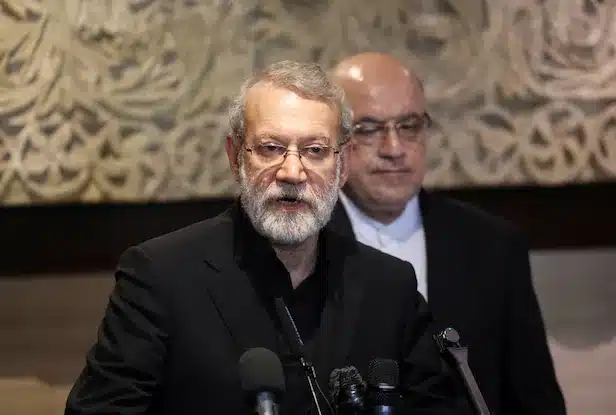
The provided information describes a major development in the ongoing US-Israel war with Iran as of March 2026. Ali Larijani, Iran’s influential Secretary of the Supreme National Security Council and a veteran politician, was killed in an Israeli airstrike. Iranian state media and the Supreme National Security Council confirmed his death on Tuesday, along with his son (often reported as Morteza Larijani), several bodyguards, and aides such as Alireza Bayat. Israel announced the strike earlier, describing Larijani as Iran’s de facto leader and a key target, alongside the killing of Basij commander Gholam Reza Soleimani in related actions.
This event marks one of the most significant losses to Iran’s leadership since the assassination of Supreme Leader Ayatollah Ali Khamenei on February 28, 2026, at the war’s outset. Larijani, aged 67, had been a pragmatic bridge-builder in Iran’s conservative establishment for decades.
Ali Larijani Killed in Israeli Airstrike: Iran’s Top Security Chief and De Facto Leader Dies Amid Escalating US-Israel War on Iran – Full Details and Impact 2026
Ali Larijani Killed: A Devastating Blow to Iran’s Regime in the 2026 US-Israel War
In a dramatic escalation of the ongoing conflict that has gripped the Middle East since late February 2026, Ali Larijani, one of Iran’s most experienced and influential figures, has been confirmed killed in an Israeli airstrike. Iranian state media, citing a statement from the Supreme National Security Council (SNSC), announced on Tuesday, March 18, 2026, that Larijani — the secretary of the SNSC and widely regarded as the country’s de facto leader following the death of Supreme Leader Ayatollah Ali Khamenei — perished in the overnight attack. He was 67.
The SNSC statement revealed that Larijani was martyred alongside his son, several bodyguards, and key aides, including Alireza Bayat, the deputy for security affairs in the council’s secretariat. No specific location or precise circumstances were detailed in the official release, but Israeli officials, including Defense Minister Israel Katz, had earlier claimed responsibility, stating that Larijani was “eliminated” in strikes targeting high-value regime assets near Tehran. Israel also reported the concurrent killing of Gholam Reza Soleimani, head of the Basij paramilitary force — the volunteer militia notorious for suppressing domestic protests.
This assassination represents a severe depletion of Iran’s dwindling pool of seasoned leadership. Since the war began with devastating US and Israeli strikes that eliminated Supreme Leader Khamenei on February 28, the Islamic Republic has struggled to maintain cohesion. Ali Larijani emerged as a central coordinator, stepping into his second term as SNSC secretary in 2025 amid heightened tensions, and assuming even greater prominence after Khamenei’s death.
Experts describe Larijani’s loss as catastrophic. Ellie Geranmayeh, a senior policy fellow at the European Council on Foreign Relations, highlighted his unique role: “Larijani has long been the bridge builder between the military and political establishment. He had been at the forefront of recent negotiations aimed at finding a political breakthrough with Washington.” Similarly, Ali Alfoneh of the Arab Gulf States Institute noted that as SNSC secretary, Larijani operated “at the center of Iran’s strategic decision-making apparatus,” serving primarily as a coordinator who gathered proposals from the security bureaucracy, presented options to the leadership, and oversaw implementation.
Background: Who Was Ali Larijani?
Born into a prominent political family — his brothers include former parliament speaker Ali Larijani (note: often conflated in reports, but the killed figure is the security-focused veteran) — Ali Larijani built a career as a shrewd pragmatist within Iran’s Principlist (conservative) faction. He navigated alliances between hardliners and moderates, earning a reputation for adaptability in a rigid system.
Larijani enjoyed close ties to the late Supreme Leader Ayatollah Ali Khamenei, who appointed him to key positions, including head of Iran’s state broadcaster (IRIB). In that role, he managed the monopoly on national airways, turning it into a primary propaganda tool with deep links to intelligence and security organs. He also served as Khamenei’s representative on councils resolving legislative disputes.
In the war context, Larijani was reappointed SNSC secretary in 2025 following Israel’s initial major offensive against Iran. His influence surged after February 28, when Khamenei’s death triggered a leadership vacuum. Surviving commanders adopted a strategy of “maximum economic disruption” in the region, targeting shipping, energy infrastructure, and allies to pressure the US and Israel.
In a March 1 interview on Iranian state TV — just days into intensified hostilities — Larijani articulated Iran’s perspective: He argued that Israel, lacking regional allies and unable to occupy a vast country like Iran, sought to fragment and dismantle the Islamic Republic. He accused the US of entanglement in this plan. These comments, made amid bombings in Tehran, underscored his defiance.
Larijani was last seen publicly on March 13 at a large state-organized rally in downtown Tehran, where images of him mingling with crowds circulated widely on social media despite ongoing aerial attacks.
Controversies and Sanctions
Ali Larijani faced international scrutiny. In January 2026, the United States sanctioned him, accusing the SNSC under his leadership of deploying forces to violently suppress anti-government protests that erupted on December 28 (prior year). Human Rights Activists News Agency reported 6,488 civilian deaths in the unrest, with over 11,000 cases under review. Larijani never publicly addressed these allegations.
On March 14, the US State Department included him in a $10 million reward program for information on Iran’s surviving leaders’ whereabouts — a list that highlighted the regime’s vulnerability.
Internally, Larijani reportedly opposed the appointment of Mojtaba Khamenei as successor to his father, arguing hereditary rule contradicted the Islamic Republic’s revolutionary principles. This stance positioned him as a defender of institutional norms amid factional tensions.
Strategic Impact of Ali Larijani’s Death
The killing of Ali Larijani further fragments Iran’s command structure at a critical juncture. With Khamenei gone and now the SNSC chief eliminated, the regime loses a key pragmatist capable of coordinating across military, political, and security lines. Analysts warn this could accelerate internal disarray, hinder decision-making, and weaken responses to ongoing strikes.
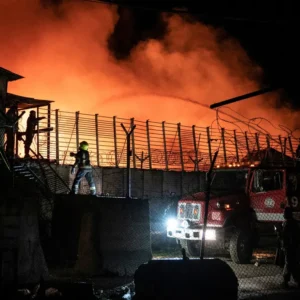
Iran has already retaliated with missile barrages, including cluster warhead attacks near Tel Aviv that killed civilians and caused destruction. Tehran vows further responses, framing the killings as treacherous aggression that will only strengthen resolve.
For the US and Israel, targeting figures like Larijani aims to decapitate leadership and disrupt coordination. Yet experts caution that such assassinations risk galvanizing hardliners and prolonging the conflict.
As the war enters its most volatile phase, the death of Ali Larijani underscores the high stakes: a regime fighting for survival, depleted of experienced hands, facing relentless external pressure and internal challenges.
This developing story continues to unfold with potential for further escalations. Stay updated for live coverage of the US-Israel-Iran conflict, leadership changes in Tehran, and regional implications.