Dhruv Rathee Detained in Gurugram: Shocking Police Raid Blocks Jantar Mantar Protest
Dhruv Rathee Detained in Early Morning Joint Operation by Delhi and Gurugram Police
YouTuber and activist Dhruv Rathee was detained in a joint operation by Delhi Police and Gurugram police from a residential flat in Gurugram on Saturday morning, October 10, 2026, sources in intelligence agencies confirmed. The detention took place ahead of a planned protest at Jantar Mantar against Chief Election Commissioner Gyanesh Kumar. Mr. Rathee was staying with his parents at a flat in Central Park Vihar, Sector 56, Gurugram, when police personnel reached the residence. He was reportedly taken to an undisclosed location in Gurugram.
According to information available, Delhi Police personnel entered the residence at around 7.48 a.m. after his mother opened the door. Around 50 police personnel had reportedly gathered outside the residence late on Friday night, October 9. Mr. Rathee had travelled to Delhi to participate in the proposed demonstration at Jantar Mantar. The planned protest comes amid heightened security arrangements in the national capital, with the police imposing restrictions on public movement and transport in anticipation of the gathering.
On Friday, October 9, Mr. Rathee posted a video on Instagram, filmed at Kartavya Path, in which he questioned the extensive security measures and transport restrictions introduced ahead of the planned protest. These reportedly included the proposed closure of metro stations, cancellation of trains and a temporary suspension of mobile internet services in parts of central Delhi. The reported detention comes amid a wider police operation across the national capital.
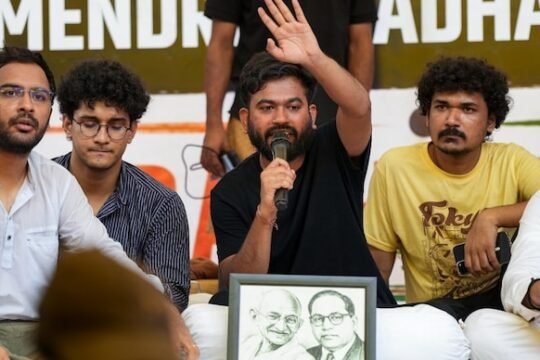
YouTuber Dhruv Rathee was detained by Delhi Police ahead of the Cockroach Janta Party’s (CJP) proposed protest at Delhi’s Jantar Mantar on Saturday. Rathee was detained from his residence in Gurugram’s Sector 56, police sources told news agency PTI, on his way to join the demonstration, prompting heightened security arrangements across the national capital.
CJP condemned the detention of the YouTuber and other protesters and activists by Delhi Police, alleging a crackdown on dissent over electoral roll irregularities. In a press release, the party demanded the “immediate and unconditional release” of Rathee and other citizens and student activists allegedly held in custody. It accused the government of attempting to silence protests over the issue.
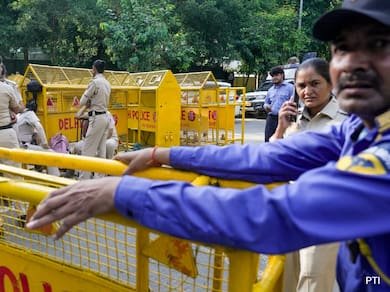
Delhi Police had denied permission for the protest earlier in the week, citing security concerns and procedural requirements. Around 150 protesters had been detained from various locations in New Delhi as police stepped up preventive action to stop demonstrators from reaching the protest site.
The events of Saturday morning mark a significant escalation in the ongoing tensions surrounding the proposed demonstration. Intelligence agency sources indicated that the joint operation was carefully coordinated between Delhi and Gurugram police units to prevent potential disruptions in the national capital. The presence of approximately 50 police personnel outside the Sector 56 residence late on Friday night underscored the scale of the preventive measures put in place.
Residents of Central Park Vihar reported unusual police activity in the area during the night hours leading up to the detention. The flat where Mr. Rathee was staying with his parents became the focal point of the operation early on Saturday. After his mother opened the door at around 7.48 a.m., Delhi Police personnel entered the premises and took the YouTuber into custody. He was subsequently moved to an undisclosed location within Gurugram, according to the sources.
Mr. Rathee’s Instagram video from Kartavya Path the previous day had drawn attention to the security arrangements. In the footage, he highlighted the proposed closure of several metro stations, the cancellation of multiple train services, and the temporary suspension of mobile internet services in parts of central Delhi. These measures were introduced as authorities prepared for the gathering at Jantar Mantar. The video amplified discussions online about the restrictions and the reasons behind them.
The Cockroach Janta Party, which had organised the proposed protest, issued a strong statement following the detention. The party described the action as part of a broader crackdown on citizens and student activists raising concerns over electoral roll irregularities. CJP’s press release specifically called for the immediate and unconditional release of Dhruv Rathee along with others held in custody. Party representatives argued that the detentions represented an attempt to suppress legitimate dissent and prevent public expression of grievances related to the electoral process.
Delhi Police had earlier refused permission for the protest, pointing to security concerns and the need to follow established procedural requirements. In the days leading up to Saturday, police increased preventive actions across New Delhi. Reports indicated that approximately 150 individuals had already been detained from different locations in the city to stop them from assembling at the protest site. These earlier detentions formed part of the wider operation that culminated in the action at the Gurugram residence.
Heightened security arrangements remained visible throughout the national capital on Saturday. Restrictions on public movement and transport continued as authorities maintained a strong presence near potential gathering points. The combination of metro station closures, train cancellations, and internet service suspensions in central Delhi created significant challenges for ordinary citizens while also limiting the ability of protesters to converge on Jantar Mantar.
The detention of a high-profile figure such as Dhruv Rathee has drawn immediate attention to the methods employed in the preventive operation. Intelligence sources emphasised that the joint effort between Delhi and Gurugram police was aimed at maintaining order ahead of the planned demonstration. The fact that personnel had assembled outside the residence the previous night suggests detailed planning and surveillance preceding the early morning entry.
Family members present at the Sector 56 flat witnessed the arrival of the police team. The decision to move Mr. Rathee to an undisclosed location in Gurugram rather than a standard police station has raised questions among observers, though official clarification on the place of detention has not been immediately available. Sources close to the operation maintained that the action was taken strictly in accordance with the need to prevent participation in an unauthorised gathering.
CJP’s condemnation focused on what it termed a systematic effort to silence voices questioning electoral roll irregularities. The party linked the detention of Rathee and the earlier holding of around 150 other individuals to a larger pattern of restricting public protest. By demanding unconditional release, CJP positioned the events as an infringement on the right to peaceful assembly and expression of concerns regarding the electoral machinery headed by Chief Election Commissioner Gyanesh Kumar.
The proposed protest at Jantar Mantar had been framed by organisers as a response to alleged irregularities in electoral rolls. Delhi Police’s refusal of permission, based on security and procedural grounds, set the stage for the series of preventive detentions that unfolded over Friday and Saturday. The Instagram video posted by Rathee on Friday served as a public critique of the resulting restrictions, bringing the security measures into wider public view shortly before his own detention.
As the day progressed, the impact of the police operation continued to be felt across the capital. Transport disruptions affected daily commuting, while the temporary internet suspension in certain areas limited real-time communication. These measures, combined with the detention of key figures and ordinary protesters alike, effectively contained the planned demonstration at Jantar Mantar.
The joint operation involving roughly 50 personnel at the Gurugram residence stands out for its scale and timing. Entering the flat at 7.48 a.m. after the door was opened by Mr. Rathee’s mother allowed police to complete the detention with minimal public confrontation at the scene. Subsequent transfer to an undisclosed location kept the YouTuber away from the protest site and from media attention in the immediate hours following the action.
Reactions from the Cockroach Janta Party and supporting activists have centred on calls for release and criticism of the government’s approach to dissent. The party’s press release framed the detentions as an overreach that prioritised control over dialogue on electoral concerns. Meanwhile, police sources reiterated that the actions were necessary to uphold security in the national capital and to enforce the earlier denial of permission for the gathering.
The sequence of events—from the Friday night gathering of police outside the Sector 56 flat, through the early Saturday entry, to the broader detentions of around 150 individuals—illustrates the comprehensive nature of the preventive strategy. Mr. Rathee’s travel to Delhi specifically to join the demonstration placed him within the operational focus of the authorities. His public questioning of the security measures via Instagram further elevated his visibility in the hours before the detention.
As details continue to emerge from intelligence and police sources, the detention of Dhruv Rathee remains a central development in the story of the blocked Jantar Mantar protest. The involvement of both Delhi and Gurugram police units, the precise timing of the raid, and the concurrent restrictions on movement and communication paint a picture of coordinated action designed to forestall the planned demonstration against the Chief Election Commissioner.
Observers note that the episode highlights ongoing tensions between authorities and groups seeking to raise issues related to electoral processes. While police cite security imperatives and procedural compliance, critics including CJP argue that the scale of detentions and restrictions points to a determination to limit public scrutiny. The demand for the immediate and unconditional release of Rathee and other detained citizens and student activists remains the primary response from the organising party.
In the national capital, the effects of the heightened arrangements persisted through Saturday. Metro stations remained affected, train services faced cancellations, and mobile internet services stayed suspended in designated zones. These practical barriers, layered on top of the physical detentions, ensured that the proposed protest at Jantar Mantar did not materialise in the form originally intended by the Cockroach Janta Party.
The case of Dhruv Rathee, detained from his parents’ residence in Central Park Vihar after a night-long police presence, has become emblematic of the day’s events. From the 7.48 a.m. entry to the transfer to an undisclosed Gurugram location, the operation followed a clear sequence aimed at removing a prominent participant from the equation. Coupled with the earlier holding of approximately 150 other individuals, the action reflects the intensity of the preventive measures deployed across Delhi and its neighbouring areas.
As the situation develops, attention remains fixed on the status of those in custody and the official justification for the joint raid. The primary keyword focus on Dhruv Rathee detained continues to drive public and media interest, while secondary aspects involving the Jantar Mantar protest, electoral roll concerns, and the response of the Cockroach Janta Party provide the broader context for understanding the morning’s events.