Ultimate 9-Day Navaratri 2026 Guide: Dates, Colours & Goddess Secrets
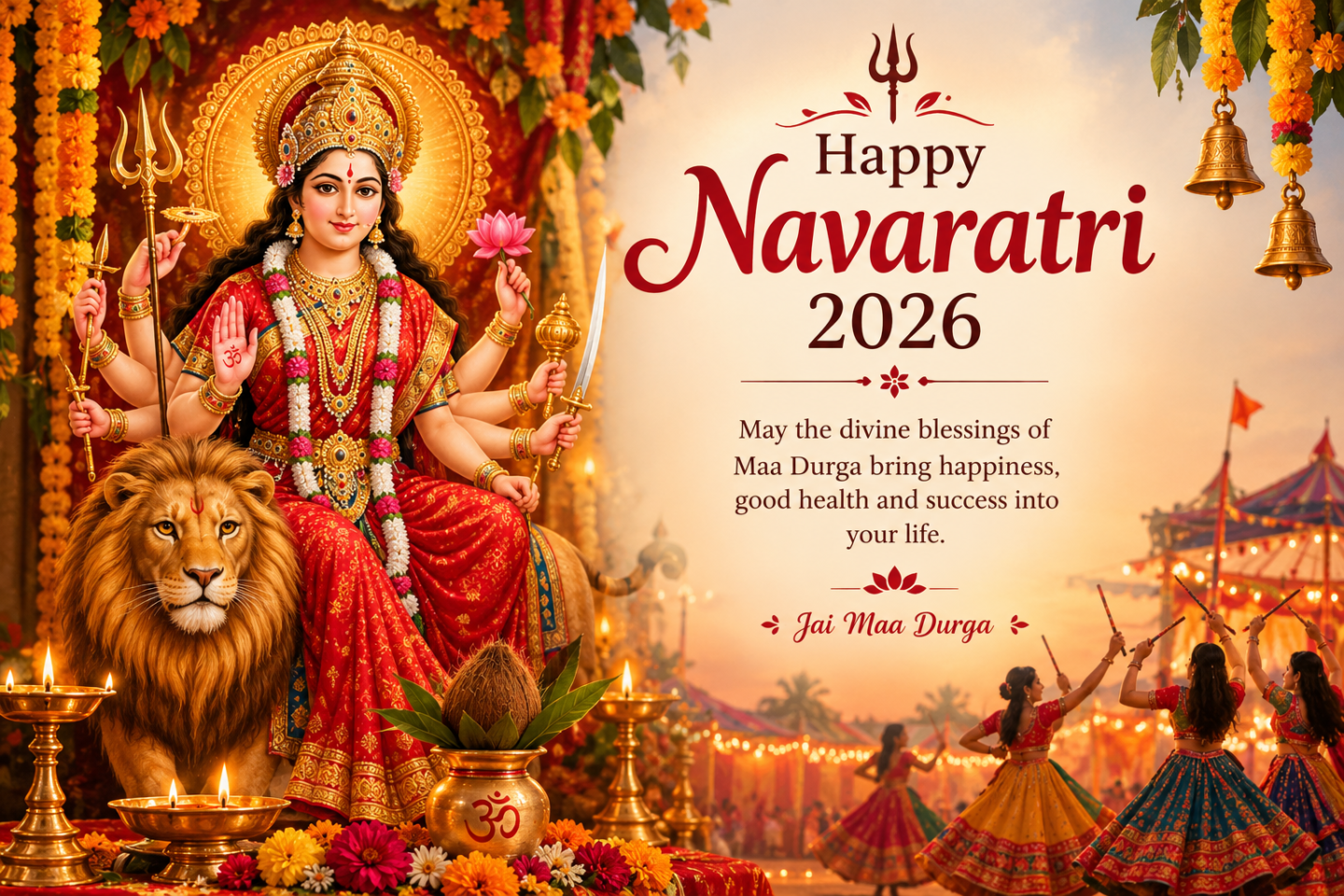
As the sacred season of devotion arrives, millions of devotees across India and the global Hindu diaspora prepare for one of the most powerful and joyous festivals of the year. Sharad Navaratri 2026 begins on Sunday, October 11, and continues for nine auspicious nights until Monday, October 19, culminating in the grand celebration of Vijayadashami or Dussehra on Tuesday, October 20. This year’s Navaratri 2026 promises an extraordinary blend of spiritual intensity, cultural vibrancy and community celebration as families invoke the divine feminine energy of Goddess Durga in her nine magnificent forms.
Navaratri, derived from the Sanskrit words “nava” meaning nine and “ratri” meaning nights, is a festival that celebrates the triumph of good over evil and the infinite power of Shakti. In 2026, the festival holds special significance as Durga Ashtami and Maha Navami both fall on the same day, October 19, creating a concentrated period of intense worship and blessings. The festival opens with the highly auspicious ritual of Ghatasthapana, also known as Kalash Sthapana, on October 11.
Navaratri 2026 Complete Day-Wise Calendar
Here is the full Sharad Navaratri 2026 schedule based on widely followed panchangs:
- Day 1 – October 11 (Sunday): Maa Shailputri | Colour: Orange
- Day 2 – October 12 (Monday): Maa Brahmacharini | Colour: White
- Day 3 – October 13 (Tuesday): Maa Chandraghanta | Colour: Red
- Day 4 – October 14 (Wednesday): Maa Kushmanda | Colour: Royal Blue
- Day 5 – October 15 (Thursday): Maa Skandamata | Colour: Yellow
- Day 6 – October 16 (Friday): Maa Katyayani | Colour: Green
- Day 7 – October 17 (Saturday): Maa Kalaratri | Colour: Grey
- Day 8 – October 18 (Sunday): Maa Mahagauri | Colour: Purple
- Day 9 – October 19 (Monday): Maa Siddhidatri | Colour: Peacock Green
Vijayadashami / Dussehra will be celebrated on October 20. The Ghatasthapana muhurat in New Delhi falls between approximately 6:19 AM and 10:12 AM, with Abhijit muhurat available later in the morning for those who miss the primary window. Devotees are advised to consult their local panchang for precise regional timings.
The Divine Significance of Each Form of Navadurga
Each day of Navaratri 2026 is dedicated to one of the nine forms of Goddess Durga, collectively known as Navadurga. These forms represent progressive stages of spiritual evolution, strength, wisdom and grace.
Maa Shailputri, the daughter of the mountains, marks the beginning. She embodies purity, strength and the raw energy of nature. On the second day, Maa Brahmacharini represents austerity, knowledge and unwavering devotion. Maa Chandraghanta, worshipped on the third day, is the warrior form who grants courage and removes fear. The fourth day belongs to Maa Kushmanda, the creator of the cosmic egg, associated with vitality and abundance.
Maa Skandamata, the mother of Kartikeya, is revered on the fifth day for maternal love and protection. Maa Katyayani on the sixth day is the fierce form who destroyed the demon Mahishasura and is particularly popular among devotees seeking marital harmony and victory over obstacles. The seventh day honours Maa Kalaratri, the dark and powerful form who destroys ignorance and negativity. Maa Mahagauri on the eighth day brings peace, purity and forgiveness. Finally, Maa Siddhidatri on the ninth day bestows spiritual powers, fulfilment and ultimate success.
Rituals That Define Navaratri 2026
The festival begins with Ghatasthapana, when a sacred kalash filled with water, mango leaves, coconut and coins is installed in a clean space. Barley or other grains are often sown beside it and allowed to grow throughout the nine days as a symbol of prosperity. Many families keep an Akhand Jyoti, an uninterrupted flame, burning for the entire duration of the festival.
Daily worship includes offering flowers, incense, fruits and traditional bhog according to the form of the Goddess being honoured that day. Recitation of Durga Saptashati or Devi Mahatmya is considered highly meritorious. Fasting remains one of the most visible practices. Some devotees observe a complete fast, while others consume fruits, milk, sabudana, kuttu or singhara flour preparations. The rules vary by family tradition and regional customs.
On the combined Ashtami and Navami day of October 19, Kanya Puja or Kanjak holds special importance. Nine young girls, representing the nine forms of the Goddess, are invited, worshipped and offered traditional food, clothes and gifts. Sandhi Puja, performed at the junction of Ashtami and Navami, is regarded as particularly powerful.
Regional Celebrations Across India
Navaratri 2026 will light up the country in distinctive ways. In Gujarat and parts of Maharashtra, the nights will resonate with energetic Garba and Dandiya Raas circles as people dance in colourful traditional attire matching the day’s colour. In West Bengal, Odisha, Assam and Tripura, the festival merges with the grand Durga Puja celebrations featuring elaborate artistic pandals, cultural programmes and the emotional immersion of idols on Vijayadashami.
In North India, Ramlila performances depicting the story of Lord Rama’s victory over Ravana will draw large crowds, culminating in the burning of towering effigies of Ravana, Meghnad and Kumbhakarna on Dussehra. In South India, the festival is marked by the display of dolls and figurines in the traditional Golu or Bommai Kolu arrangement, along with special prayers to Goddesses Durga, Lakshmi and Saraswati on the final three days.
Why Navaratri Continues to Captivate Millions
Beyond rituals, Navaratri 2026 offers a profound opportunity for inner transformation. The nine nights symbolise the journey from darkness to light, from ignorance to knowledge, and from limitation to empowerment. In a fast-paced modern world, the festival provides a structured period of discipline, community bonding, cultural expression and spiritual recharge.
The tradition of wearing specific colours each day has grown immensely popular. Orange for enthusiasm, white for purity, red for energy, royal blue for confidence, yellow for knowledge, green for harmony, grey for detachment, purple for transformation and peacock green for fulfilment create a visual spectacle that unites people across generations.
As Navaratri 2026 begins tomorrow, devotees are encouraged to approach the festival with sincerity, discipline and joy. Whether through quiet home worship, vibrant community dances, elaborate temple rituals or simple acts of charity, every expression of devotion finds its place. The blessings of the Navadurga are believed to remove obstacles, grant strength, protect families and open doors to prosperity and peace.
This Sharad Navaratri arrives at a time when the world seeks positivity and resilience. By honouring the divine feminine in her nine powerful forms, millions will once again reaffirm the eternal truth that light ultimately conquers darkness and that divine grace is always available to those who seek it with pure hearts.
May the sacred nine nights of Navaratri 2026 fill every home with the radiant energy of Maa Durga, bringing health, harmony, success and spiritual elevation to all. Jai Mata Di!