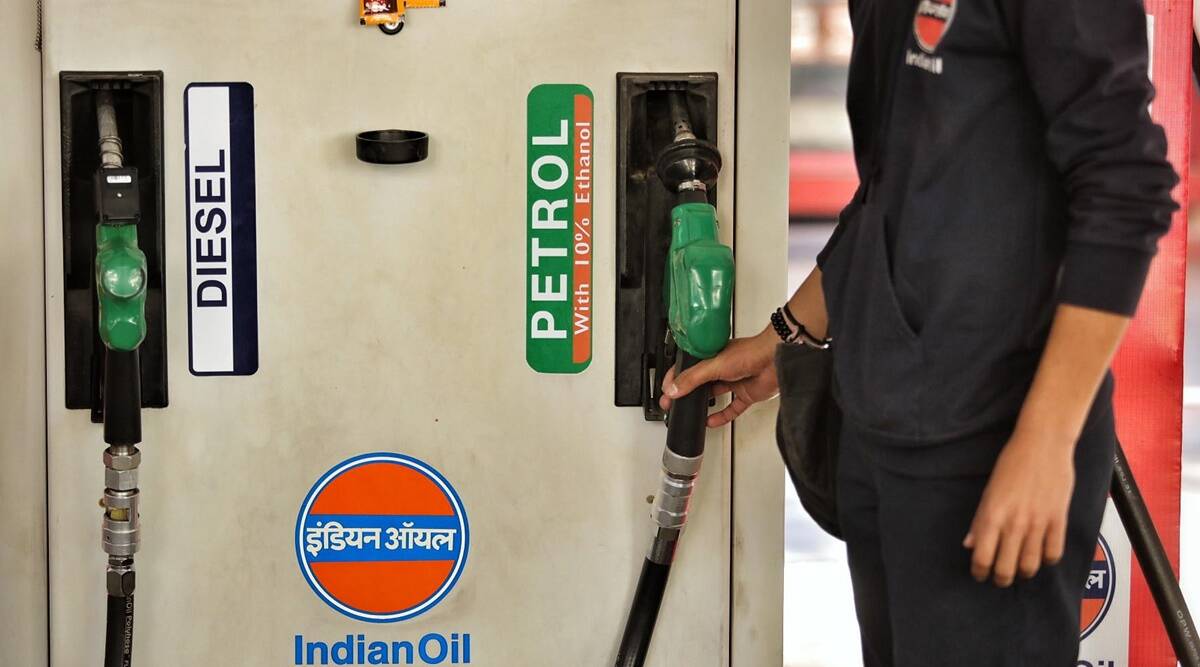
Petrol Diesel Price Today in India April 2026: Private Retailers Hike Amid US-Israel-Iran War Oil Surge, Govt OMCs Hold Steady – Full City-Wise Rates
Petrol Diesel Price Today in India: Private vs Government Retailers Diverge as Iran Conflict Fuels Oil Market Volatility
As the US-Israel-Iran war enters its second month in April 2026, global oil markets remain highly volatile, directly impacting fuel costs for Indian consumers. Despite US President Donald Trump’s recent assertions that the “core strategic objectives” against Iran are nearing completion, crude oil futures spiked over 5% following his remarks. Trump warned of hitting Iran “extremely hard” in the coming two to three weeks while suggesting the US might not prioritize reopening the Strait of Hormuz, a critical chokepoint carrying about 20% of the world’s crude oil supply.
This ongoing tension has kept Brent crude prices elevated, pressuring Indian fuel retailers. Private players have responded with sharp increases, while government-owned oil marketing companies (OMCs) like Indian Oil Corporation Ltd (IOCL), Bharat Petroleum, and Hindustan Petroleum are holding regular petrol and diesel prices steady, thanks in part to a timely excise duty reduction by the Centre last month.
Why Petrol Diesel Prices Are Diverging in April 2026
Private fuel retailers, including Shell India and Nayara Energy, face direct exposure to surging international crude costs without the same level of government support as state-run OMCs. Earlier this week, Shell India implemented significant hikes: petrol prices rose by a steep ₹7.41 per litre, while diesel jumped by ₹25.01 per litre at its outlets. These adjustments aim to offset the rising cost of crude imports amid the Middle East conflict.
In contrast, state-run OMCs have largely maintained base rates for regular petrol and diesel. To ease margin pressure on these companies and provide relief to consumers, the Indian government slashed excise duty on regular petrol by ₹3 per litre (bringing special additional excise duty to ₹3/litre) and fully exempted regular diesel from the levy. This intervention, announced last month, has helped prevent widespread retail price spikes despite global headwinds.
However, premium fuel variants have not been spared. IOCL recently increased the price of its high-performance XP100 petrol (100-octane, ethanol-free) by ₹11 per litre, pushing it past the ₹160 mark in Delhi. The premium diesel variant, XtraGreen, was also raised to ₹92.99 per litre. These hikes reflect the higher refining and import costs for specialized fuels popular among luxury car and superbike owners.
OMCs revise prices daily at 6 AM based on international benchmarks, foreign exchange rates, and local taxes. On Sunday (April 5, 2026), regular petrol and diesel saw only marginal or mixed variations across major cities, even as private outlets and premium segments adjusted upward.
Current Petrol Diesel Price Today in Major Indian Cities (as of April 5, 2026)
Here are the latest regular petrol and diesel prices at government OMC pumps (prices in ₹ per litre):
- Delhi: Petrol ₹94.77 | Diesel ₹87.67
- Mumbai: Petrol ₹103.50 | Diesel ₹90.03
- Kolkata: Petrol ₹105.41 | Diesel ₹92.02
- Chennai: Petrol ₹100.90 | Diesel ₹92.49
- Hyderabad: Petrol ₹107.46 | Diesel ₹95.70
- Bengaluru: Petrol ₹102.55 | Diesel ₹89.02
- Lucknow: Petrol ₹94.69 | Diesel ₹87.80
- Ahmedabad: Petrol ₹94.49 | Diesel ₹90.17
Note: Prices at private retailers like Shell can be substantially higher. For instance, in cities like Bengaluru, Shell’s regular petrol has crossed ₹119 per litre and diesel over ₹123 per litre following the recent hikes. Always check with your local pump for the most accurate rates, as state taxes (VAT) and dealer commissions vary.
Kolkata, where many readers are based, currently shows one of the higher rates for petrol at ₹105.41/litre, reflecting higher transportation and local levies compared to Delhi or Lucknow.
Global Backdrop: US-Israel-Iran War and Its Ripple Effects on Oil Supplies
The conflict, now stretching beyond a month, has disrupted energy flows significantly. Iran’s actions, including threats and disruptions around the Strait of Hormuz, have created what the International Energy Agency describes as one of the largest supply shocks in oil market history. With roughly 20% of global seaborne crude typically passing through this narrow waterway, even partial closures or heightened insurance risks have driven prices higher.
Trump’s statements this week emphasized progress in degrading Iran’s missile, drone, and naval capabilities. He claimed the US mission would conclude “very shortly” but cautioned of intensified strikes in the near term. Markets reacted nervously: after his comments, crude futures reversed earlier declines and gained more than 5%. The uncertainty over whether the Strait of Hormuz will reopen soon has left importers like India—highly dependent on Middle Eastern crude—vulnerable to prolonged volatility.
India imports a substantial portion of its crude from the Gulf region. Any sustained disruption not only raises raw material costs for refiners but also affects related sectors like logistics, aviation (with ATF prices also surging), and manufacturing. Economists warn that prolonged high oil prices could feed into broader inflation, impacting everything from transportation costs to daily essentials.
How the Government Is Mitigating the Impact on Indian Consumers
The Centre’s decision to cut excise duties demonstrates a proactive approach to shield both OMCs and the public. By reducing the fiscal burden on regular fuels, the government has allowed state-run companies to absorb some of the global cost increase without immediately passing it on at the pump. This move also helps contain inflationary pressures ahead of various economic indicators.
State-run OMCs continue to bear significant under-recovery risks on diesel and other segments, but the duty cuts have narrowed the gap. Meanwhile, private retailers, operating on thinner margins and without equivalent subsidies or buffers, have had little choice but to adjust prices more aggressively.
For consumers, this creates a clear divide:
- Budget-conscious drivers sticking to regular fuels at IOCL, BPCL, or HPCL outlets benefit from relative stability.
- Premium vehicle owners face higher costs for XP100 and similar variants, which offer better performance but are now noticeably more expensive.
- Frequent users of private stations (often located on highways or in premium areas) are seeing the sharpest immediate impact from Shell and Nayara hikes.
Broader Economic Implications for India
Fuel prices directly influence India’s economy in multiple ways. Higher transportation costs raise the price of goods, contributing to retail inflation. Diesel, in particular, powers freight and public transport, so spikes here can have cascading effects on food prices and supply chains.
The current situation also highlights India’s strategic push toward energy diversification. While short-term measures like duty cuts provide relief, long-term solutions include increasing domestic exploration, boosting renewable energy adoption, expanding electric vehicle infrastructure, and building larger strategic petroleum reserves.
Analysts suggest that if the Iran conflict de-escalates and the Strait of Hormuz reopens fully, oil prices could moderate, offering some relief. However, Trump’s indication that the US may leave Hormuz management to other nations adds uncertainty. Global inventories are being drawn down, and alternative routes (where available) come with higher costs and longer transit times.
Tips for Indian Consumers Amid Rising Petrol Diesel Prices
- Track Daily Updates: Visit official OMC websites or reliable apps for 6 AM revisions.
- Choose Pumps Wisely: Compare government vs private outlets in your area.
- Fuel Efficiency Matters: Maintain your vehicle, drive smoothly, and avoid unnecessary idling to stretch every litre.
- Consider Alternatives: Where feasible, use public transport, carpool, or explore CNG/LPG options in supported cities.
- Premium Fuels Selectively: Reserve XP100 or Power variants for high-performance engines only when necessary, as the cost-benefit narrows with price hikes.
- Monitor Global News: Developments in the US-Israel-Iran situation can signal upcoming price movements.
What Lies Ahead for Petrol Diesel Prices in India?
As of early April 2026, the immediate outlook depends heavily on diplomatic and military developments in the Middle East. If Trump’s “nearing completion” assessment holds and tensions ease, markets may stabilize. Conversely, any escalation or prolonged Hormuz issues could push crude higher, testing the limits of government support measures.
The Indian government has shown willingness to use fiscal tools (duty adjustments, export duties on certain products) to prioritize domestic supply and consumer protection. However, sustained high global prices will eventually strain public finances and refinery margins.
For now, regular petrol diesel prices at most government pumps remain relatively anchored compared to the volatility seen in private segments and premium fuels. Residents in high-price cities like Kolkata (₹105.41 petrol) or Hyderabad (₹107.46 petrol) continue to feel the pinch more acutely due to local tax structures.
This divergence between private and public retailers underscores the complex interplay of geopolitics, taxation, and market dynamics affecting everyday Indians. As the situation evolves, staying informed through credible sources will be key to managing fuel expenses effectively.