IndiGo CEO Resignation: Pieter Elbers Steps Down Amid Operational Challenges, Rahul Bhatia Takes Interim Charge – Stock Rallies
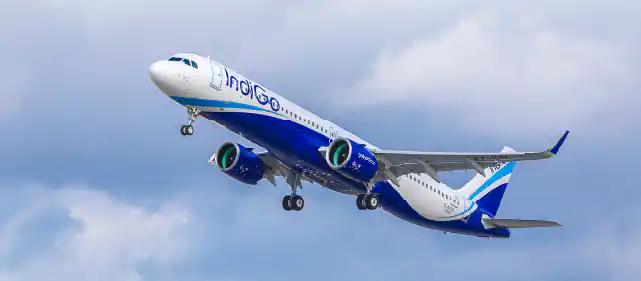
IndiGo, India’s dominant low-cost carrier operated by InterGlobe Aviation Limited, has witnessed a significant leadership shift with the abrupt resignation of its Chief Executive Officer (CEO), Pieter Elbers. The development, announced on March 10, 2026, comes just three months after the airline grappled with one of its most severe operational crises in history, involving thousands of flight cancellations that disrupted travel for lakhs of passengers across the country.
The indigo ceo transition has drawn widespread attention from investors, industry experts, and passengers alike, especially given IndiGo’s commanding position in the Indian aviation sector. Despite the sudden exit, the company’s shares demonstrated resilience, rallying in early trading on March 11, 2026, reflecting sustained investor confidence in IndiGo’s long-term prospects.
Background of Pieter Elbers’ Tenure as IndiGo CEO
Pieter Elbers, a Dutch aviation executive with prior experience as CEO of KLM Royal Dutch Airlines, joined IndiGo in September 2022. His appointment was seen as a strategic move to professionalize the airline’s operations and accelerate its international expansion while preserving the ultra-low-cost model that had made IndiGo a market leader.
During his approximately three-and-a-half-year tenure, Elbers oversaw several key achievements:
- The airline crossed the significant milestone of $10 billion in annual revenue.
- IndiGo placed a massive order for 500 aircraft from Airbus, primarily from the A320 family, bolstering its fleet expansion plans.
- Expansion of international routes, enhancing connectivity beyond domestic dominance.
- Strengthening the fleet pipeline to support future growth in one of the world’s fastest-growing aviation markets.
Elbers’ leadership focused on operational efficiency, cost control, and scaling international presence, aligning with IndiGo’s core philosophy of affordability and reliability.
However, his exit was sudden and cited “personal reasons” in his resignation letter. Reports indicate he requested a waiver of his notice period, and the board accepted the resignation with immediate effect, relieving him from duties by the close of business on March 10, 2026. This abrupt departure has raised eyebrows in industry circles, especially in light of recent challenges.
The December 2025 Operational Crisis: Catalyst for Change?
The resignation arrives against the backdrop of a major crisis in December 2025, when new pilot duty time limitations (PDTL) regulations introduced by the Directorate General of Civil Aviation (DGCA) triggered an industry-wide pilot shortage and scheduling crunch.
IndiGo, as the largest operator, was hit hardest:
- Over 4,500 flights were cancelled in a short period.
- Thousands more faced delays.
- Hundreds of thousands of passengers were stranded, leading to widespread complaints, compensation claims, and regulatory scrutiny.
The disruptions were described as IndiGo’s “worst-ever operational crisis,” drawing intervention from the government and aviation regulator. The airline faced fines, public backlash, and questions about planning and adaptability to the new norms. While the industry as a whole struggled, IndiGo’s scale amplified the impact.
Analysts note that leadership transitions in such scenarios are not uncommon, as boards seek to restore stability and public trust. Elbers’ departure, though officially for personal reasons, is widely viewed in the context of this fallout.
Rahul Bhatia Steps In as Interim Leader
In a stabilizing move, InterGlobe Aviation’s co-founder and Managing Director, Rahul Bhatia, has assumed interim management responsibilities. Bhatia, who has been with the airline for over two decades, is credited as the architect of IndiGo’s efficient low-cost operating model that propelled it to market dominance.
Chairman Vikram Singh Mehta emphasized Bhatia’s role in the official statement:
“Rahul returns to assume management of the affairs of the airline to strengthen the company’s Culture, reinforce operational excellence and deepen its commitment to delivering exceptional service of care, reliability and professionalism to its customers.”
Bhatia’s involvement is seen as a positive signal for continuity. Founder oversight during transitions often reassures stakeholders, minimizing uncertainty. The airline indicated that a permanent successor is expected to be announced “in short order.”
Market Reaction: IndiGo Shares Rally Despite Leadership Change
Contrary to expectations of volatility, InterGlobe Aviation’s stock showed strength on March 11, 2026. Shares climbed approximately 2.62%, rising ₹114.95 to ₹4,498.40 by mid-morning IST, after hitting an intraday high of ₹4,510. This compared to the previous close of ₹4,383.45.
Trading volume was robust, with about 1.85 million shares exchanged. The market capitalization hovered around ₹1.73 lakh crore, underscoring IndiGo’s stature.
The rally highlights institutional confidence in IndiGo’s structural advantages:
- Dominant domestic market share of around 63.6%.
- Scale benefits over competitors.
- Strong balance sheet and pricing power in a growing market.
Even amid the leadership transition, the market appears to view the change as manageable, thanks to Bhatia’s interim role and the intact long-term growth roadmap.
Brokerage Views Remain Bullish on IndiGo
Major global brokerages have maintained positive ratings post the announcement, emphasizing that the leadership shift does not alter core fundamentals.
- Jefferies: Retained ‘Buy’ rating with a target price of ₹6,140. The firm highlighted smooth historical transitions due to strong founder involvement and praised IndiGo’s 63.6% market share as a “powerful competitive advantage” in India’s booming aviation sector.
- HSBC: Also ‘Buy’ with a target of ₹5,860. HSBC noted that the reset does not change favorable industry dynamics, particularly as rivals like Air India undergo their own transformations. This could enable firmer ticket pricing and better yields industry-wide.
Brokerages point to IndiGo’s competitive moat, fleet orders, international expansion, and India’s aviation growth story as key drivers for sustained optimism.
IndiGo’s Strong Position in Indian Aviation
Despite recent turbulence, IndiGo remains unchallenged as India’s leading airline. Its low-cost model, punctuality focus (when operations are normal), and vast network have built customer loyalty and a formidable edge over competitors like Air India, SpiceJet, and others.
The airline’s international ambitions continue, supported by the massive Airbus order. India’s aviation sector is projected to grow rapidly, driven by rising middle-class travel, infrastructure development, and economic expansion. IndiGo is well-positioned to capture a large share of this growth.
The leadership change, while notable, is expected to be transitional. Bhatia’s hands-on approach could help reinforce operational discipline and culture, addressing any lingering effects from the December disruptions.
What Lies Ahead for IndiGo?
As the search for a new CEO begins, stakeholders will watch for signals on strategic priorities:
- Enhancing operational resilience and pilot scheduling.
- Maintaining cost leadership.
- Accelerating international growth.
- Sustaining service quality amid competition.
The swift appointment of a successor will be crucial for momentum. In the interim, Bhatia’s experience provides stability.
For passengers, the focus remains on reliability and affordability—core promises that have defined IndiGo’s success.
This indigo ceo resignation marks a pivotal moment, but IndiGo’s fundamentals appear solid. Investors and the market have responded positively, betting on the airline’s enduring strength in one of the world’s most dynamic aviation markets.