PM Modi Congratulates Nitin Nabin and Declares Himself a Party Worker Under New BJP Chief
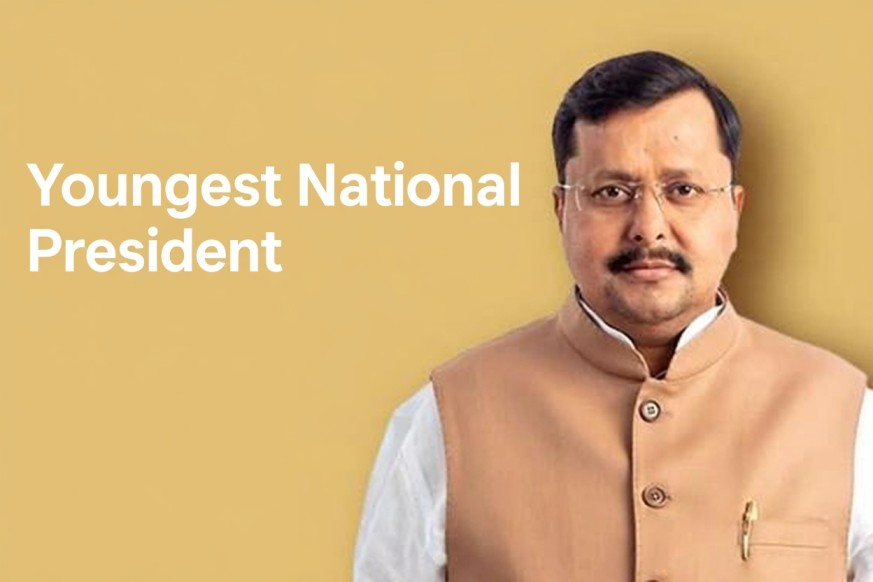
In a significant development for Indian politics, the Bharatiya Janata Party (BJP), the world’s largest political party, appointed Nitin Nabin as its new national president on January 20, 2026. The 45-year-old leader from Bihar succeeded JP Nadda in a seamless transition marked by a grand organizational event (Sangathan Parv) at the BJP headquarters in New Delhi. Nitin Nabin, elected unopposed through the party’s democratic internal process, becomes the 12th national president and the youngest ever to hold this prestigious position.
The ceremony witnessed the presence of Prime Minister Narendra Modi, outgoing president JP Nadda, Union Home Minister Amit Shah, Defence Minister Rajnath Singh, Union Minister Nitin Gadkari, and several chief ministers from BJP-ruled states. This leadership change underscores the BJP’s emphasis on generational transition, organizational strength, and continuity of its core ideals as the party gears up for upcoming state assembly elections and the long-term vision for a developed India by 2047.
Prime Minister Narendra Modi, in his address, congratulated Nitin Nabin wholeheartedly and emphasized the democratic spirit of the election process. “I extend my heartfelt congratulations and best wishes to Nitin Nabin on being elected as the national president of the world’s largest party,” Modi said. He highlighted how the selection began from the smallest unit and culminated at the national level, aligning with the BJP’s constitution.
In a humble and symbolic gesture, PM Modi declared, “From today, he is my boss, and I am his worker.” He reiterated that while the party president has changed, the BJP’s ideals and direction remain unchanged. Modi proudly stated, “The biggest thing in my life is that I am a BJP worker. This is my greatest pride. And when it comes to party matters, Nitin Nabin, I am a worker, and he is my boss.”
Modi described Nitin Nabin as a “millennial” leader belonging to a generation that has witnessed profound economic, social, and technological transformations in India. He noted that the next 25 years of the 21st century are crucial for building a developed India, and Nitin Nabin will lead the BJP in this pivotal phase. The Prime Minister stressed the party’s focus on both organizational expansion and worker development, portraying the BJP as a family where relationships outweigh positions.
Reflecting on the party’s journey, Modi paid tribute to former presidents. He recalled how under Atal Bihari Vajpayee, LK Advani, and Murli Manohar Joshi, the BJP rose from humble beginnings to national prominence. Contributions from leaders like Venkaiah Naidu and Nitin Gadkari were acknowledged, along with milestones under Rajnath Singh (first absolute majority), Amit Shah (governments in multiple states and second consecutive central term), and JP Nadda (strengthening from panchayats to Parliament and third consecutive central government).
Modi emphasized that the BJP is not just a party but a culture, a family, and a tradition driven by processes rather than temporary positions. “Presidents change, but ideals do not. Leadership changes, but direction does not,” he said. He also referenced recent celebrations, including the 125th birth anniversary of Dr. Shyama Prasad Mukherjee, the 100th birth anniversary of Atal Bihari Vajpayee, and the centenary of the Rashtriya Swayamsevak Sangh (RSS), which have reinforced the party’s resolve for national service.
Nitin Nabin’s elevation is seen as a strategic move by the BJP to infuse youthful energy into its ranks while maintaining ideological continuity. A five-time MLA from Bihar’s Bankipur constituency, Nabin has a strong organizational background, having served as the national general secretary of the Bharatiya Janata Yuva Morcha (BJYM), president of BJYM’s Bihar unit, and in key roles during elections, including in Chhattisgarh. His appointment signals the party’s preparation for upcoming challenges, including assembly polls in states like Assam, West Bengal, Tamil Nadu, and others, as well as the 2029 Lok Sabha elections.
The BJP’s internal election process, which ran for several months, exemplified its commitment to grassroots democracy. Nabin received overwhelming support, with nominations backed by PM Modi, Amit Shah, Rajnath Singh, Nitin Gadkari, JP Nadda, and numerous others. This unanimity reflects the party’s unified leadership under Modi’s guidance.
As Nitin Nabin assumes charge, the BJP aims to further expand its footprint, strengthen its booth-level network, and continue its mission of Antyodaya (upliftment of the last person) and inclusive development. With Modi’s endorsement and the party’s storied legacy, this transition is poised to propel the BJP toward greater heights in serving the nation.
The appointment of Nitin Nabin as BJP national president marks not just a change in leadership but a reaffirmation of the party’s worker-centric ethos, democratic values, and unwavering commitment to building a Viksit Bharat (Developed India). As the saffron brigade looks ahead, all eyes are on how this new chapter unfolds under its youngest leader.