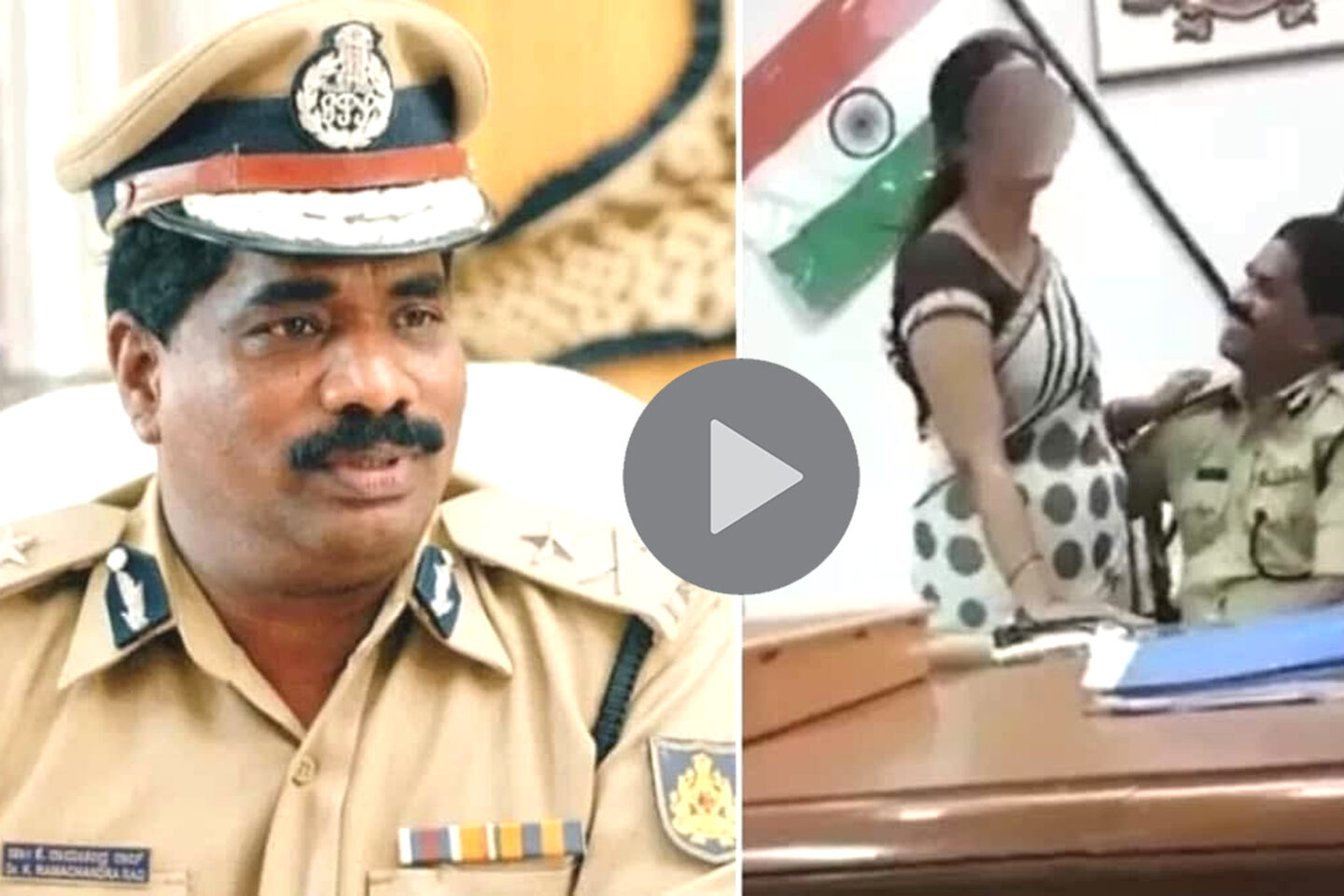
In a scandal that has sent shockwaves through the Indian administrative and political circles, Karnataka Director General of Police (DGP) K Ramachandra Rao has been suspended from his position following the viral circulation of a controversial video. The DGP Viral Video, which surfaced on social media platforms on Monday, purportedly shows the senior Indian Police Service (IPS) officer in compromising positions with women inside his official chamber. This incident has triggered widespread public outrage, leading to swift action by the Congress-led state government.
The Viral Footage: What Does the DGP Ramachandra Rao Viral Video Show?
The DGP Ramachandra Rao Viral Video is not a single clip but appears to be a compiled montage of multiple recordings, suggesting incidents from different points in time. The footage, reportedly recorded secretly within the premises of the Directorate of Civil Rights Enforcement (DCRE) office in Bengaluru, shows Rao—in full police uniform—engaging in intimate behaviour such as hugging and kissing various women.
Key aspects of the video content include:
- Multiple Occasions: The women featured appear on different days, indicated by their varied outfits and the changing settings in the office.
- Office Hours & Premises: All interactions seem to occur during official working hours within the DGP’s private office, raising severe questions about the misuse of authority and public space.
- Uniformed Conduct: Rao is seen in his official police uniform, complete with insignia, amplifying the breach of conduct and the perceived insult to the sanctity of the service.
The compilation nature of the video suggests a deliberate attempt to document a pattern of behaviour, rather than an isolated moment captured accidentally.
Swift Government Action: Suspension and Inquiry
The DGP Viral Video quickly escalated into a political firestorm. As public anger grew online and offline, the controversy reached the desk of Chief Minister Siddaramaiah. After taking a detailed brief from the concerned Home Department on Monday, the state administration moved decisively.
On Tuesday, the Karnataka government issued orders for the immediate suspension of DGP K Ramachandra Rao. While a formal departmental inquiry is being instituted, the suspension is a preventive measure under the All India Services (Discipline and Appeal) Rules, pending a full investigation. This action underscores the government’s stance of “zero tolerance” towards misconduct by officials, especially those occupying the highest echelons of the police force.
Rao was serving as the head of the Directorate of Civil Rights Enforcement (DCRE), a wing entrusted with protecting the rights of citizens, particularly those from marginalised communities. The irony of the allegations against the chief of such a department has not been lost on the public.
DGP Rao’s Defence: Claims of Morphing and Conspiracy
Facing intense scrutiny, DGP Ramachandra Rao has vehemently denied the allegations. In his initial response, he has claimed that the circulating DGP Ramachandra Rao Viral Video is “morphed” and fabricated with malicious intent to tarnish his reputation and career. He has demanded a thorough and impartial forensic investigation to establish the video’s authenticity.
Sources close to the officer have hinted at a possible conspiracy, suggesting the videos could be an act of vengeance by individuals or groups upset by his professional actions. However, these claims are yet to be substantiated. The upcoming forensic analysis by state forensic labs will be crucial in determining whether the footage is genuine, edited, or fabricated.
A Shadow of Previous Controversy: The Ranya Rao Connection
Adding another layer of public interest to the scandal is DGP Rao’s family connection. He is the father of Kanada film actress Ranya Rao, who herself was embroiled in a high-profile gold smuggling case in 2021. Ranya Rao was accused by the Customs Department of being part of a network smuggling gold from Dubai. Although she was granted bail, the case had already brought the family under the media spotlight.
This previous association with controversy has amplified the public and media narrative around the current DGP Viral Video scandal, painting a picture of recurrent notoriety.
Public and Political Reaction: Outrage and Demand for Accountability
The reaction to the DGP Ramachandra Rao Viral Video has been one of universal condemnation.
- Citizens and Civil Society: There is widespread anger and disappointment, with many expressing betrayal by an officer sworn to uphold law and propriety. Social media is rife with debates on the misuse of power, the need for accountability in the police force, and the safety of women visiting police offices.
- Political Voices: Opposition parties, including the BJP, have seized upon the incident to criticise the state government’s law and order management. They have demanded not just a suspension but a criminal investigation. Even within the ruling party, there is pressure to handle the matter with utmost seriousness to avoid any perception of shielding senior officials.
- Police Fraternity: While the official police association is yet to comment, the incident has caused immense embarrassment within the ranks, potentially damaging the public trust that serving officers strive to build.
The Legal and Procedural Road Ahead
The suspension is only the first step in a long process. The state government is likely to refer the case to an empowered committee or appoint an investigating officer of a sufficiently senior rank (possibly from outside the state police to ensure impartiality) to conduct a detailed departmental inquiry.
Simultaneously, if the forensic report confirms the video’s authenticity, a separate criminal case could be registered. Potential charges, depending on the evidence and complaints, could include:
- Violation of the All India Services (Conduct) Rules.
- Sections related to outraging the modesty of a woman (Section 354 IPC) if a formal complaint is filed.
- Disobedience to a law promulgated by a public servant (Section 188 IPC).
- Charges under the Prevention of Corruption Act for misusing official position for personal gratification.
The inquiry will also need to establish the identity of the women in the video, how the secret recordings were made, and who compiled and leaked them to the public.
FAQ
Q1: What is the DGP Ramachandra Rao Viral Video scandal?
A1: The DGP Ramachandra Rao Viral Video refers to a compiled video that surfaced online showing Karnataka’s DGP-rank officer K Ramachandra Rao in intimate acts with women inside his official office. This led to his suspension.
Q2: Has DGP Ramachandra Rao been suspended?
A2: Yes, the Karnataka government suspended DGP K Ramachandra Rao on Tuesday, a day after the DGP Viral Video went viral on social media, pending a full departmental inquiry.
Q3: What has been DGP Rao’s response to the viral video?
A3: DGP Ramachandra Rao has denied all allegations, claiming the DGP Viral Video is morphed and fabricated. He has demanded a forensic investigation to prove his innocence.
Q4: Which department was DGP Ramachandra Rao heading?
A4: He was serving as the Director General of Police (DGP) of the Directorate of Civil Rights Enforcement (DCRE) in Karnataka at the time of the incident.
Q5: Is this incident connected to DGP Rao’s family?
A5: While the video scandal is separate, DGP Rao is the father of actress Ranya Rao, who was previously accused in a gold smuggling case, adding to the public controversy surrounding the family.
A Test of Integrity and Governance
The DGP Ramachandra Rao Viral Video episode is more than a personal failing; it is a critical test for the Karnataka government’s commitment to accountability and for the integrity of the police force. As the investigation unfolds, it must be transparent, swift, and uncompromising to restore public faith. The outcome will set a significant precedent for how India deals with allegations of high-level misconduct, balancing the principles of natural justice for the accused with the imperative need for ethical governance. The nation’s eyes are now firmly on Karnataka, awaiting the next chapter in this sordid tale of power, alleged impropriety, and the quest for truth.