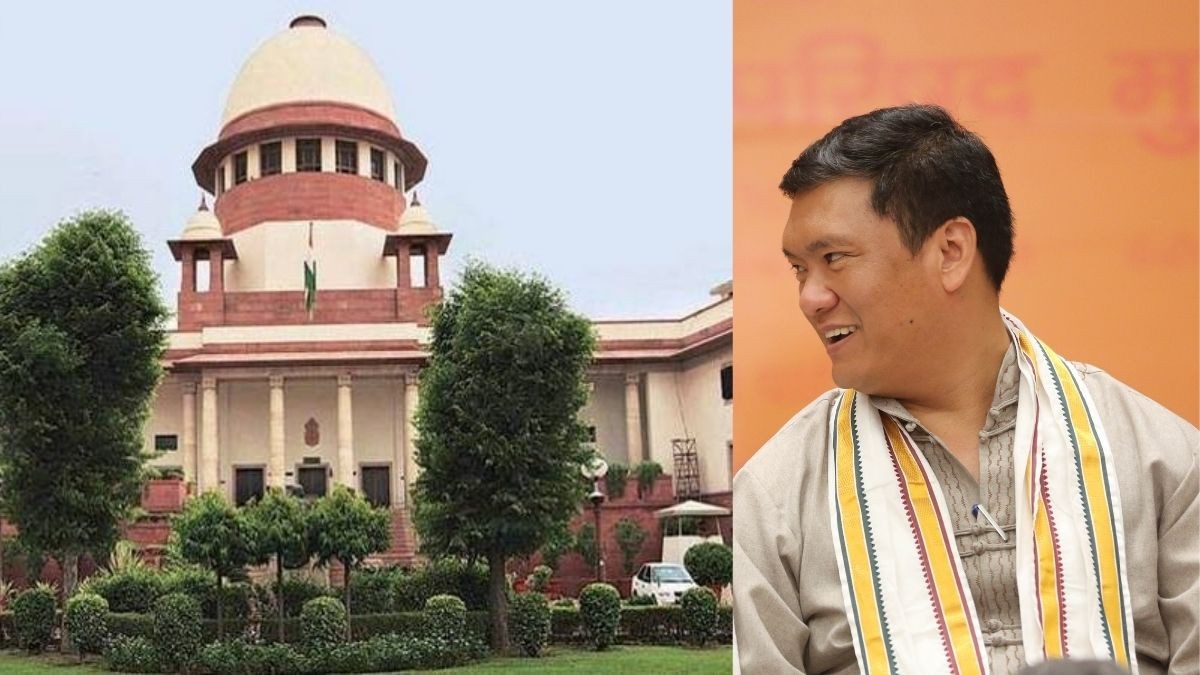
Supreme Court Orders CBI Probe into Arunachal CM Pema Khandu Family Government Contracts Scandal: What It Means for Transparency in Northeast India
Supreme Court Orders CBI Preliminary Enquiry in Major Case Involving Pema Khandu Family and Arunachal Pradesh Government Contracts
In a significant development that has sent ripples across the political landscape of Northeast India, the Supreme Court of India on Monday, April 6, 2026, directed the Central Bureau of Investigation (CBI) to initiate a preliminary enquiry into allegations that numerous public development contracts were awarded to firms allegedly linked to the family members of Arunachal Pradesh Chief Minister Pema Khandu.
The order comes in response to a Public Interest Litigation (PIL) highlighting serious concerns over lack of transparency, possible conflict of interest, and irregularities in the tender processes for government works in the state. This case underscores ongoing debates about governance, nepotism allegations, and accountability in public procurement, especially in hilly and strategically important border states like Arunachal Pradesh.
The three-judge bench comprising Justices Vikram Nath, Sandeep Mehta, and N.V. Anjaria delivered the order, emphasizing the need for an impartial probe by a central agency. The court observed that state police may not be in a position to investigate such matters objectively when high-level political figures and their families are involved.
Advocate Prashant Bhushan, representing the petitioners, strongly argued during hearings that the Arunachal Pradesh government appeared to function like a “private limited company” for the benefit of a select few, with contracts allegedly funneled to close relatives despite clear conflict-of-interest norms.
Background of the Allegations Against Pema Khandu Family Contracts
The PIL was filed by two prominent organizations — Save Mon Region Federation and Voluntary Arunachal Sena (also referred to as Voluntary Arunachal Senaa). The petitioners alleged that over the last decade (roughly 2015 to 2025), government contracts and work orders worth approximately Rs 1,270 crore were irregularly awarded to a handful of firms connected to Chief Minister Pema Khandu’s immediate family.
Specific mentions in reports and court proceedings include:
- Firms allegedly linked to Khandu’s wife
- His step-mother (Rinchin Drema, second wife of late Dorjee Khandu)
- Nephew Tsering Tashi
- And other close relatives
One company frequently cited is M/s Brand Eagles, reportedly associated with a family member, which is said to have secured a large number of construction and development projects. Other entities like Alliance Trading Co. were also referenced in connection with the nephew.
Petitioners claimed that many of these awards bypassed standard open tender norms, raising questions about single bidding, lack of competition, approval processes, fund flow, and actual execution of works. They pointed to potential violations of procurement rules, including e-procurement guidelines and conflict-of-interest provisions for public servants and their families.
The organizations argued that such practices undermine public trust, divert development funds meant for infrastructure in remote tribal areas, and compromise the quality of roads, bridges, schools, hospitals, and other essential projects in Arunachal Pradesh — a state critical for national security due to its international border with China.
Key Details of the Supreme Court Order on Pema Khandu Case
The bench issued several strict directions to ensure a thorough and time-bound enquiry:
- CBI Timeline: The CBI must register a Preliminary Enquiry (PE) within two weeks from the date of the order (i.e., by around April 20, 2026).
- Scope of Investigation: The probe will primarily cover the period from January 1, 2015, to December 31, 2025. However, CBI is not barred from examining contracts outside this window if required.
- Focus Areas:
- All public works, contracts, and tenders awarded in Arunachal Pradesh during the period.
- Specifically, contracts given to respondents No. 4 to 6 (family-linked individuals/firms) and associated entities.
- Reasons for closing open tenders or single bidding.
- Compliance with approval procedures and purchase rules.
- Fund flow, payments, vouchers, completion certificates, and actual utilization of funds.
- E-procurement records and comparative statements.
- State Government Obligations:
- Full cooperation with CBI.
- No destruction or tampering of physical or digital records/evidence.
- Within four weeks, provide all relevant documents: administrative approvals, tender documents, comparative charts, tender committee minutes, contracts, bills, vouchers, utilization certificates, etc.
- Chief Secretary to appoint a Nodal Officer within one week for coordination with CBI.
- Every concerned department must also appoint its own Nodal Officer within the same timeframe.
- Reporting: CBI must submit a status report before the Supreme Court within 16 weeks.
If the preliminary enquiry reveals cognizable offences, CBI can proceed to a full investigation and register a regular case as per law.
The court made it clear that the Arunachal Pradesh government and all its departments must extend complete assistance, failing which it could invite contempt proceedings.
Timeline of the Legal Battle Leading to CBI Probe
- 2024: PIL filed by Save Mon Region Federation and Voluntary Arunachal Sena alleging favouritism in contract awards.
- December 2, 2025: Supreme Court directs Arunachal government to file a comprehensive affidavit detailing all contracts from 2015 to 2025.
- February 17, 2026: Court reserves order after hearing arguments by Prashant Bhushan.
- April 6, 2026: Final order directing CBI preliminary enquiry.
During earlier hearings, the state government was asked to submit details, and the statistics presented were described as “telling” by the bench. Bhushan highlighted that dozens of contracts went to family-linked firms, including at least 70 to one particular company.
Why This Pema Khandu Family Contracts Case Matters: Broader Implications
This order is not just about one state or one leader. It touches upon several critical issues in Indian governance:
- Conflict of Interest: Public representatives and their families are expected to maintain arm’s-length distance from government contracts. Rules under CVC guidelines and state procurement policies generally prohibit such dealings to prevent undue advantage.
- Transparency in Public Procurement: In a federal structure, states handle massive development funds (often supplemented by central schemes like PMGSY, PMAY, health missions, etc.). Any perception of cronyism erodes citizen confidence.
- Northeast India Development: Arunachal Pradesh receives special category status and huge central assistance for infrastructure to counter border challenges and promote economic growth. Diverted or poorly executed projects can have strategic and socio-economic consequences.
- Role of Judiciary and CBI: By directing a central agency probe instead of leaving it to state police, the Supreme Court has reinforced the principle that serious allegations involving constitutional functionaries require independent investigation.
- Political Ramifications: Pema Khandu, a senior BJP leader who has been Chief Minister since 2016 (after succeeding his father Dorjee Khandu’s political legacy), faces scrutiny at a time when his government is pushing various development initiatives. The outcome of the CBI enquiry could influence political discourse in the region ahead of future elections.
Opposition parties and civil society groups in the Northeast have often raised voices about “family rule” or “dynastic politics” in contract allocation. This judicial intervention is being seen by many as a step towards cleaning up the system.
What Happens Next in the CBI Enquiry on Arunachal Contracts?
The preliminary enquiry is essentially a fact-finding exercise. CBI will:
- Collect and scrutinize documents from the state government.
- Examine officials involved in tender processes.
- Verify ownership of the companies in question.
- Check bank transactions, payment trails, and work execution quality (possibly through site visits or technical audits).
- Interview complainants and witnesses.
If prima facie evidence of corruption, cheating, criminal conspiracy, or violation of prevention of corruption laws is found, a regular FIR can be registered, leading to deeper investigation, possible arrests, and chargesheet.
Meanwhile, the Supreme Court will monitor progress through the status report.
Voices from the Case
Prashant Bhushan reportedly stated during arguments that the situation “reeked of corruption” and that state agencies could not be relied upon for an impartial probe.
The petitioners have welcomed the order, calling it a victory for transparency and rule of law in the Himalayan state.
The Arunachal Pradesh government is yet to issue an official reaction as of the latest reports, but it is bound by the court’s directives to cooperate fully.
Importance of Transparent Governance in Arunachal Pradesh and Northeast
Arunachal Pradesh, with its rugged terrain, diverse tribal communities, and sensitive border location, requires robust infrastructure development. Roads, hydropower projects, tourism infrastructure, and basic services are crucial for connecting remote villages and boosting the local economy.
When contracts are allegedly concentrated in a few hands, it raises red flags about:
- Quality of work (substandard execution leading to frequent damages)
- Cost overruns or inflated bills
- Delayed projects affecting public welfare
- Misuse of taxpayer and central funds
Civil society groups like Save Mon Region Federation have been active on environmental and developmental issues in the region (notably opposing certain hydropower projects in the past). Their involvement in this PIL shows how development accountability is becoming a cross-cutting concern.
SEO Note for Readers Searching This Topic
If you searched for “Pema Khandu family contracts”, “Supreme Court CBI Arunachal”, “Pema Khandu scam”, or related terms, this article provides comprehensive, fact-based coverage drawn from the court order and multiple credible reports. We will update this story as CBI registers the enquiry and further developments emerge.
For more on Northeast politics, governance issues, and Supreme Court interventions in regional matters, bookmark our site and follow updates.